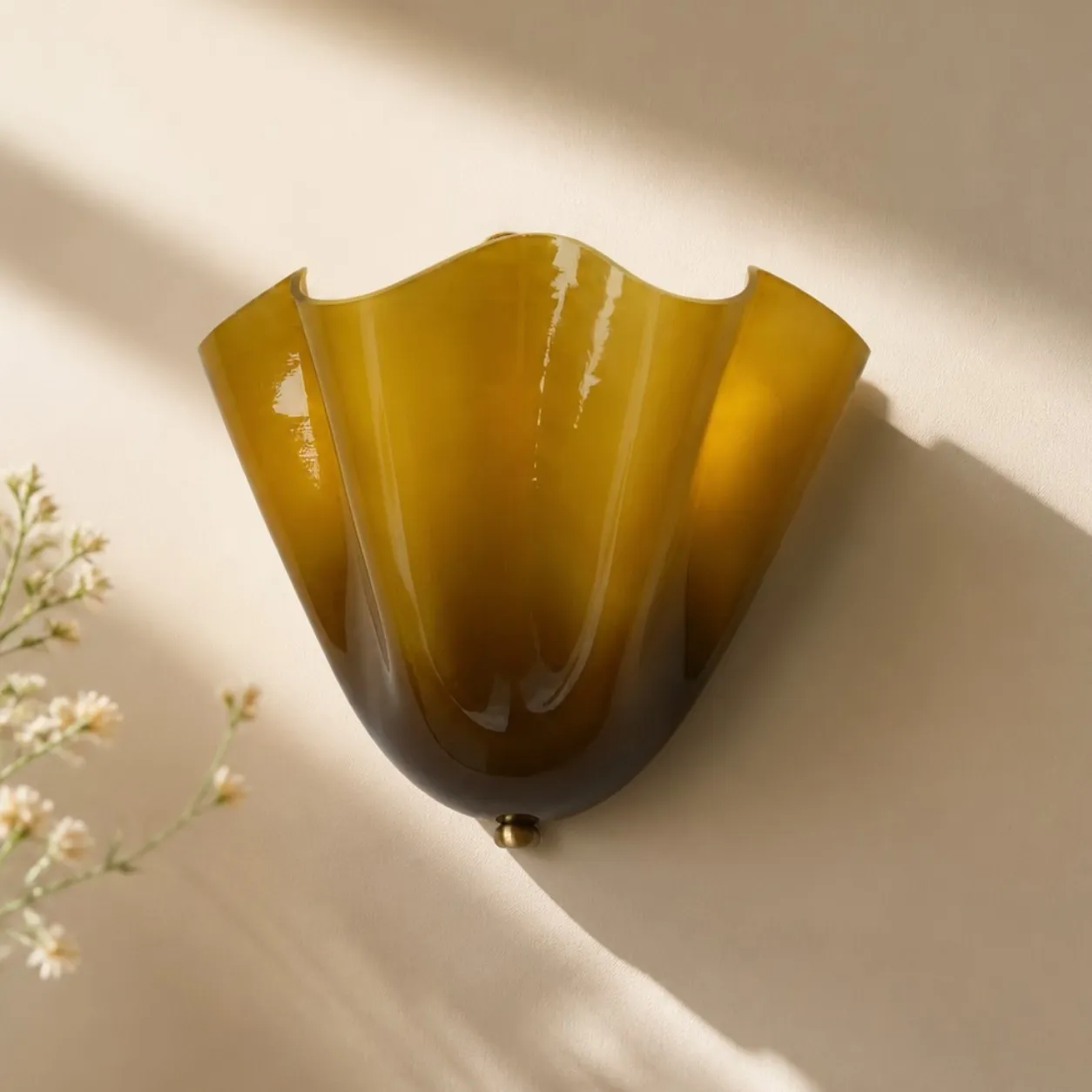


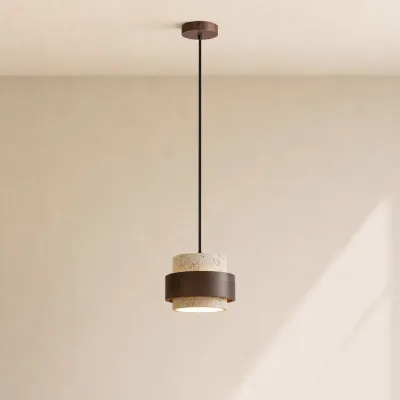


Short answer: In a bedroom, place a wall sconce where its light source is slightly above your seated eye level and where the fixture clears the mattress, headboard and nightstand. In a hallway, center it around eye level while protecting the walking path. The Bellina Wall Lamp is 28 cm wide, 25 cm high and projects about 13 cm from the wall, so its real footprint should guide the final mark.
Start With the Wall, Not the Lamp
Good placement is a relationship between the fixture, the person using it and the empty space around it. A sconce can be beautiful on its own yet feel wrong if it sits too close to a door casing, overlaps a headboard or throws light directly into a sleeper's eyes. Before drilling, measure the wall, tape a paper rectangle that matches the Bellina's 28 x 25 cm profile, and stand back from the usual viewing position.
Use the product page as the source of truth for the Bellina's hardwired construction, glass body, E26/E27 socket, dimmer compatibility and 13 cm wall projection. The lamp is damp rated, but a bathroom or covered outdoor location still needs a local installation check. View the Bellina Wall Lamp specifications before finalizing a position.
A Bedroom Formula That Works for Real People

For bedside use, measure three heights: the floor, the top of the mattress and your seated eye level. A useful starting point is to put the center of the light source about 15-30 cm above seated eye level. In many bedrooms this places the fixture center roughly 145-165 cm from the floor, but the person and bed matter more than a universal number.
- Check the seated view: sit against the pillows and look toward the proposed center. You should see the shade or glass form, not an exposed bright bulb.
- Clear the bed: keep the lower edge above the mattress and away from the area where pillows are fluffed or a person leans back.
- Respect the nightstand: a center point 30-45 cm above the nightstand top usually leaves room for a book, water glass and charging cable without making the wall feel top-heavy.
- Match the headboard: with a tall headboard, move the pair wider rather than higher so the light remains useful at shoulder height.
Soft, diffused light is especially valuable beside a bed. A 2022 PNAS study found that even moderate light exposure during sleep can affect overnight cardiometabolic measures; that does not create a universal brightness rule, but it is a good reason to aim the fixture for useful task light and use a dimmer for the wind-down period. Read the peer-reviewed study on light exposure during sleep.
Hallway Placement: Protect Movement and Sightlines
Hallways need a different test. The fixture should help people read the route without becoming a shoulder-level obstacle. Start with the center of the shade around 150-165 cm from the floor, then check the tightest point: door swings, corners, artwork, handrails and the clear walking line. Because Bellina projects approximately 13 cm, mark that depth on the wall and walk past it with a bag or laundry basket.
For a long corridor, use a rhythm rather than a rigid spacing code. Place the first sconce where the entry or a turn needs visual emphasis, then repeat at intervals that keep the pools of light connected without crowding door trim. A single fixture can be enough in a short hall; two or more should be aligned to the same center height.
Proportion Checks Before the Electrician Arrives
Make a full-size cardboard template: 28 cm wide, 25 cm high and 13 cm deep. Tape it at the intended center, leave it overnight, and view it from the bed, doorway and adjacent room. This catches the most common errors before a junction box is moved.
- Measure from the wall edge to the fixture center, not just to the outside edge of the glass.
- Compare the sconce width with the nightstand or console. A 28 cm lamp usually reads balanced over a 45-60 cm bedside table, but the furniture should still open freely.
- Check two-way symmetry only after the functional marks are correct; perfect symmetry cannot rescue an uncomfortable height.
- Confirm the electrician can place the box where the backplate and cable route will be hidden.
Three Placement Mistakes to Avoid
Mounting by ceiling height alone: a tall ceiling does not mean a bedside sconce belongs higher.
Ignoring projection: the 13 cm depth matters beside a narrow passage and near curtains.
Choosing a position before choosing the bulb: a clear or bright bulb can produce more glare than expected through glass, so test the intended lamp and dimmer combination before the final install.
Use the Bellina as a Measured Accent
The Bellina Wall Lamp works best when its sculptural glass is given breathing room. Explore the Bellina Wall Lamp with your taped template beside the bed or along the hallway, then verify the hardwired location with a qualified electrician. For a closer look at bedside measurements, see the planned guide How High Should a Wall Sconce Be Above a Bedside Table or Mattress?; for pair spacing, see How Far Apart Should Two Bedside Wall Sconces Be for a Queen or King Bed?.
In a small room, the planned comparison Wall Sconce vs Table Lamp for a Small Bedroom: Which Saves More Space? can help you decide whether the wall is the better place for the lighting task.
FAQ
How high should a bedroom sconce be?
Start with the light source 15-30 cm above seated eye level, then confirm it clears the mattress and headboard.
How far should a hallway sconce project?
Measure the fixture depth, including the 13 cm Bellina projection, against the narrowest walking clearance and door swing.
Can one sconce light a hallway?
Yes, for a short hall. Longer halls usually need a consistent rhythm of fixtures or another ambient layer.
Should I install the junction box first?
No. Tape the full-size fixture, confirm the view from every approach, then give the final mark to the electrician.
Can I use a dimmer?
The Bellina page lists dimmer compatibility; select a compatible dimmer and have the circuit checked during installation.