



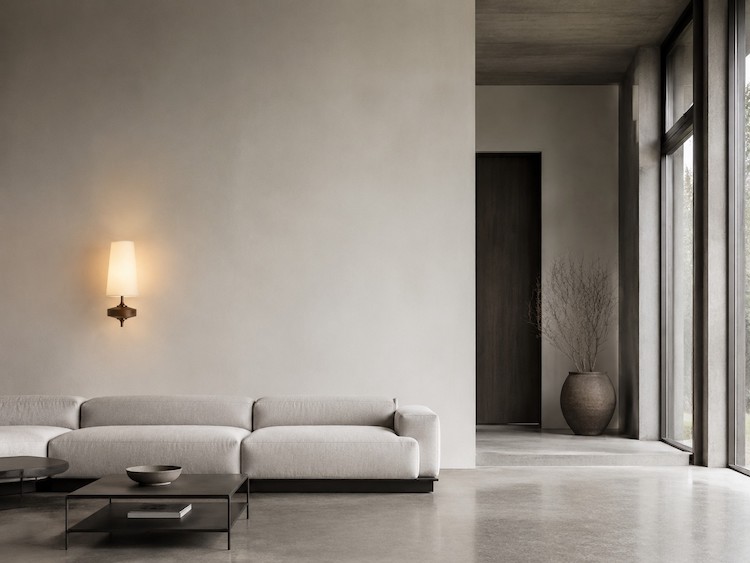
How to Mix Wood Fixtures Seamlessly in Cold Modern Interiors
The direct answer is yes: You can absolutely integrate wood fixtures into cold modern interiors, and doing so is often the secret to transforming a sterile space into a high-end, livable masterpiece. The core principle is simple: treat wood not as a rustic rusticizer, but as a high-precision architectural element that tunes the visual temperature of your space.
When an interior features expansive polished concrete, large-format porcelain tiles, industrial steel, and sharp glass, it possesses undeniable architectural clarity, but it lacks emotional resonance. Wood introduces a natural, irregular texture that breaks up the monochromatic rigidity without disrupting the clean lines of minimalism. This article will serve as your ultimate framework to judge exactly how to evaluate your current architecture, select the perfect timber species, choose the right product proportions, and execute a flawless material integration.
Before You Start: The Pre-Evaluation Framework
Before spending a single dollar on a wood light fixture, a floating shelf, or an architectural panel, you must analyze your existing room against six rigid parameters. Skipping this step leads to mismatched design aesthetics or, worse, installation failures.
- Spatial Dimensions: Measure the precise volumetric scale of your room. High ceilings (above 3 meters) demand fixtures with strong geometric presence or vertical grain orientation to draw the eye upward. Low ceilings require low-profile, horizontally oriented fixtures that don't crowd the visual plane.
- Usage Scenarios: Define the micro-environment. Is this a high-traffic hallway prone to physical contact, a serene living room intended for relaxation, or a high-humidity zone like a kitchen or powder room? The environmental stress dictates the level of wood sealing required.
- Product Dimensions & Proportions: A wood fixture should respect the "rule of thirds" within its structural canvas. For instance, a wood wall sconce placed on a massive concrete pillar should occupy roughly one-third of the pillar's visible width to look intentional rather than accidental.
- Budget Allocations: Balance product cost with technical installation. Integrating wood fixtures into modern surfaces like poured concrete or solid stone requires specialized masonry drilling, professional wiring rerouting, and precise patching, which can equal the cost of the fixture itself.
- Style Preferences: Determine your desired degree of contrast. Are you aiming for an ultra-clean Scandinavian aesthetic (low contrast, blonde woods) or a high-contrast dramatic modern look (rich, dark timbers against stark white or raw concrete)?
- Installation Conditions: Verify your wall composition. Modern minimalist homes frequently use drywall over light-gauge steel studs or solid structural concrete. You must know your substrate to determine whether you need simple toggle bolts or heavy-duty masonry anchors.
Step 1: Identify Your Core Needs
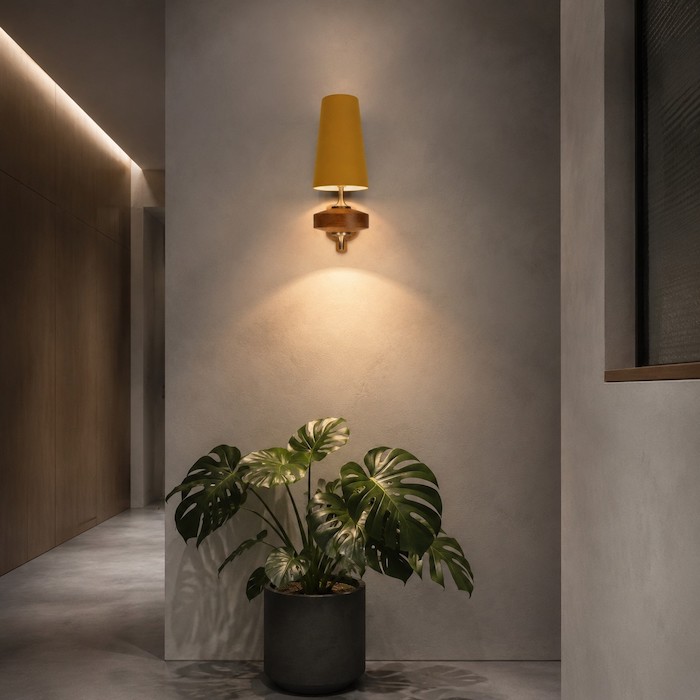
Every design addition in a minimalist space must have a definitive functional or psychological purpose. Random decoration destroys modernism. Ask yourself which of these three primary roles your wood fixture will fulfill:
Visual Temperature Management
If your room features northern exposure with cold, bluish natural light bouncing off grey micro-cement floors, your core need is visual warming. Wood absorbs harsh light reflections and re-emits a softer, warmer visual spectrum.
Architectural Zoning
In open-concept modern layouts, wood fixtures act as spatial markers. A series of strategically placed wood fixtures or a slatted wood ceiling section can frame a dining area or a reading corner, conceptually isolating it from the colder, grander paths of the house without building physical walls.
Functional Spatial Efficiency
In modern minimalism, keeping surfaces clear of clutter is paramount. A wood wall fixture is often a Small Bedroom Lifesaver: Swapping Table Lamps for Wood Sconces to Free Up Nightstand Space. This simple architectural shift not only introduces organic warmth to the bedside but also preserves the negative space essential for a clean, contemporary aesthetic.
Tactile Counterpoint
Modernism can feel untouchable. If the fixture is positioned at an interactive height—such as a wall sconce next to a bed or a custom grab-rail—the warm, organic texture of wood provides an inviting tactile experience that completely contrasts with the cold touch of glass or powder-coated steel.
Step 2: Choose the Perfect Size and Type
Proportion and geometry dictate success when mixing organic elements into modern architecture. To keep the space feeling tailored and intentional, follow these rules for selecting the size and type of your wood fixtures: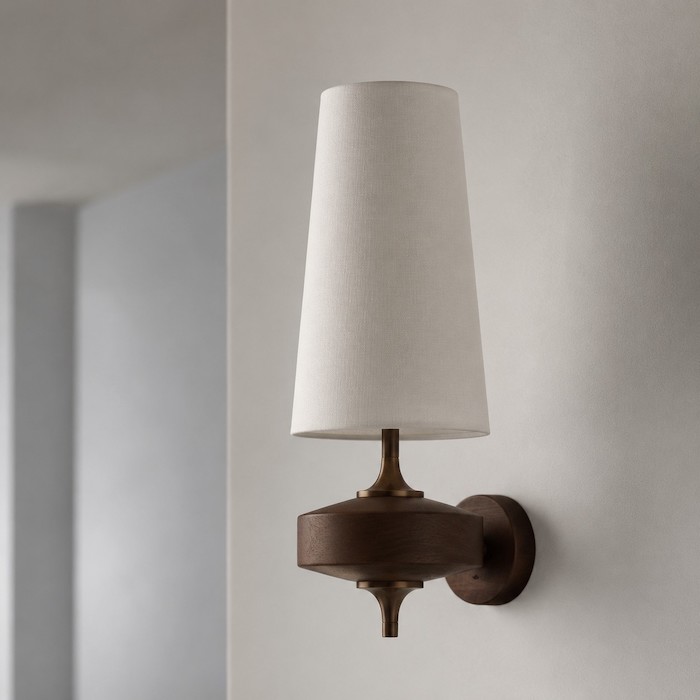
Maintain Geometric Alignment
Avoid organic, free-form, or live-edge wood shapes unless they are curated as standalone, gallery-style art pieces. For structural and lighting fixtures, look for clean, unyielding geometries: perfect spheres, rectilinear columns, or precise linear slats. These shapes mimic the structural grid of modern architecture, allowing the wood to integrate seamlessly.
Match Visual Weight to Material Mass
Wood has a high visual weight. In a room dominated by delicate glass shelves and floating steel stairs, a massive, solid block of timber will look like a structural error. Instead, choose open-frame wood fixtures, layered slatted designs, or fixtures that pair wood with lightweight components like linen or frosted glass. Conversely, if your space features thick, structural raw concrete walls, it can easily handle a denser, solid timber fixture.
Step 3: Match Textures, Finishes, and Styles
This is where most homeowners fail. Bringing the wrong wood finish into a modern home can instantly create a jarring color clash or degrade your home's aesthetic into a cabin style. To prevent this, apply the Undertone Principle.
| Existing Cold Surface | Recommended Wood Species | Recommended Finish |
|---|---|---|
| Cool Grey Concrete / Bluestone | White Oak, Ash, Smoked Walnut | Ultra-Matte Clear Coat (No Yellowing) |
| Stark Minimalist White Drywall | American Walnut, Charcoal-Stained Oak | Low-Satin Oils |
| Dark Charcoal / Matte Black Steel | Teak, Natural Walnut, Rift-Sawn Oak | Matte Polyurethane |
| Travertine / Warm-Toned Concrete | Bleached Maple, Natural White Oak | Raw-Look Dead Flat Finish |
Grain Selection
Opt for "Rift-Sawn" or "Quarter-Sawn" timbers. These milling techniques produce straight, linear grain patterns that perfectly match modern architecture. Avoid "Flat-Sawn" woods like standard pine or wild-grained oak, which feature large, wavy cathedral patterns that instantly scream rustic or traditional.
The Hybrid Material Bridge
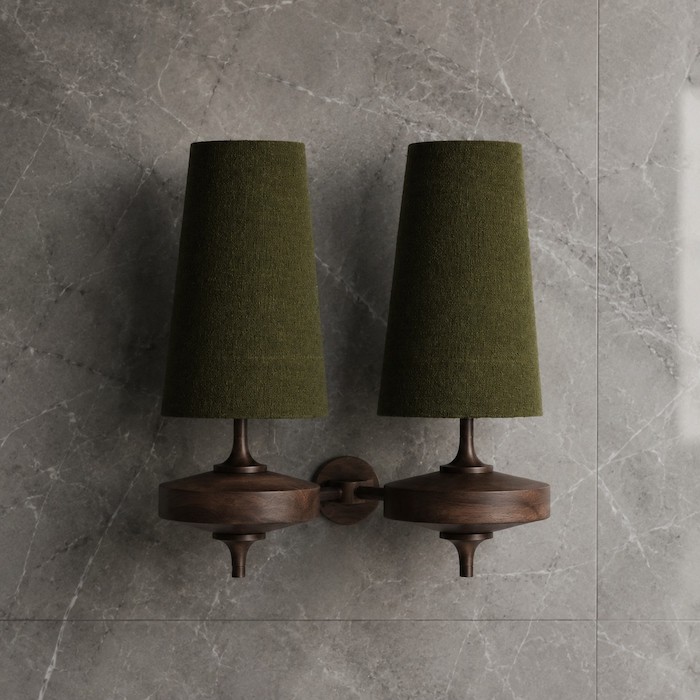
To make a wood fixture feel entirely cohesive in a cold room, choose products that physically combine wood with industrial materials. A wall sconce that pairs a refined timber element with a matte black metal frame or a crisp fabric shade acts as a literal bridge, validating the presence of both materials in the same space.
Step 4: Verify Installation and Environmental Conditions
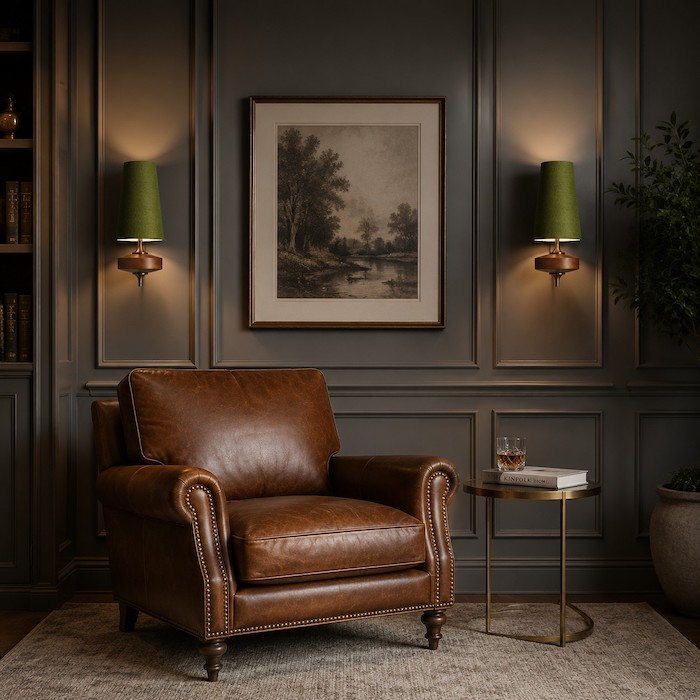
Modern minimalism relies on absolute precision; there are no ornate moldings or trim pieces to hide mistakes. Before installing any wood fixture, you must address three technical variables:
Alignment and Flush Mounting
Ensure that the junction boxes for your fixtures are installed completely flush with the finished wall surface. Wood bases are rigid; if your drywall bows or your plaster is uneven, a square wood fixture will reveal unsightly gaps along the wall line.
Thermal Integrity
Wood is a live material that reacts directly to heat. Traditional incandescent bulbs generate high levels of thermal radiation that can dry out wood grain over time, causing it to split, warp, or discolor its surrounding finishes. Ensure any wood lighting fixture you source utilizes advanced LED technology. LEDs emit minimal heat, protecting both the timber structure and any sensitive fabric shades.
Moisture Barriers
If your modern space uses concrete and stone in a bathroom or open kitchen, specify that your wood fixtures have a commercial-grade moisture barrier, such as a dead-flat marine varnish or multi-coat polyurethane, to block humidity absorption.
Step 5: Avoid Common Design Mistakes
To maintain a sophisticated, high-end residential look, steer completely clear of these three common pitfalls:
Mistake 1: The "Cabin Effect" (Wood Overload)
The primary rule of accent design is restraint. Do not introduce more than two distinct wood species within a single visual field. If you have a grey polished concrete floor, adding a walnut media console, an oak dining table, and cherry wood light fixtures creates a chaotic visual environment. Stick to one dominant wood tone and use a secondary tone only for small, precise accents.
Mistake 2: High-Gloss Lacquer Violations
Never use high-gloss or shiny yellow varnishes on wood fixtures in a modern interior. High-gloss finishes reflect light sources in harsh, specular patterns that compete with the clean, diffused look of modern architecture. Always select matte, dead-flat, or natural oiled finishes that showcase the authentic texture of the timber.
Mistake 3: The Floating Artifact
Placing a single, tiny wood fixture on a vast, open concrete or white wall makes it look accidental. A small wood fixture must be anchored by context. Pair it with a linear architectural feature, place it intentionally above a minimalist console table, or align it precisely with structural windows.
Final Checklist
Before purchasing any wood fixture for your contemporary space, cross-reference your selection with this technical checklist:
| Check | Verification Criterion |
|---|---|
| ☐ | Have I confirmed that the wood species has a cool or neutral undertone to match my grey/white surfaces? |
| ☐ | Is the grain pattern linear (Rift-Sawn/Quarter-Sawn) rather than wavy or rustic? |
| ☐ | Does the fixture include a modern structural material (metal, linen, glass) to tie into the room's architecture? |
| ☐ | Have I verified that the mounting substrate can support the weight of a solid timber fixture? |
| ☐ | Is the light source purely LED-compatible to avoid thermal degradation of the wood? |
| ☐ | Does the product depth comply with comfortable clearance pathways (especially in narrow hallways)? |
Recommended Products & Collections
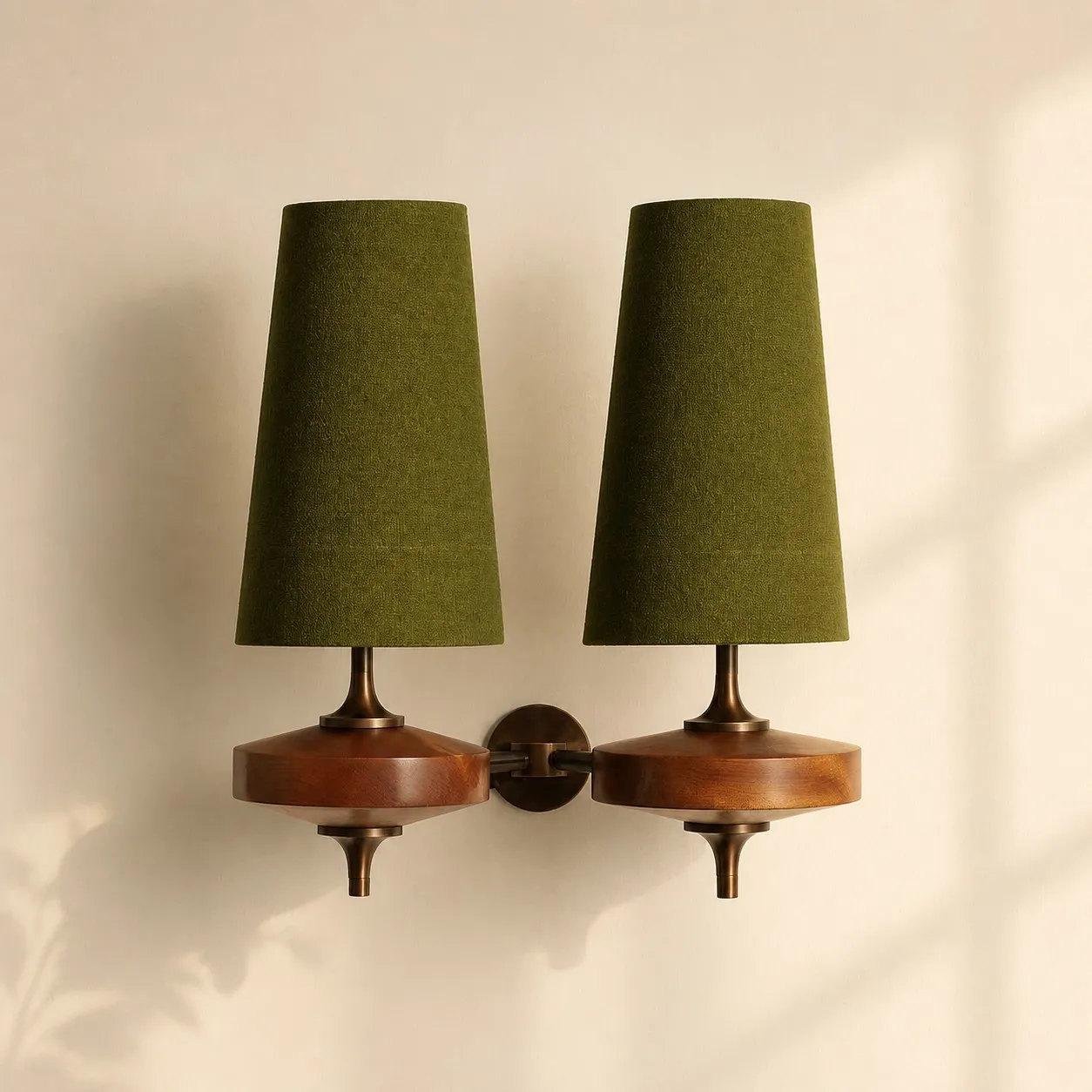
How to Avoid Monotony in Minimalist Spaces? The Decorative Magic of Modern Wood Wall Sconces with Fabric Shades. When selecting a fixture that perfectly embodies all the rules of material bridging, geometric precision, and thermal safety, look no further than the Hour Rho Wall Lamp - Modern Wood Wall Sconce with Fabric Shade.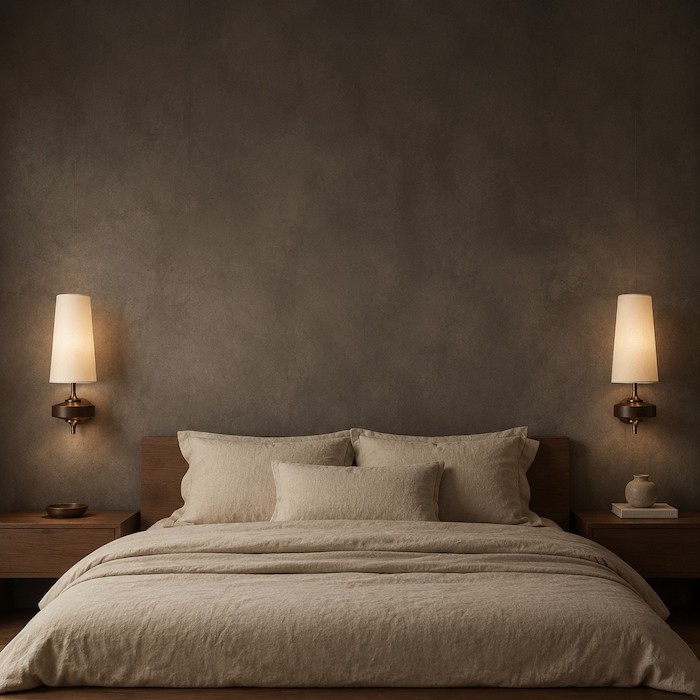
This fixture is a masterclass in modern balance. It features a finely milled, structural solid wood base that provides an organic anchor against cold drywall, concrete, or stone surfaces. Rather than overwhelming the space, the wood grain is beautifully counterbalanced by a clean, geometric fabric shade. This shade serves a critical architectural function: it dampens the harsh, cold reflections common in minimalist rooms by diffusing a soft, ambient glow.
Because it utilizes an advanced, low-heat LED layout, the integrity of both the premium wood casing and the fabric shade remains perfectly preserved over time. For those seeking to resolve the coldness of an entrance corridor or add localized warmth to a minimalist living room seating area, the Hour Rho Wall Lamp is a pristine, ready-to-install solution.
Explore more tailored lighting options by browsing our complete Wall Lighting Collection.
FAQ
A: Yes, but you must limit it strictly to two types and create a clear hierarchy. One wood must be dominant (e.g., covering 80% of your wood elements, like a large white oak floor), and the second must be a distinct contrast accent (e.g., 20%, like a dark walnut Hour Rho Wall Lamp). Ensure both woods share a similar underlying color temperature (both neutral-cool or both neutral-warm).
A: Not at all. In fact, wood fixtures often look better in rooms without wood floors. In a space with polished concrete, epoxy resin, or stone flooring, a well-placed wood wall fixture or floating shelf acts as a brilliant, unexpected pop of organic texture that prevents the room from looking clinical.
A: Minimalist spaces rely on pristine surfaces. Dust wood fixtures weekly with a dry, anti-static microfiber cloth. Avoid all commercial aerosol furniture polishes, which contain silicones that build up a artificial, greasy shine. Once a year, if the wood appears dry, apply a microscopic layer of specialized furniture wax or oil matching the original matte finish.