



Best Wall Lights for Narrow Hallways: Size and Spacing Before You Buy
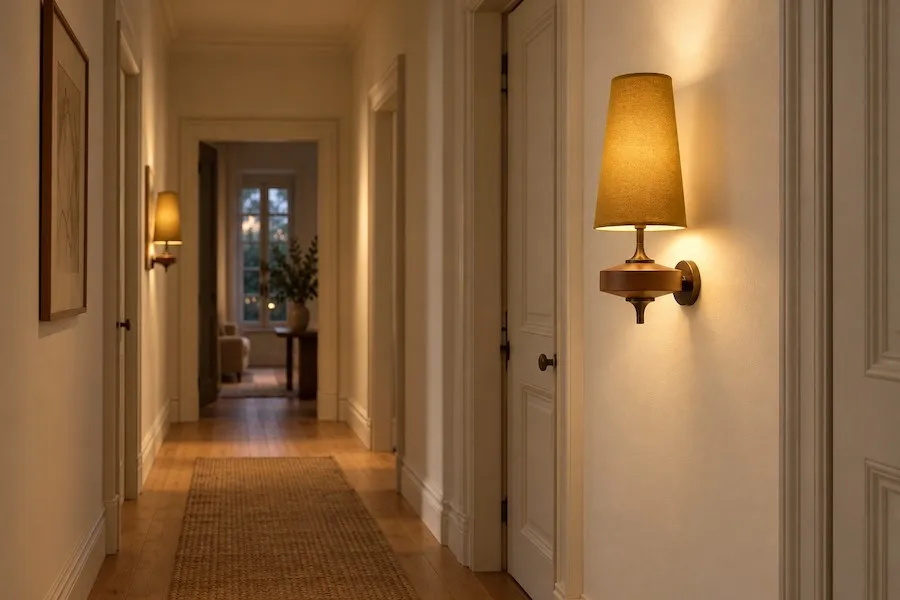
Narrow hallways need light, but they have very little spare depth for a fixture. The right hallway wall lights make the route feel legible and welcoming; the wrong size can catch a shoulder, interrupt a door swing or turn a useful passage into an obstacle course. The most reliable approach is to measure the clear path first, then choose a fixture whose projection and rhythm suit that path.
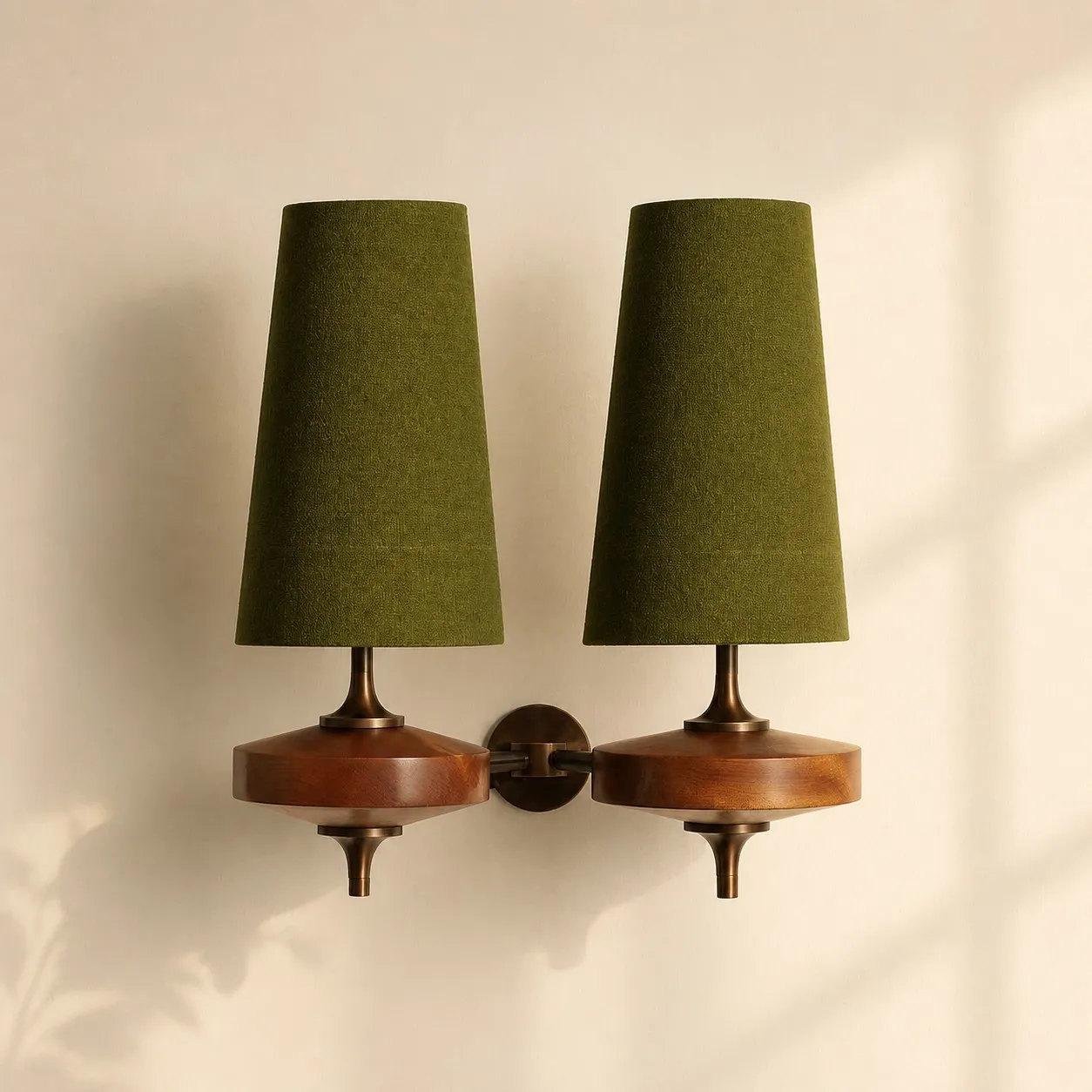
As a practical example, review the Hour Rho Wall Lamp in its two listed widths: a single version at approximately L19 x H35 cm and a double version at approximately L35 x H35 cm. Those dimensions are not interchangeable. The single form can be easier to place on a tight return wall, while the wider form needs a longer uninterrupted section.
Quick answer: choose rhythm before decoration
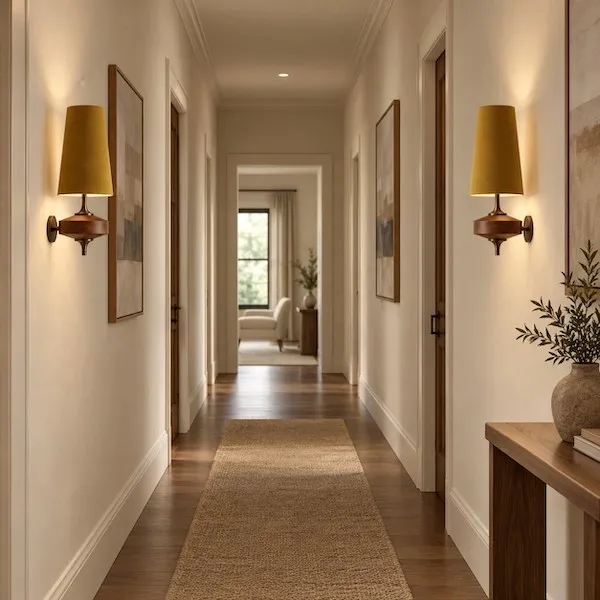
For a very narrow hall, start with the smallest width that still reads clearly from the entrance. Use one fixture at a visual pause, or repeat compact fixtures only where the wall remains clear of doors, frames and shelving. On a long, relatively straight hall, a wider double fixture can anchor a larger wall section, but it should not be forced between two openings.
Spacing is a composition decision rather than a universal number. Stand at both ends of the hallway and mark possible centres with removable tape. If the marks look irregular from either direction, adjust them before an electrician makes a connection. The related single vs double wall sconce guide can help when the choice is between one compact silhouette and a broader focal point.
Measure the passage, not only the wall
- Record the clear walking width. Measure from the finished wall to the nearest fixed projection, such as a handrail or radiator. Do this at the fixture height, not just at the floor.
- Map every moving element. Draw door swings, cupboard doors and wardrobe doors on the plan. A sconce that looks safe when a door is closed may be awkward in daily use.
- Measure each wall pocket. Note the distance between corners, architraves, switches and frames. The available pocket, rather than the total hallway length, determines the maximum fixture width.
- Test the height visually. Use a paper rectangle in the product's approximate dimensions. Walk past it with a bag or coat and check sightlines from the stairs and adjacent rooms.
For a complete room-to-room planning approach, link this article with the European living room wall-light buyer's guide. The same tape-test method prevents a beautiful fixture from being oversized once furniture and trim are included.
Single or double: how the Hour Rho sizes read
The Hour Rho single is approximately 19 cm wide and 35 cm high. Its narrower footprint can suit a short wall between a door casing and a corner, or a sequence where the hallway already contains strong artwork. The double is approximately 35 cm wide and 35 cm high. Its broader horizontal presence can feel balanced on a longer blank wall, but it needs more breathing room around the shade and body.
Do not infer the exact electrical arrangement from the silhouette alone. Confirm the selected listing and installation instructions, including the socket version. The product page describes E12 or E14 options, a 110-240V range and a maximum 40W rating, with the bulb not included. That information belongs on the buying checklist, not in an assumption about how many light sources the variant contains.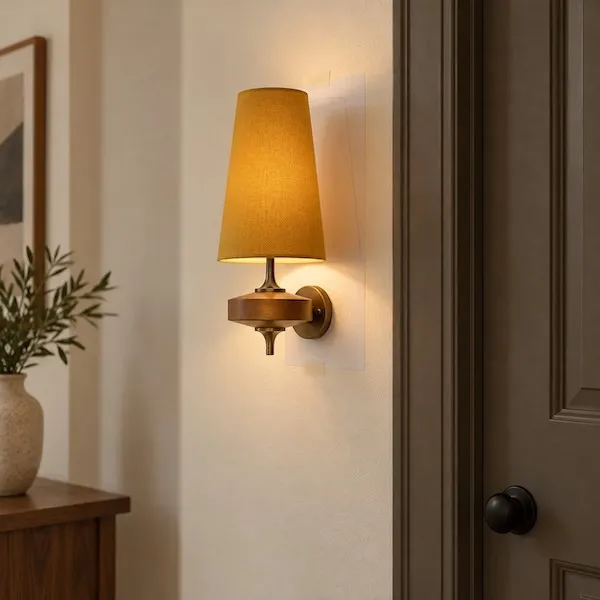
When the wall is short, review the Hour Rho single-width option against the tape outline. When a long wall has a natural pause, review the double-width option without mixing the two measurements.
Spacing that feels intentional
Good hallway spacing is read as a steady visual beat. Align fixtures with meaningful points such as a console, artwork centre or a change in flooring. Keep the same centreline where possible, but let door openings interrupt the sequence rather than squeezing a light into a leftover gap. In a short hall, one well-placed sconce usually feels calmer than two competing with a mirror and a switch plate.
Check the view from the living room and stair landing. A shade that is comfortable when approached straight on can appear bright from a side angle. The fabric shade on Hour Rho can soften the source visually, yet shade material does not remove the need to test the actual sightline and bulb choice.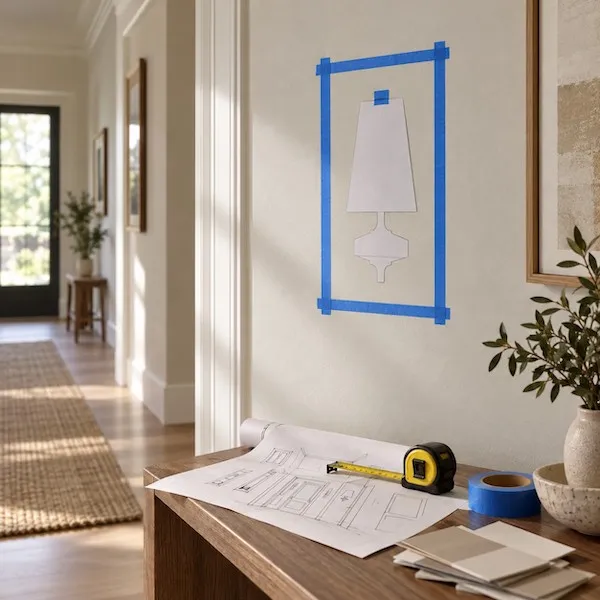
Finishes and maintenance in a busy route
Hallways are high-contact spaces, so select a finish that supports the rest of the home. Hour Rho is listed in Walnut, Antique Brass, White, Green and Red. Walnut can connect to timber flooring or a console; Antique Brass can echo a handle or picture frame. White can visually recede, while Green or Red can turn a quiet wall into a deliberate accent.
Leave access for dusting and bulb replacement. Before ordering online, read the current delivery and return information for your country and keep the selected size and colour in the confirmation. The guide to buying wall lights online in Europe expands this final check, including packaging and installation questions.
Once the tape test works from both ends of the passage, open the Hour Rho listing and select the single or double size that matches your measured wall pocket.
For an efficiency-focused winter renovation, use the checks in the energy-efficient wall-lighting guide alongside your hallway measurements.
FAQ
Is a single wall light better for a narrow hallway?
Often, yes, when wall pockets are short or doors are close together. Choose a double only when the wider outline has clear space and a visual reason to be there.
How far apart should hallway sconces be?
There is no universal spacing that fits every plan. Mark centres on the wall, check door swings and view the sequence from both ends before final wiring.
Will a 35 cm-high sconce feel too large?
Height alone does not decide scale. Compare the 35 cm height with the wall pocket, trim and eye-level sightline using a paper template.
What should I verify for an Hour Rho hallway installation?
Confirm the chosen single or double dimensions, the E12 or E14 socket version, 110-240V range, 40W maximum and bulb-not-included status. Ask a qualified electrician about the actual connection.