



Fabric Shade Wall Lights: Pros, Cons and What to Check Before Buying
A fabric shade wall light can make a room feel softer within minutes, but the material deserves a more careful buying check than a quick style decision. The shade affects what you see from a sofa, how the fixture sits against the wall and how easy it is to clean or relamp. The best choice balances a comfortable appearance with clear information about the socket, wattage, dimensions and care.
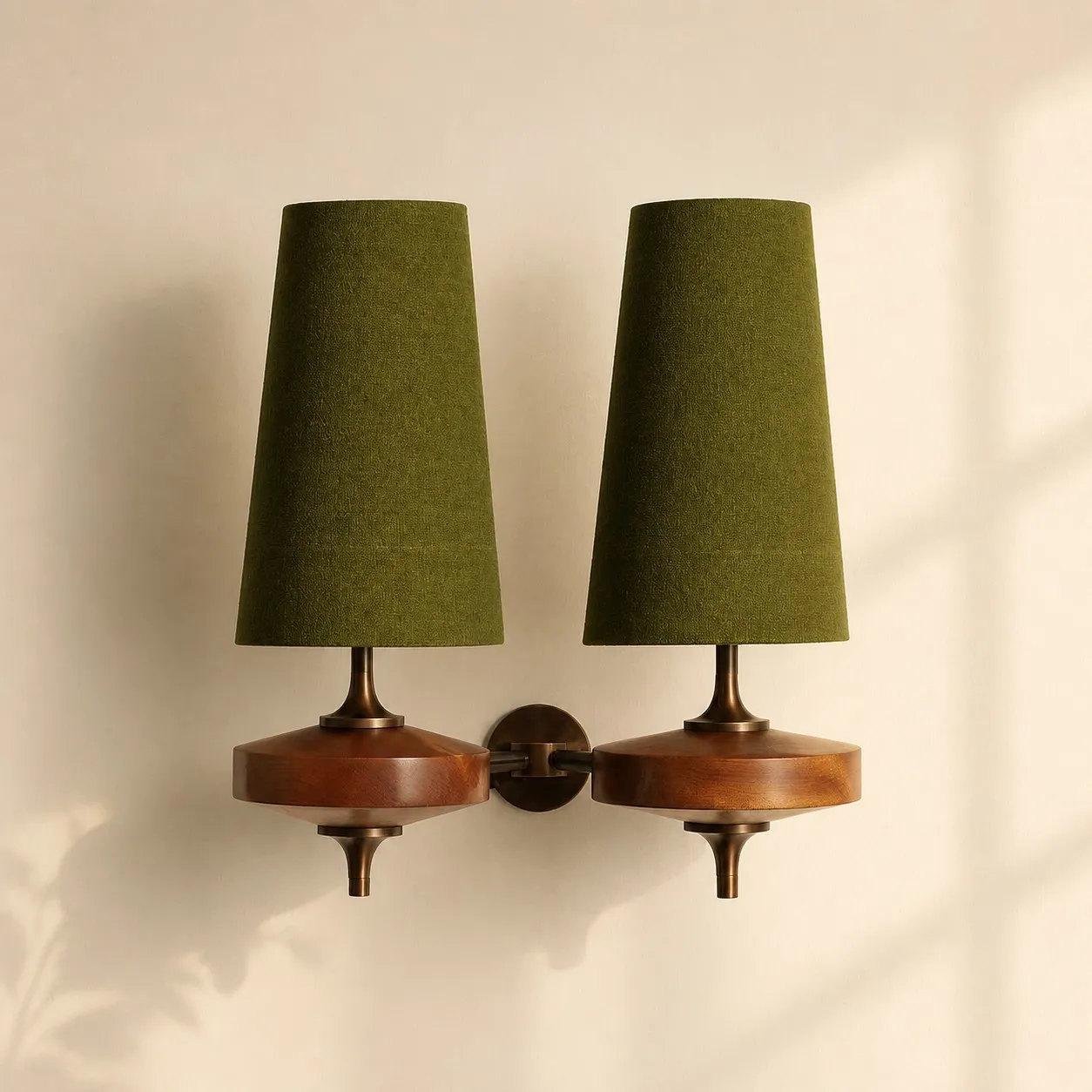
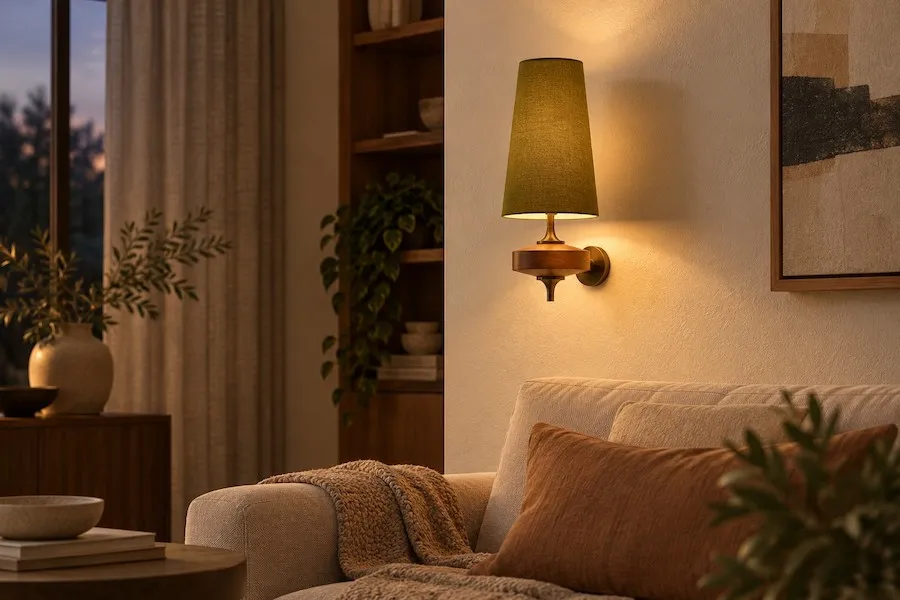
Review the Hour Rho Wall Lamp as a useful example: its listing identifies a fabric shade paired with a wooden and metal lamp body. That combination shows why “fabric shade” is not a complete description: the shade controls the visual softness, while the body still determines the room's material character. The listing does not identify the fibre composition or a specific cleaning chemical, so those details should never be guessed.
Pros and cons at a glance
| Potential benefit | What to verify |
|---|---|
| A gentler-looking source than an exposed bulb | Check the shade shape from seated and standing sightlines |
| Adds textile texture to a hard wall | Confirm the actual fabric, colour and seam quality in the listing |
| Works well as an evening or accent layer | Do not assume it will illuminate the entire room |
| Can hide the bulb visually | Leave enough access to replace the bulb and follow the maximum rating |
What fabric changes about the light
A shade places a layer between your eyes and the lamp. That can reduce the sense of a bare point source and make a wall light more comfortable beside a sofa, bed or dining seat. The effect depends on the weave, lining, colour, shape and bulb, so use “soft” as a design expectation rather than a measured performance claim.
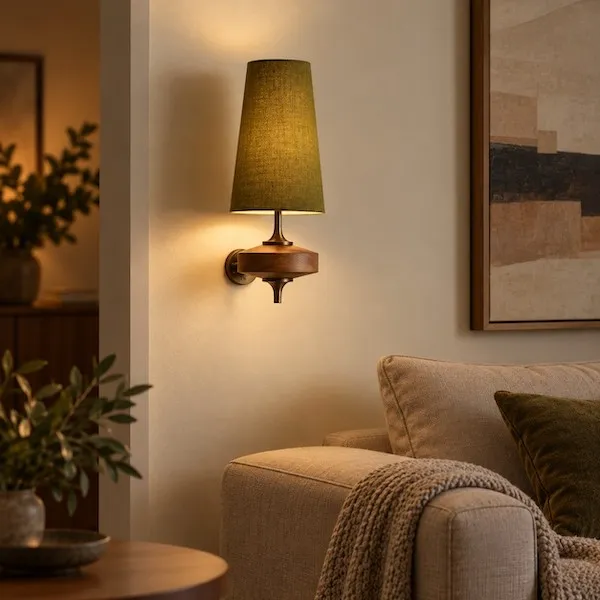
Fabric also changes the daytime appearance. A wall light can act like a small piece of upholstery, linking curtains, cushions or a headboard to the wall. Hour Rho adds a wood-and-metal frame around that textile element, making it suitable for rooms where an all-metal fixture would feel too sharp. For a broader room selection, see the European living room wall-light guide.
The less glamorous side: dust, access and heat
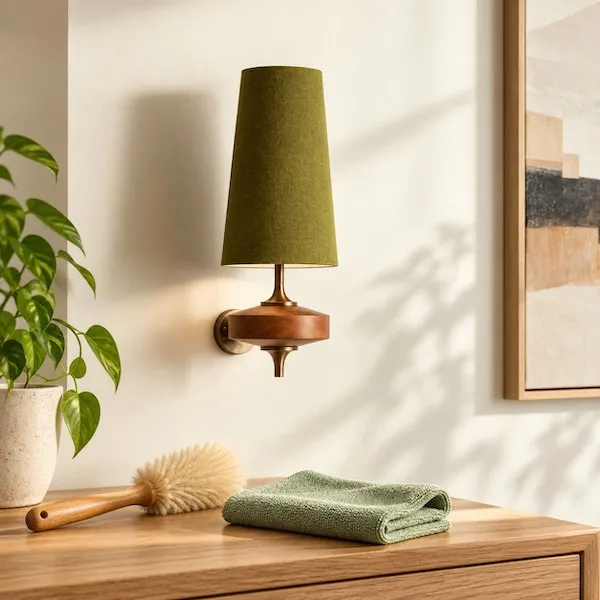
Textile surfaces can show dust more readily than smooth metal or glass. That does not make them impractical; it means the cleaning method matters. Before purchase, look for the supplier's care instructions and confirm whether the shade can be dusted in place. Do not introduce water, solvent or a household spray unless the supplied instructions explicitly allow it. For Hour Rho, the fabric type and approved cleaning product are not specified in the brief, so follow the care information that arrives with the selected item.
Bulb access is another everyday issue. Check whether you can remove the shade or reach the socket without twisting the fabric or leaning a ladder against the wall. The Hour Rho listing describes E12 or E14 options, a 110-240V range, a maximum 40W rating and a bulb-not-included status. Confirm the exact order variant before buying a replacement bulb; a shade does not make an incorrect socket safe.
Use the rated bulb and leave the clearance described in the instructions. If the lamp becomes unexpectedly hot, smells unusual or shows damage, switch it off and ask the supplier or a qualified electrician for next steps. Avoid converting a style decision into an electrical assumption.
Five checks before you click Buy
- Shade dimensions: Compare height and width with the wall pocket, artwork and furniture below.
- View angle: Stand where people actually sit and walk. The bulb should not dominate the sightline.
- Socket and rating: Match E12 or E14 to the selected SKU, confirm 110-240V suitability and stay at or below 40W.
- Care route: Save the supplied cleaning instructions and ask what to do if the shade arrives marked or creased.
- Replacement route: Confirm that a future bulb can be changed without dismantling the entire wall fitting.
If you are comparing the tactile benefit of fabric with a harder fixture, the wood wall lights versus metal wall lights comparison helps separate material mood from maintenance assumptions. For bulb shape and brightness questions, continue to the E14 LED bulb guide for wall lights.
When Hour Rho is a sensible fit
Hour Rho suits a buyer who wants a fabric shade but does not want a purely soft or traditional silhouette. The wooden and metal body gives the wall some structure, while the listed Walnut, Antique Brass, White, Green and Red choices allow the fixture to either blend or make a controlled accent. Review the live Hour Rho specification and finish options before ordering, especially if the lamp will sit close to a high-contact route.
It may be less suitable when the wall needs a sealed, wipe-clean surface or when the only available position leaves no access for relamping. In those cases, choose a different shade construction or redesign the location rather than hoping routine maintenance will be easy.
If the practical checks fit your room, review the Hour Rho listing one more time for the selected finish, socket version and current care information before checkout.
For a final colour-temperature decision, compare fabric-shade ambience with the recommendations in the 2700K versus 3000K wall-light guide.
FAQ
Do fabric wall lights collect dust?
They can show dust more than smooth surfaces. Use only the care method supplied for the specific shade and avoid unapproved liquids.
Are fabric shades safer than exposed bulbs?
A shade can hide the direct view of a bulb, but safety still depends on the correct bulb, clearance, wiring and installation instructions.
Can I wash the Hour Rho shade?
The available specification does not confirm a washable fabric or a cleaning agent. Follow the product's supplied care instructions and ask OME before wet cleaning.
Is the bulb included?
No. The listed specification says the bulb is not included. Verify the E12 or E14 version and the 40W maximum.