



Dimmable Wall Lights: Compatibility Checklist Before You Buy
A dimmable wall light is not a single feature that can be switched on by choosing a bulb with the word “dimmable” on its box. The lamp, bulb, wall control, wiring and supply must work as one combination. Before you order, confirm what the fitting supports, identify the exact bulb base and check whether the control system is compatible. If any part is unclear, treat dimming as unconfirmed rather than guessing.
What “Dimmable” Must Mean in Practice
For a conventional wall light, dimming changes the electrical power delivered through a control. The lamp holder must accept the bulb, the bulb must be designed for the control type, and the wiring and switch must be installed correctly. A compatible combination should change light level smoothly without persistent flicker, buzzing, delayed start or unexpected shut-off. The U.S. Department of Energy LED lighting guidance is a useful starting point for separating bulb performance and energy use from assumptions based on wattage.
Do not confuse a wall light that can be switched on and off with one that is approved for dimming. A product photograph may show a decorative wall switch without proving compatibility. Look for a current manufacturer statement for the exact lamp and market, not just a generic claim about the product family.
The Five-Part Compatibility Chain
| Part | Question to answer | Evidence to keep |
|---|---|---|
| Fixture | Does the selected wall-light variant permit dimming? | Current product specification or written seller confirmation |
| Socket and bulb | Does the bulb base and shape fit the holder and shade? | Bulb packaging, socket marking and maximum wattage |
| Dimmer | Is the control designed for this bulb type and load? | Control instructions and compatible-load list |
| Wiring | Does the circuit and switch arrangement suit the installation? | Installer assessment and local requirements |
| Supply | Does voltage match the selected market and order? | Variant, voltage range and order confirmation |
Start with the Lamp and Socket
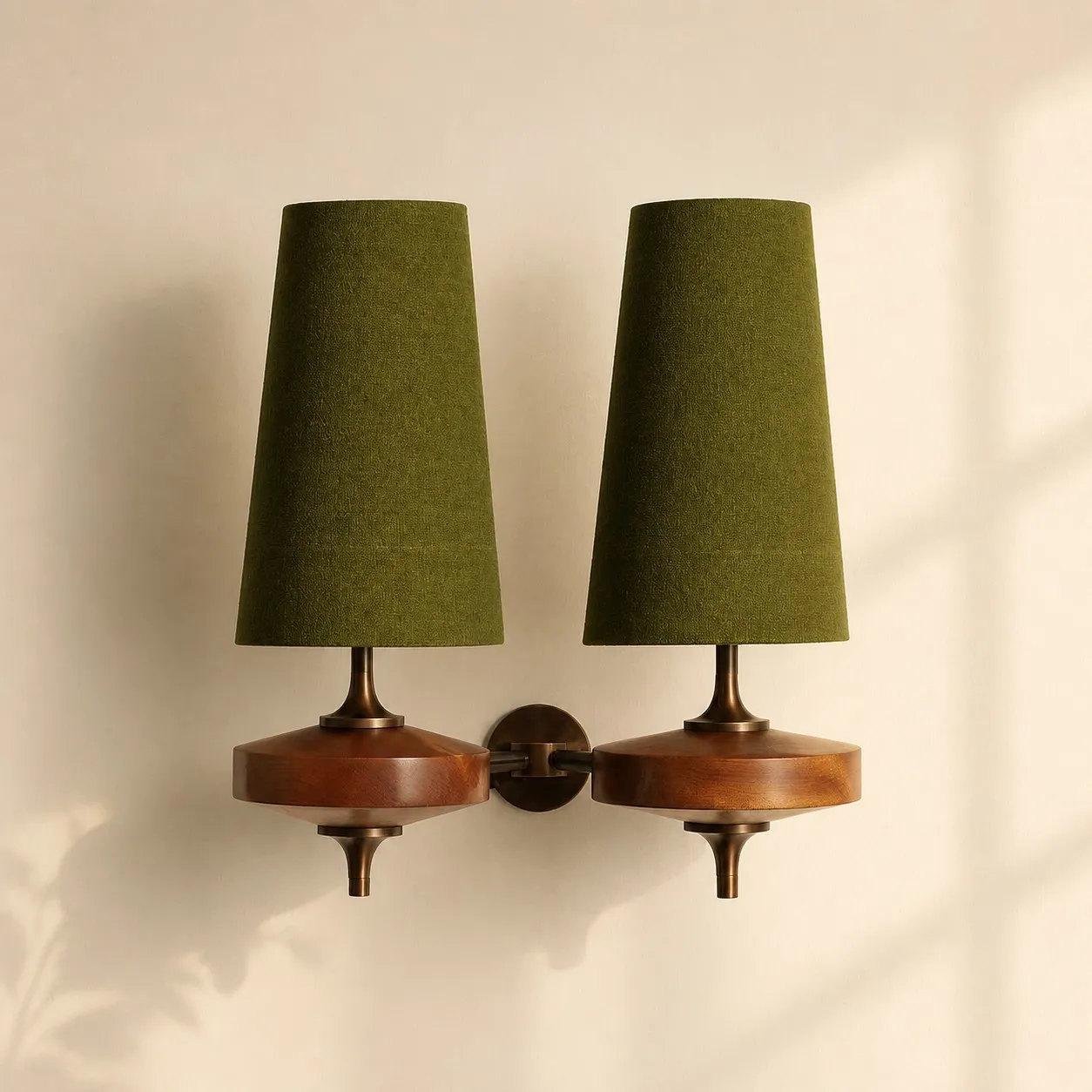
Hour Rho is listed with E12 or E14 socket options, 110-240V and a maximum 40W rating. Those are important checks, but they are not a dimming approval. Confirm the exact destination, variant and socket before shopping for a bulb. The listing also says the bulb is not included, so the bulb's own dimming claim and physical envelope become part of your responsibility.
A fabric shade adds another practical check. A bulb can be electrically compatible yet too long, too wide or too hot for the available space. Compare the bulb shape with the shade opening, follow the fitting's care information and never exceed the marked maximum. The E14 LED bulb guide covers base, lumens, shape and wattage before you add a bulb to the order.
Keep the variant in view while you plan the control. Open the Hour Rho listing, select the destination and confirm E12 or E14, voltage and maximum power before you buy a bulb or dimmer.
Check Hour Rho socket and power detailsMatch the Bulb to the Dimmer
LED bulbs can behave differently from older incandescent loads. A dimmer may have a minimum load, a specific LED compatibility list or a requirement for a neutral connection. Some combinations reach a low level smoothly; others jump, shimmer or stop before the control reaches its end position. Read the bulb and dimmer instructions together, and record the model numbers before installation.
If you want a warmer evening scene, colour temperature and dimming are separate decisions. A 2700K bulb can be dimmable, while a 3000K bulb can be non-dimmable, depending on the product. Compare the room-use advice in the 2700K versus 3000K wall-light guide, then verify the bulb's control requirements.
For a new hardwired circuit or a change to an existing switch, use local electrical guidance and a qualified installer. Electrical Safety First's home-lighting guidance provides practical safety context, but it does not replace the requirements that apply in your location.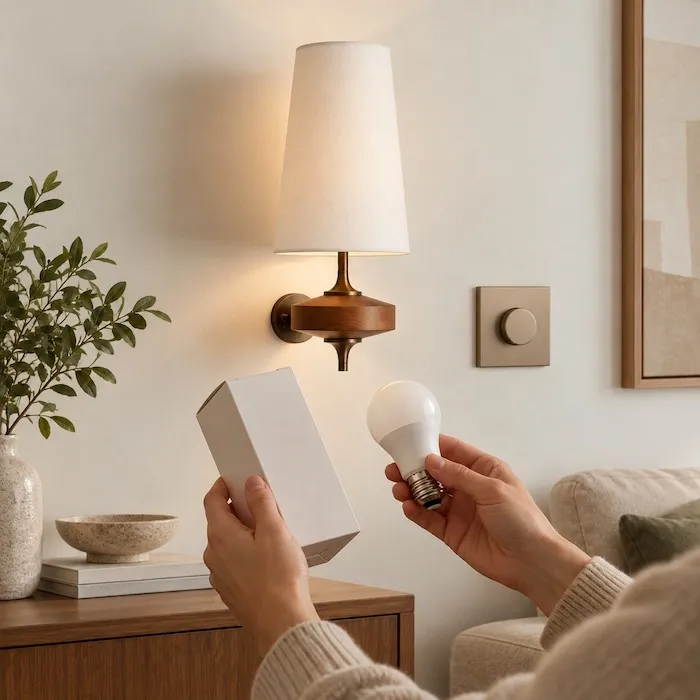
Symptoms of a Mismatch
- Flicker: The bulb, dimmer, load or connection may be unsuitable. Do not treat repeated flicker as a normal feature.
- Buzzing: Noise can indicate an unhappy lamp-control combination or a mechanical issue. Switch off and investigate safely.
- Dead travel: If the light turns off before the slider reaches its lowest point, the minimum-load range may not suit the bulb.
- Heat or smell: Stop using the fitting and check the lamp, bulb and installation with a qualified person.
Never solve a symptom by fitting a higher-wattage bulb or bypassing a protective component. A dimmer that works on one fitting is not proof that it is appropriate for another.
Need a clear purchase record? Save the selected Hour Rho variant, bulb model and proposed control together. That makes it easier to ask the seller or installer one precise compatibility question.
Review the Hour Rho product specification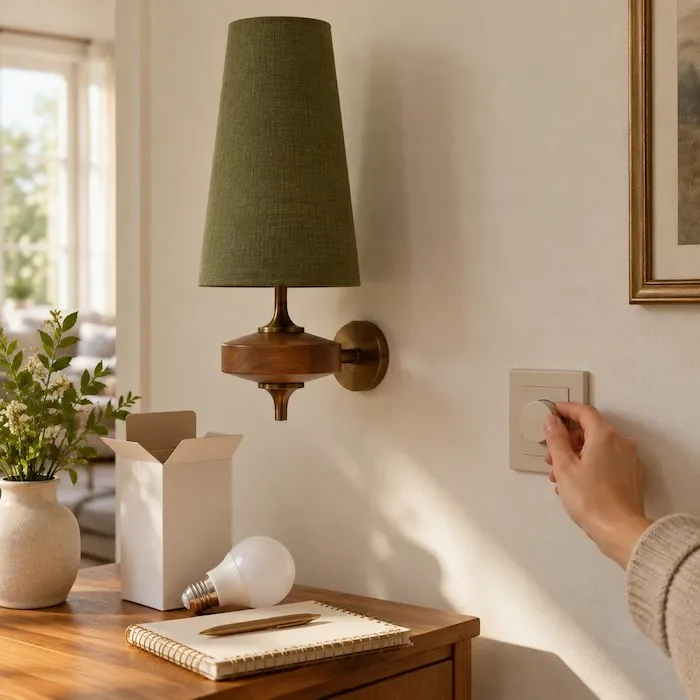
What to Confirm Before Checkout
- Write down the destination country and the exact Hour Rho variant.
- Confirm E12 or E14, 110-240V range, MAX 40W and bulb-not-included status.
- Choose a bulb whose base, shape, output and dimming claim match the fitting.
- Check the proposed dimmer's LED load range and installation instructions.
- Ask a qualified installer to review wiring, switch arrangement and local requirements.
- Keep the order, packaging and compatibility notes for future replacement.
For the wider online purchase workflow, the European wall-light checkout checklist is the relevant companion topic.
If your plan includes a current smart-lighting trend, the Decorex 2026 smart-lighting buyer checklist can help separate a traditional lamp's confirmed specification from an additional control system. Do not treat a trend article as proof of compatibility.
Make the final control decision from verified information. Confirm the selected Hour Rho configuration and ask for written dimming guidance before an electrician changes the circuit.
Open Hour Rho before orderingFrequently Asked Questions
Can I use any dimmable E14 LED bulb?
No. The bulb must fit the exact socket and shade, stay within the lamp limit and work with the proposed dimmer.
Does Hour Rho automatically support a wall dimmer?
The supplied product information does not confirm that. Verify the exact variant and control combination before installation.
Why does an LED wall light flicker when dimmed?
Possible causes include an incompatible bulb, dimmer, load range or connection. Stop guessing and check the complete system.
Can I install the dimmer myself?
Use a qualified installer where wiring or local rules require it. Follow the lamp, bulb and control instructions together.