



2700K vs 3000K Wall Lights: Which Warm White Should You Buy?
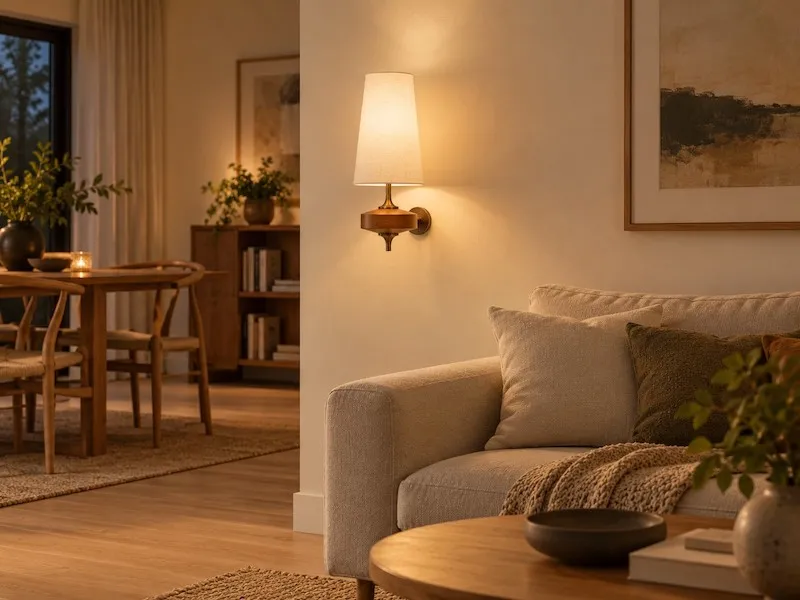
Choose 2700K when you want a softer, candle-like atmosphere for a bedroom, lounge or dining corner. Choose 3000K when you want warm light that feels a little clearer for circulation, reading or a kitchen-adjacent wall. Neither number is automatically brighter: colour temperature describes the appearance of white light, while brightness depends on the bulb's output, shade and room surfaces.
What the Kelvin Number Actually Changes
Kelvin, written as K, is a description of correlated colour temperature. A lower number generally looks warmer and more amber; a higher number within the warm-white range looks less orange and more neutral. The U.S. Department of Energy LED lighting guidance also separates a bulb's energy use from its light output, which is why wattage alone cannot tell you whether 2700K or 3000K will look brighter.
In a wall light, the shade and wall colour alter that impression. Fabric can soften the source and make either temperature feel calmer. A cream wall may reinforce 2700K's warmth, while a cool white wall can make 3000K appear more balanced. Compare a real bulb through the actual shade, not just a colour chip on a screen.
2700K and 3000K at a Glance
| Decision point | 2700K | 3000K |
|---|---|---|
| Visual character | Warm, intimate and slightly amber | Warm white with a cleaner, less amber feel |
| Good starting rooms | Bedroom, lounge, dining nook and relaxed seating | Hallway, study corner, kitchen-adjacent wall and mixed-use room |
| Material pairing | Brings out walnut, linen, leather and warm paint | Keeps white walls, brass and mixed finishes more defined |
| Common risk | Can look too yellow beside cool finishes | Can feel less cosy if the room is intended for winding down |
Choose by the Room's Evening Job
Ask what people will do under the wall light after sunset. If the fixture is mainly a low-level companion to a sofa or bed, 2700K usually supports a quiet mood. It can also make timber and warm textiles feel visually connected. That is a preference, not a promise of better colour rendering; check the bulb's colour-rendering information when accurate appearance matters.
For a hallway, 3000K can make steps, artwork and door hardware read more clearly without becoming stark. In a room that changes jobs, select the temperature that suits the longest or most important activity, then use separate layers for reading or cleaning. The fabric-shade wall-light guide explains how shade coverage changes the perceived softness of either option.
A bedroom with a reading chair may need a different answer from the bedside. Keep the ambient wall light warm, then give the task area its own source if the bulb and shade cannot provide comfortable detail. For bedroom placement and glare checks, use the bedroom wall-light buying guide.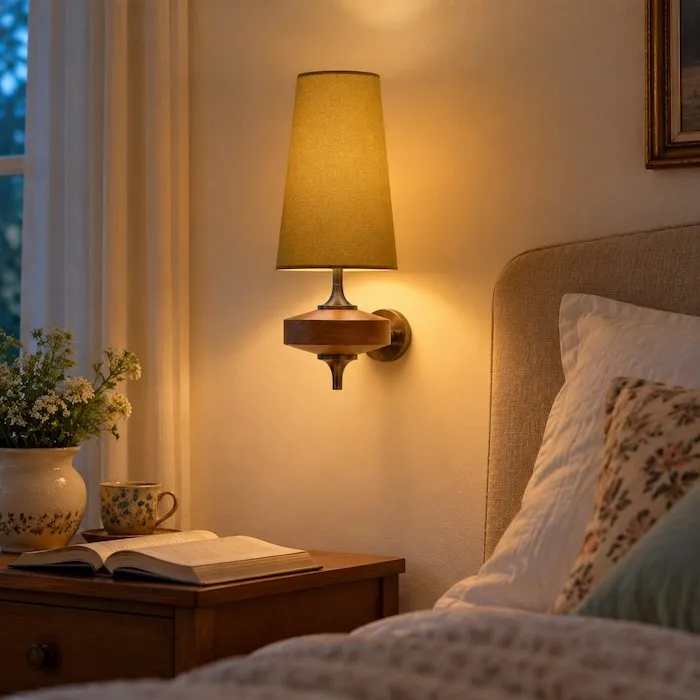
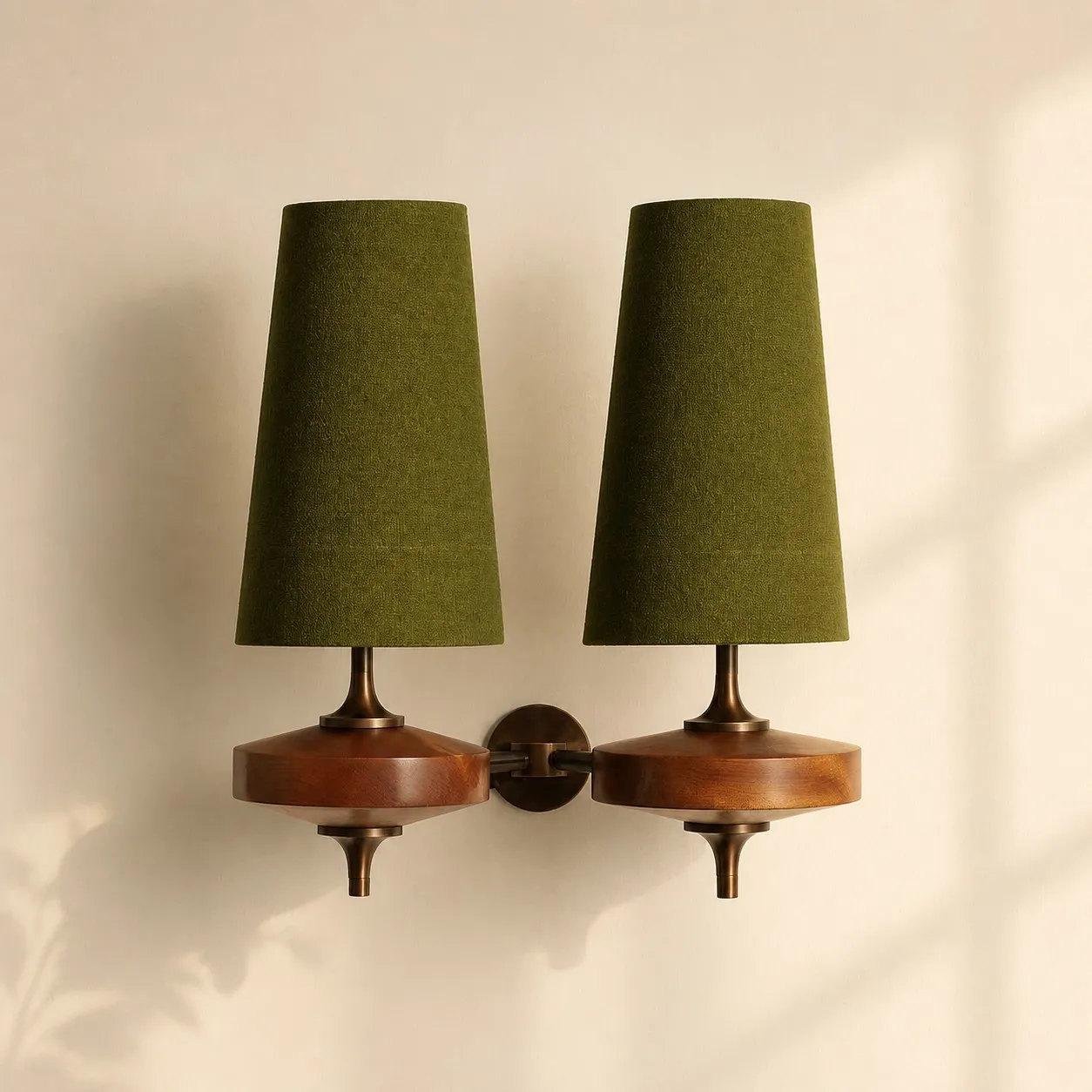
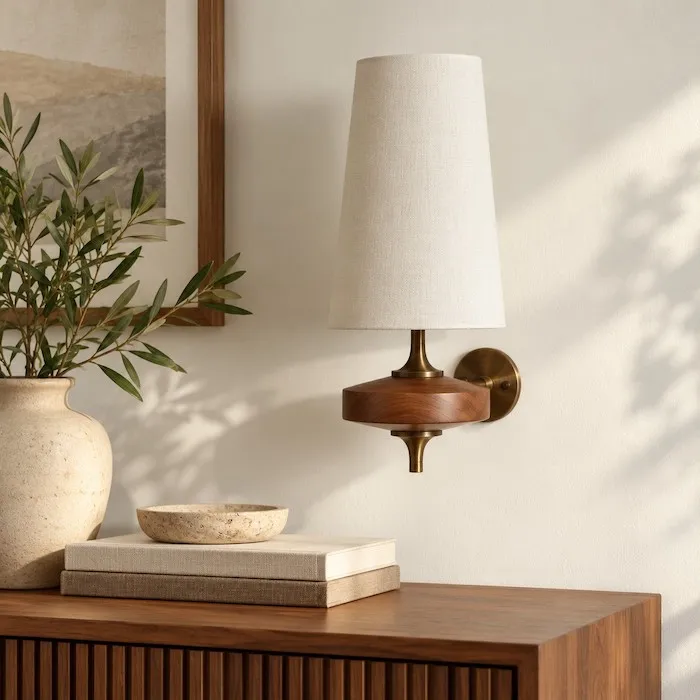
Use the product page to make the colour decision concrete. Hour Rho combines a fabric shade with a wooden and metal body, so compare a 2700K and 3000K bulb through the shade against your actual wall and furniture samples.
Review Hour Rho finishes and variantsCheck Bulb, Socket and Shade Together
Colour temperature is only one part of the purchase. Confirm the exact socket first: the Hour Rho listing describes E12 or E14 configurations, so do not buy an E14 bulb merely because the article keyword says E14. Check the selected market, order record and physical lamp marking. The product page also states that bulbs are not included and that the maximum power is 40W. Stay within the marked limit and choose a bulb shape that clears the shade.
Then compare lumen output and the shade's transmission. A high-output bulb can feel intense behind a small shade even at 2700K, while a lower-output bulb can be too quiet for a long hallway at 3000K. The E14 LED bulb guide covers base, lumens, shape and wattage as a separate check.
Do not treat a warmer colour as proof that a fitting is dimmable. Dimming depends on the lamp, bulb, control and wiring as a complete system. If that function matters, use the dimmable wall-light compatibility checklist before ordering and ask for confirmation where the listing is silent.
Need a measured comparison? Open the Hour Rho listing beside the bulb packaging, confirm E12 or E14, voltage and the 40W maximum, then compare the chosen colour through the real fabric shade.
Check the Hour Rho technical detailsHow Hour Rho's Materials Affect the Choice
Hour Rho is described as a wooden and metal lamp body with a fabric lampshade. Walnut and Antique Brass can make 2700K feel especially enveloping, while White, Green or Red can give either warm-white option a more deliberate accent. The finish list does not tell you the final colour seen in every room, so compare a sample, photograph or live listing with your own paint and flooring.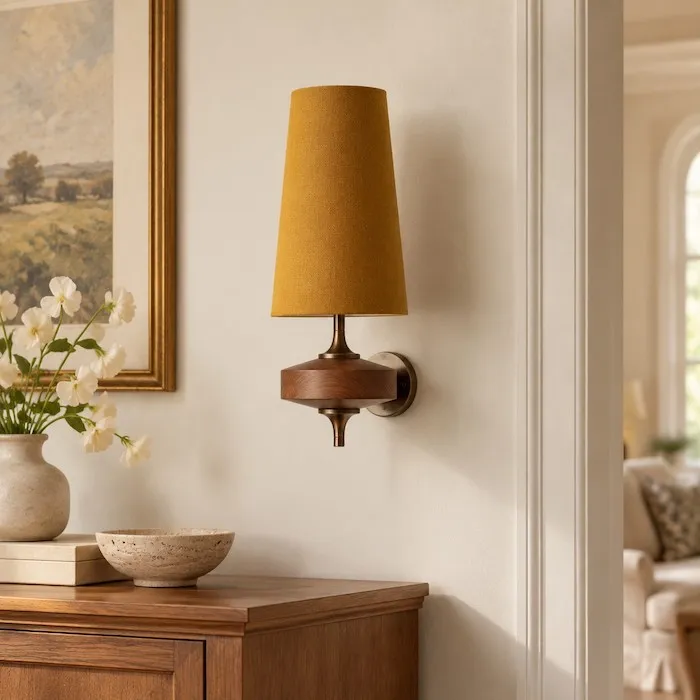
For a balanced scheme, repeat one warm cue rather than matching every metal exactly. A 3000K bulb can keep a brass detail legible against a pale wall; a 2700K bulb can visually join walnut, curtains and upholstered furniture. The right choice is the one that supports the room's job without making the fixture look disconnected when it is switched off.
Ready to choose the warmer white? Compare the selected Hour Rho colour, shade and bulb plan in the room where it will live, then verify the current variant before checkout.
Compare Hour Rho colour optionsFrequently Asked Questions
Is 2700K always better for a bedroom?
No. It is a useful starting point for a relaxed room, but sightline, output, shade and personal preference still matter.
Does 3000K use more electricity than 2700K?
Not by colour temperature alone. Compare the bulb's wattage and output; the Kelvin number describes appearance.
Can I change Hour Rho from 2700K to 3000K?
The supplied information does not confirm a fixed colour temperature. Verify the bulb and exact socket variant before buying.
Will a fabric shade make both temperatures look identical?
No. It can soften both, but the bulb, shade material, wall colour and viewing angle still change the result.