



From Vanity to Kitchen Island: How Alabaster Lighting Expands Your Home’s Visual Horizon
When we talk about "space" in a home, we often focus on square footage. But as a lighting professional, I look at something different: Visual Volume. A room can be physically large but feel cramped if it is filled with heavy, opaque objects that block the eye. Conversely, a small room can feel vast if the lighting is used to soften boundaries and draw the eye toward the vertical planes.
Natural alabaster is a unique material in the designer’s toolkit. Unlike fabric shades that absorb light or metal shades that direct it, alabaster is translucent stone. It glows from within, acting as a source of light that feels light-weight and ethereal. By strategically placing slender alabaster fixtures—from your bathroom mirror to your kitchen island—you can effectively "expand" your home’s visual horizon. Here is how to achieve the look room by room.
The Bathroom: Eliminating Visual Clutter
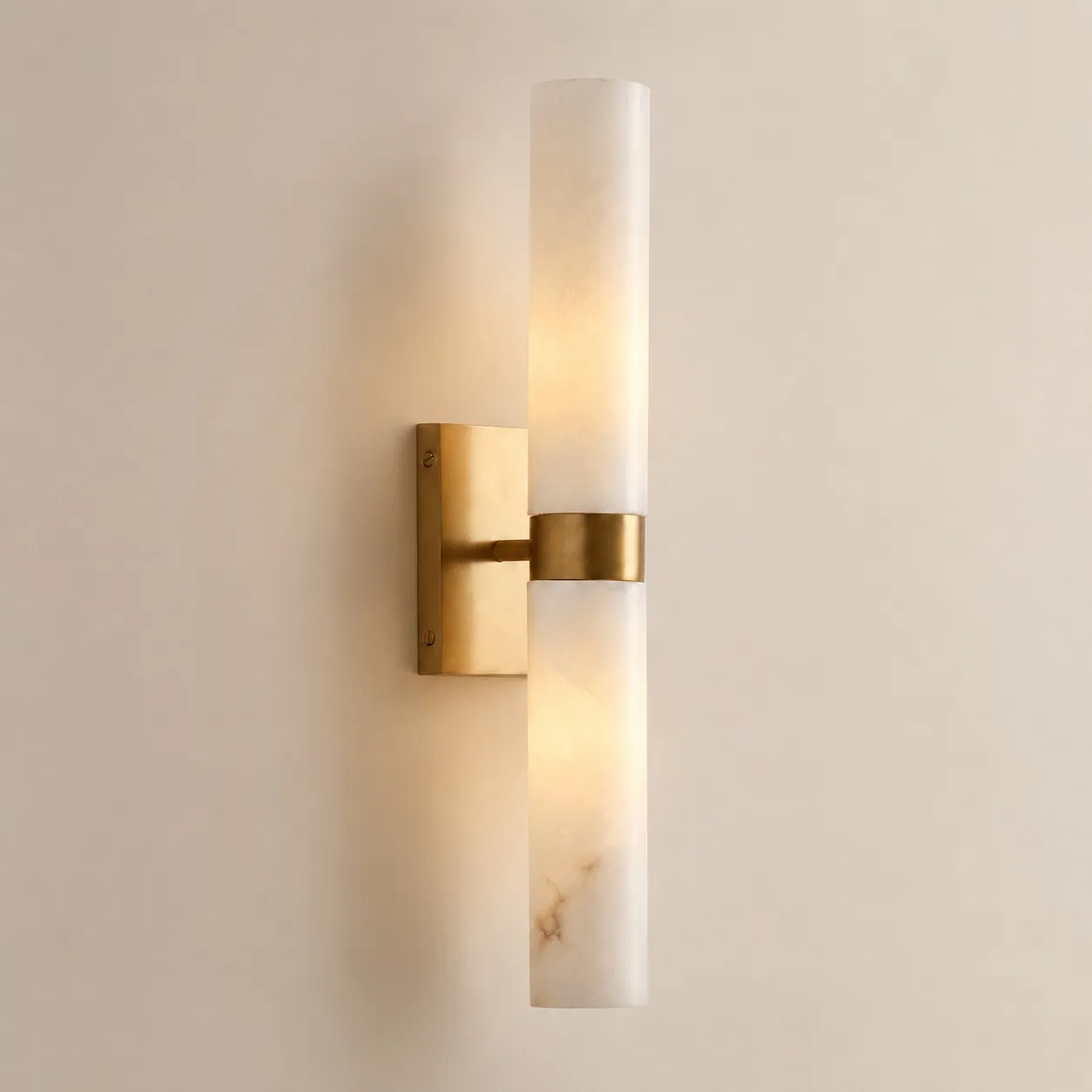
The bathroom is often where we feel the most restricted. Traditional vanity lights are frequently bulky, horizontal bars that "cut" the wall and make the ceiling feel lower. To expand a bathroom, you must emphasize height. By using vertical tube sconces, you create two strong vertical pillars of light.
These vertical lines draw the eye upward toward the ceiling, creating an illusion of loftiness. Because the alabaster stone diffuses the light so softly, it fills the space between the walls with a gentle glow rather than harsh, directional beams. This eliminates the "dark corners" that typically make small bathrooms feel like boxes. The result is a space that feels airier, cleaner, and significantly more expensive.
The Kitchen: Floating Light and Open Views
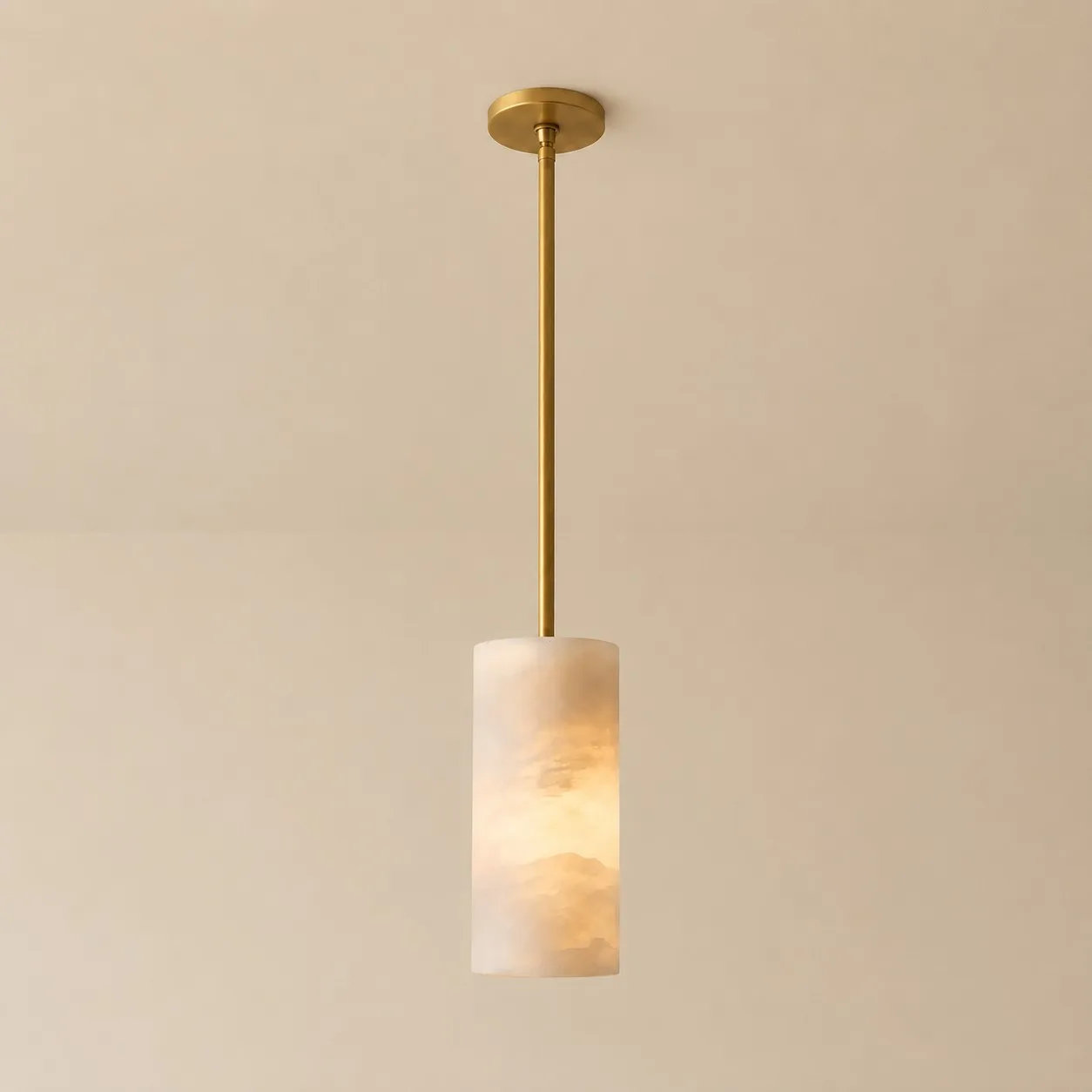
In modern American home design, the kitchen island is the focal point. However, large, bell-shaped pendants can act like "visual anchors," weighing down the center of the room and blocking the sightlines into the living area. To maintain an open-concept feel, you need lighting that provides presence without the bulk.
The cylindrical form of an alabaster pendant occupies very little space, and its natural translucency allows the eye to "pass through" the fixture. When lit, it appears to float like a pillar of light. This transparency keeps the kitchen looking expansive and prevents the "visual traffic jam" that heavy pendants often cause in open-plan spaces.
The Bedroom: Creating a Quiet, Open Sanctuary
Your bedroom should be a place of rest, but oversized bedside lamps can quickly clutter your nightstands and make the room feel busy. To reclaim your space, designers recommend moving the lighting to the walls. But not just any light will do—you need something that provides "soft volume."
A double-tube design provides twice the surface area of glowing stone, which helps wash the walls in light. This "wall-washing" effect blurs the hard edges where the wall meets the ceiling, making the boundaries of the room feel softer and more distant. By mounting these beside the bed, you free up the floor and table surfaces, making the room feel larger and much more serene. Finding The Perfect Match: How to Integrate Eloise Lighting into American Farmhouse and Modern Interiors often starts with these versatile, stone-based fixtures that bridge the gap between rustic texture and contemporary clean lines.
The Science of Translucency: Why Alabaster Works
Why does alabaster work better than glass or metal for "expanding" a room? It comes down to how the material interacts with light. Metal is opaque; it creates a "spotlight" effect that leaves half the room in shadow. Glass is transparent; it allows you to see the bulb, which creates a sharp focal point that captures the eye’s attention and stops it there.
Alabaster is translucent. It captures the light within its mineral structure and spreads it evenly across its entire surface. This creates an "ambient glow" that mimics natural daylight. Because the light is so evenly distributed, it softens the architectural lines of the room. When you soften the lines, the brain perceives the space as being more open and less confined.
Reclaiming the Hallway and Entryway
If you have a narrow hallway or a small foyer, you know the struggle of trying to find decor that doesn't feel like a trip hazard. Slender wall sconces are the perfect solution. By installing a series of alabaster lights along a corridor, you turn a transition space into a high-end gallery.
The repetition of vertical light sources creates a rhythmic pattern that leads the eye forward, making a short hallway feel longer and more intentional. This is the difference between a house that feels "lived in" and a home that feels "designed."
Conclusion
Expanding your home doesn't always require a contractor; sometimes, it just requires a change in perspective. By choosing fixtures that prioritize verticality and translucency—like our curated Alabaster collection—you can remove the visual "weight" from your rooms. Whether it is the soft morning light in your bathroom or the floating elegance over your kitchen island, alabaster lighting is the ultimate way to bring a sense of luxury and limitless space into your daily life.