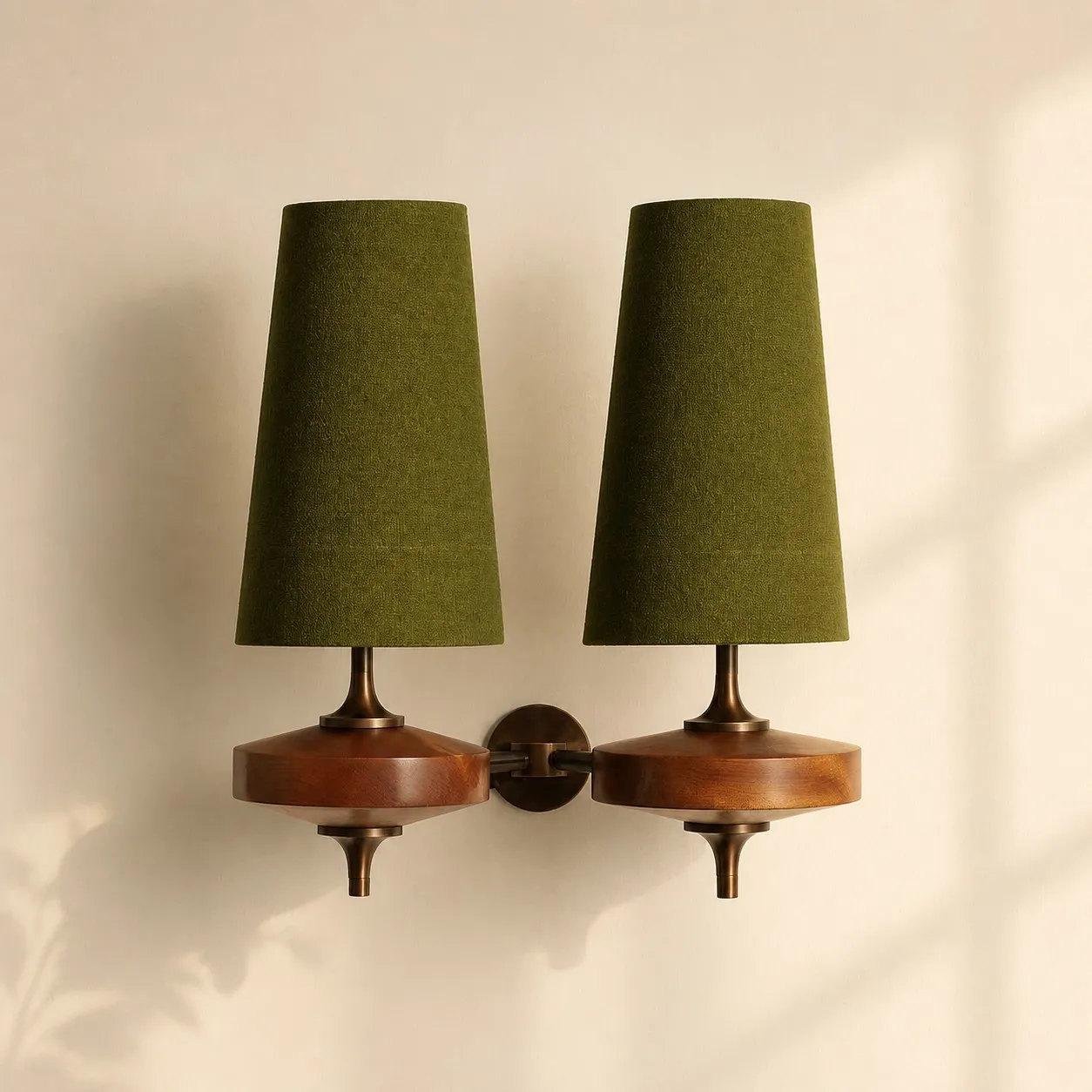




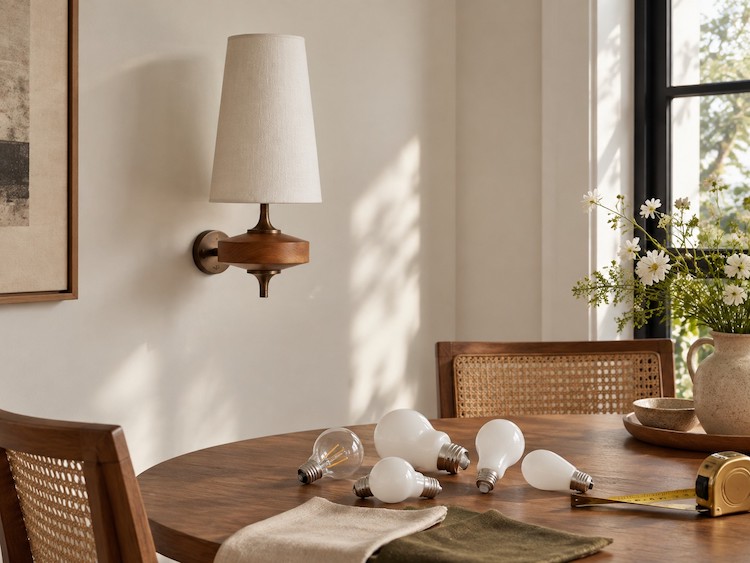
The right E26 LED bulb is the one that matches the socket, physically clears the fabric shade, provides enough lumens for the sconce's job, and carries the markings needed for the fixture and controls. Use that sequence at the store or online. A familiar shape or a claim of “equivalent” brightness cannot replace checking the actual package.
Step 1: Match the E26 Base Exactly
An E26 designation identifies the screw-base format, not brightness, shape or color. Check the current fixture specification and the marking on the new bulb. The Hour Rho Wall Lamp is currently specified with an E26 socket and does not include the bulb, so bulb selection remains a separate purchase decision.
Do not rely on a listing photo to identify a socket. Similar-looking screw bases can lead to a costly ordering mistake, especially when shoppers move between markets. A bulb should turn smoothly into the unpowered socket without cross-threading or force. If the socket is loose, damaged or discolored, do not continue with bulb testing.
For the complete relationship among socket, light output, shade and heat, refer to Fabric Shade Wall Sconces: Bulbs, Lumens & Heat Guide.
Step 2: Measure the Bulb Envelope and Shade Opening
“E26” describes the base, but E26 bulbs come in many envelopes. Record the maximum available length and width inside the shade, the size of the opening used for insertion, and the position of the socket. Allow clear space from the fabric and any lining. The bulb should install and be removed without bending the shade or dismantling parts not intended for routine access.
Shape also affects what you see. A bulb that extends below a shade can create a bright point in the normal sightline. A frosted envelope can soften that view. A decorative clear bulb may look attractive while switched off but cause more visible sparkle or glare when viewed from below. Test the actual viewing angle instead of choosing by package photography alone.
Check the Hour Rho one-head or two-head format before measuring bulb space. Its current product details provide the fixture scale and E26 socket starting point for your purchase list.
Review Hour Rho OptionsStep 3: Choose Lumens for the Job
The Federal Trade Commission explains in its consumer bulb guide that lumens measure brightness and watts measure energy use. Look for the lumen figure on the Lighting Facts label. Then define the role: ambient glow, hallway orientation, bedside support or a contribution to a layered living-room scheme.
Judge output after the fabric shade and room surfaces have shaped it. If the shade appears to be the problem, Does a Fabric Lampshade Make a Wall Sconce Too Dark? provides a diagnostic test before you buy a higher-output bulb. Often the real issue is a dark wall, a dense shade, insufficient task lighting or expecting one accent source to illuminate the whole room.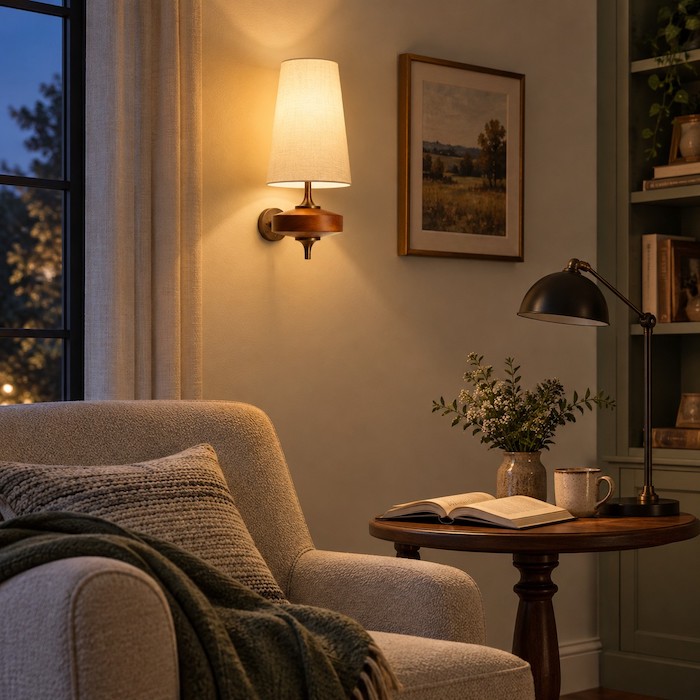
Step 4: Coordinate Light Appearance
The same FTC guide notes that the Lighting Facts label includes a warm-to-cool light appearance scale. Choose a position on that scale that works with the room's other active lamps. Wood, fabric and antique-brass tones often look comfortable under warm-appearing light, but consistency across an open space is the more dependable goal.
If two bulbs share one fixture, use matching bulbs. Mixing appearance, envelope finish or output can make the shades look uneven. When replacing only one failed bulb, compare its label with the surviving bulb; if the older model is unavailable or has visibly shifted, replacing the pair can produce a more coherent result.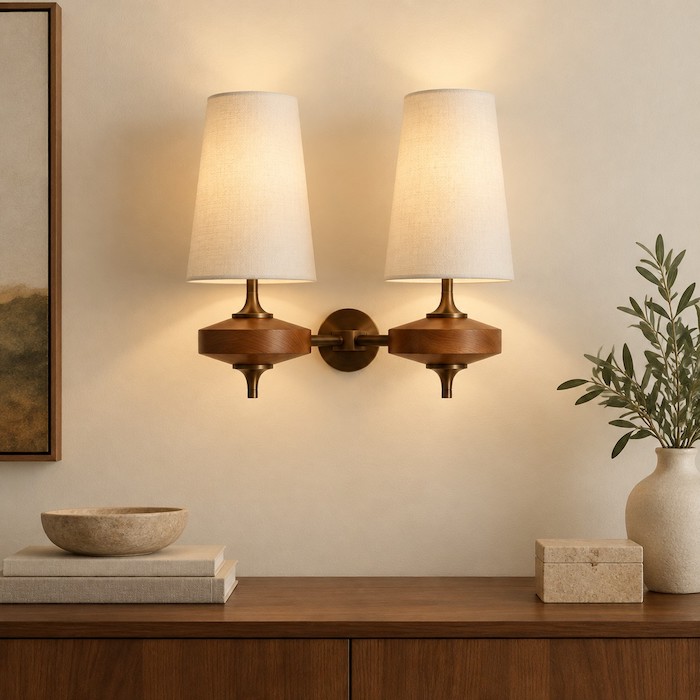
Step 5: Check Controls and Operating Conditions
A dimmer introduces another compatibility layer. Use a bulb marked dimmable and check the control manufacturer's compatibility information. A bulb that lights on a dimmer is not necessarily operating correctly across the full range. Buzzing, unstable low-level light, flashing or failure to switch off cleanly are reasons to stop the test and verify the combination.
Also read any package statement about enclosed or partially enclosed fixtures and permitted orientation. A fabric shade does not automatically define the fixture category for the bulb manufacturer. Use the most specific instructions supplied with the bulb and fixture, and preserve open paths intended for heat to escape.
When bulbs repeatedly fail or the fixture develops abnormal heat, use Why Do Wall Sconce Bulbs Keep Burning Out or Running Hot? rather than treating the next bulb as another experiment.
Step 6: Inspect the Finished Result Safely
With the correctly selected bulb installed and the shade secured, switch on from a normal distance. Check for steady operation, comfortable glare and even shade appearance. After a normal period of use, switch off and allow the fixture to cool before any handling. Never touch, reposition or clean the shade while the lamp is operating.
Hour Rho is hardwired and UL Listed. Hardwired installation, a loose socket or suspected wiring fault should be handled by a qualified electrician. The Electrical Safety Foundation International recommends using a qualified electrical professional for electrical work.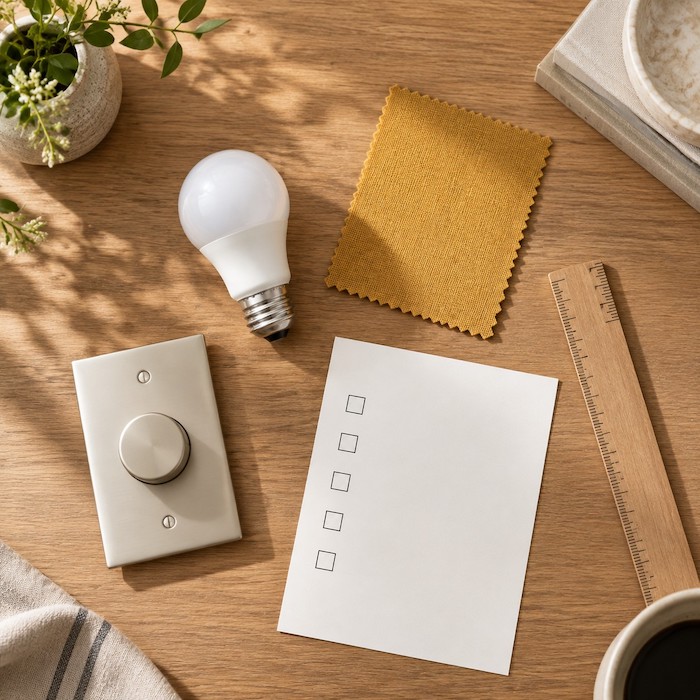
Once the bulb checklist is complete, confirm the current Hour Rho product and installation information before ordering or scheduling electrical work.
Check Hour Rho Product DetailsE26 LED Buying Checklist
- E26 appears on both the fixture specification and bulb package.
- The complete bulb passes through the shade opening and clears the fabric.
- The lumen output matches the sconce's defined role.
- The light appearance coordinates with nearby lamps.
- The bulb's finish and position avoid direct glare.
- Any dimmer and fixture-condition claims are explicitly supported.
- The bulb stays within all instructions supplied with the fixture.
Frequently Asked Questions
Does E26 tell me how bright the bulb is?
No. E26 identifies the base. Compare brightness separately in lumens.
Can I use a decorative E26 bulb behind a fabric shade?
Only if its full envelope fits, remains clear of the shade and meets the operating requirements. Check glare from normal viewpoints.
Do I need a dimmable LED?
Only when the circuit uses a dimmer. In that case, both bulb and control must be compatible.
Should two bulbs in one sconce match?
Yes. Matching model, output, appearance and envelope finish helps both shades read consistently.
What if a new LED flickers?
Switch it off and verify bulb seating and control compatibility. Persistent flicker in a hardwired fixture warrants an electrician's assessment.