



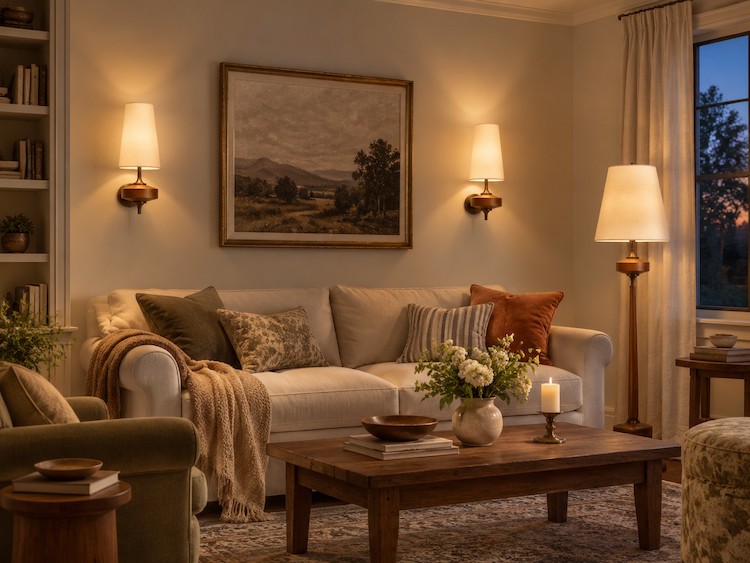
A fabric shade wall sconce works best when the bulb is selected as part of the fixture, not as an isolated replacement. Start with the exact socket, then choose useful brightness in lumens, confirm the bulb fits behind the shade, and finally check that the bulb is approved for the fixture's operating conditions. This order prevents the most common mismatch: a bulb that screws in but produces the wrong light or behaves poorly around the shade.
1. Confirm the Socket Before Comparing Light
The socket code is the first gate because visually similar screw bases are not interchangeable. Read the fixture specification, the socket marking and the bulb package rather than estimating diameter from a photograph. The current Hour Rho specification identifies an E26 socket. Its bulb is not included, so the buyer can choose the LED output and appearance, but that freedom begins only after the base has been matched.
Base compatibility is not the whole fit test. Check the bulb's overall length and widest point against the shade opening and internal space. A long decorative bulb may fit the socket yet sit too close to the fabric or protrude beyond the shade. A very wide globe may be difficult to insert even when its base is correct. Do a dry dimensional check with the power off before deciding that a shape is suitable.
The step-by-step checklist in How to Choose an E26 LED Bulb for a Fabric Sconce handles base, shape, controls and package markings in purchasing order.
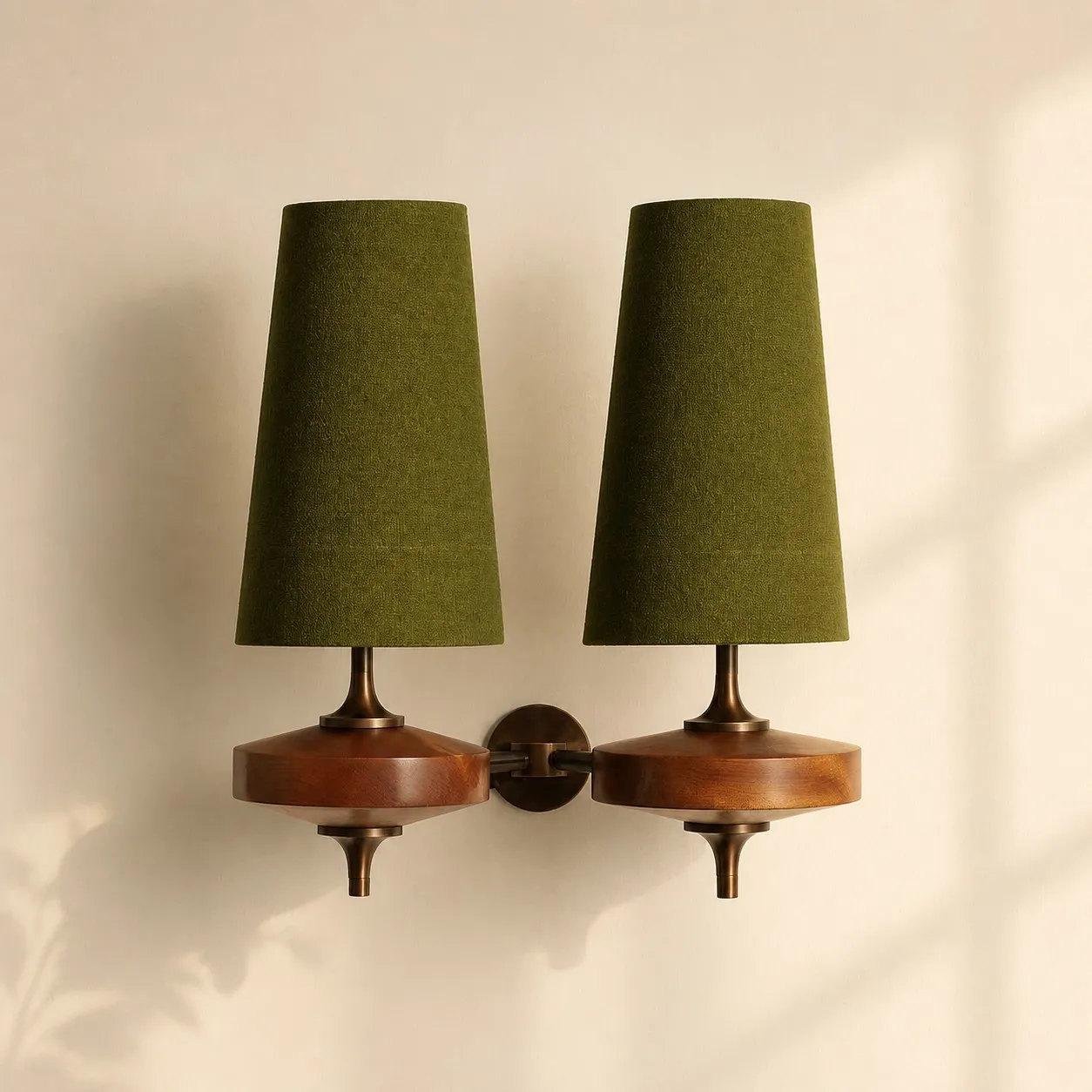
Hour Rho pairs a fabric shade with a wood-and-metal body and is currently offered in one-head and two-head formats. Review the selected format and current E26 socket information before buying bulbs.
View the Hour Rho Wall Lamp2. Shop by Lumens, Not by an Old Wattage Habit
The U.S. Federal Trade Commission's light-bulb shopping guidance makes the distinction simple: lumens describe brightness, while watts describe energy use. That matters with LEDs because two bulbs using similar energy can deliver different amounts of light, and a familiar incandescent wattage is not a reliable brightness measure for a modern bulb.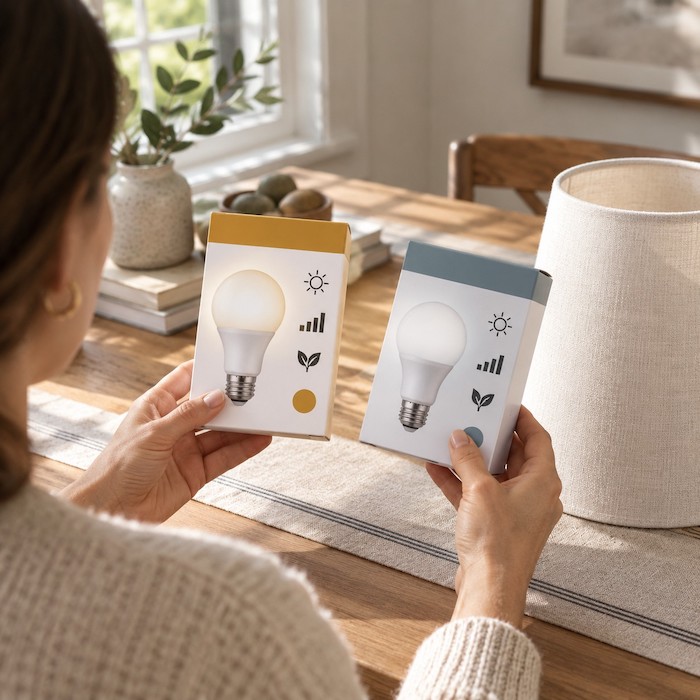
Decide what the sconce must do before choosing a lumen value. A hallway accent needs enough light to support orientation and atmosphere. A bedside or reading position needs light that reaches the page without causing glare. A living-room pair may support layered ambient light rather than carry the entire room. The answer should reflect the job and the number of light sources, not a claim that every wall sconce needs one universal output.
| Decision | Read on the bulb package | Check in the room |
|---|---|---|
| Brightness | Lumens | Whether one or several sources share the job |
| Energy use | Watts | Fixture limit and operating conditions |
| Light character | Warm-to-cool appearance scale | Wall color, fabric shade and nearby lamps |
| Expected service | Rated life and usage notes | Heat, switching pattern and control compatibility |
| Physical fit | Base and bulb dimensions | Shade opening, internal space and distance from fabric |
When comparing two candidates, hold everything else steady. Compare similar color appearance and beam behavior, then choose the lumen level that serves the space. Changing brightness, color and bulb shape at the same time makes it hard to identify why one result feels better.
3. Understand What the Fabric Shade Changes
A fabric shade does not simply remove light. It redistributes it. Some light passes through the textile as a softer glow, while more escapes through the open top or bottom. The result usually reduces the sharp view of the bulb and creates gentler contrast on faces and walls. That can feel comfortable even when a meter would record less direct light in a particular direction.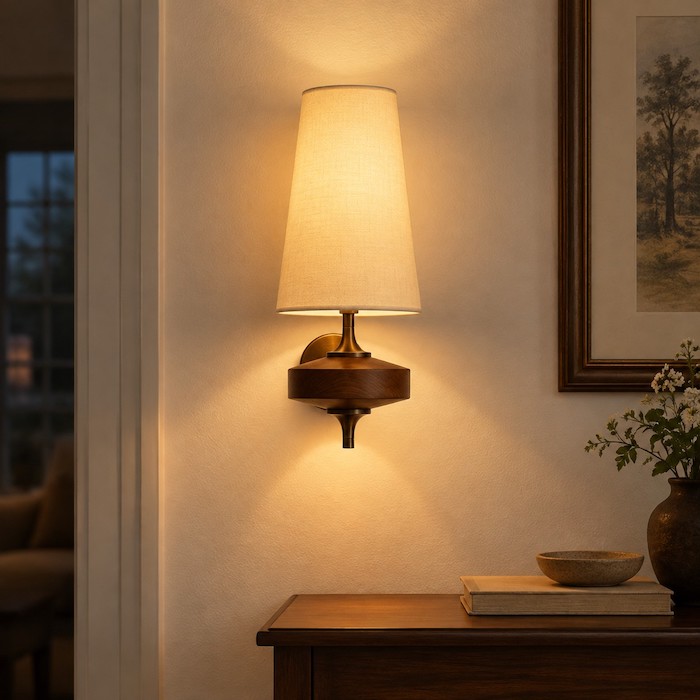
Shade color, weave, lining and age all matter. A pale open weave generally looks more luminous than a darker or densely lined shade under the same bulb. Dust can gradually mute the surface. Wall color also changes perception: a light wall returns more of the upward and downward spill, while a dark wall absorbs more. This is why the same sconce can feel bright in one room and subdued in another.
If your main concern is whether the textile is reducing too much useful light, use the room tests in Does a Fabric Lampshade Make a Wall Sconce Too Dark?. That guide separates shade transmission from bulb output, wall reflectance and insufficient lighting layers.
Use Hour Rho as an ambient layer rather than assuming any shaded wall light must carry the whole room. Compare the one-head and two-head formats against the wall area and the other light sources already present.
Compare Hour Rho Formats4. Choose Light Appearance for the Materials Around It
The Lighting Facts label described by the FTC includes a warm-to-cool light appearance scale. Use it instead of judging a product photo, because cameras and screens distort color. Warm-looking light can reinforce wood and antique-brass tones, while a more neutral appearance may suit crisp surrounding task lights.
Consistency matters more than chasing a fashionable number. Compare the new bulb with lamps that will be on at the same time. In a two-bulb fixture, use matching units so both shades read as one composition. Also check the bulb from above and below: a bright clear source can still cause glare through a shade opening, while a suitable frosted envelope often looks calmer.
5. Treat Heat as a Compatibility Question
Every operating bulb produces some heat, including an LED. The important questions are whether the bulb is used within the fixture's stated limit, whether its own package allows the intended enclosure and orientation, and whether air can move around it as designed. Do not cover ventilation paths, allow the bulb to touch the fabric, or add an improvised inner cover.
LED electronics are sensitive to sustained heat. A bulb that is not approved for a confined or partially enclosed setting may have a shorter life even if it initially lights normally. Likewise, a dimmable circuit needs a bulb and control that are stated to work together. The label is the authority for that exact bulb; “LED” alone is not a compatibility rating.
Normal warmth should not be confused with warning signs. Stop using the fixture if you notice a burning odor, browning or deformation, crackling, persistent erratic flicker, a loose socket, or repeated early failures. Why Do Wall Sconce Bulbs Keep Burning Out or Running Hot? gives a symptom-led sequence for separating a simple bulb mismatch from a fault that needs a qualified electrician.
6. Build Brightness in Layers Instead of Overdriving One Sconce
A wall sconce is often most effective as one layer. Ceiling light can provide general coverage, a floor or table lamp can handle local tasks, and the shaded wall light can soften the room's vertical surfaces. Start with output that clearly completes that role, then evaluate after dark from the doorway, main seat and walking path. If only a desk or chair remains dim, add task light there instead of turning one shaded source into glare.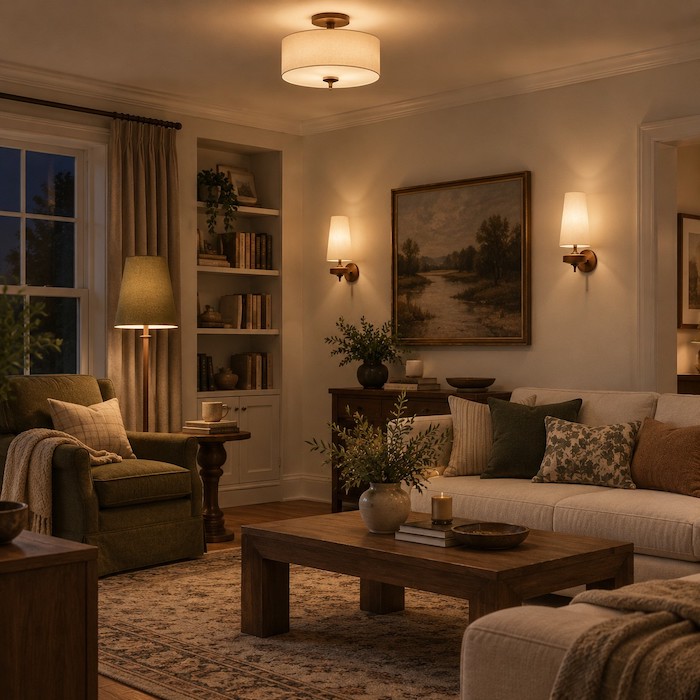
7. Use Product Facts Without Filling the Gaps
Hour Rho is a hardwired, UL Listed wall lamp with wood, metal and fabric elements. The one-head version is approximately 19 x 35 cm (7.5 x 13.8 in), and the two-head version is approximately 35 x 35 cm (13.8 x 13.8 in). Those dimensions help with visual scale, but they do not establish bulb output, dimmer compatibility or clearance around a particular bulb.
Before installation, confirm the current product page, the selected variant, the bulb package and the instructions supplied with the fixture. Because the lamp is hardwired, electrical installation and any investigation of a suspect socket or circuit should go to a qualified electrician. The Electrical Safety Foundation International advises that electrical work be performed by a qualified electrician.
Ready to plan the complete combination? Confirm the Hour Rho format, dimensions, E26 socket and installation details, then choose the LED from its own package markings.
Check Current Hour Rho DetailsFinal Bulb and Sconce Checklist
- Confirm the exact socket on the current fixture specification.
- Measure the available bulb space and shade opening.
- Define whether the sconce provides ambient, orientation or task support.
- Compare brightness in lumens and energy use in watts.
- Choose a warm-to-cool appearance that coordinates with nearby lights.
- Verify any dimmer, enclosure and orientation claims on the bulb package.
- Keep the bulb clear of fabric and preserve designed ventilation.
- Test the finished lighting from the room's real viewpoints.
Frequently Asked Questions
Are watts or lumens more important for brightness?
Use lumens to compare brightness. Watts describe energy use and must also remain within the fixture's stated limit.
Does a fabric shade always need a brighter bulb?
No. First decide the sconce's role, then assess shade color, openings, wall reflectance and other room lights before changing output.
Can any E26 LED work in an E26 wall sconce?
The base may fit, but bulb dimensions, fixture conditions, orientation and control compatibility still need to match the package and fixture instructions.
Should a wall-sconce LED feel warm?
Some warmth is normal. Odor, discoloration, deformation, crackling, unstable operation or repeated early failure are reasons to switch off and investigate.
Who should check a hardwired fixture that keeps failing?
A qualified electrician should inspect the socket, connections, control and circuit rather than having the homeowner repeatedly replace bulbs.