



Does a Fabric Lampshade Make a Wall Sconce Too Dark? Diagnose the Whole Lighting Layer
A fabric lampshade reduces direct glare and redirects light, but it does not automatically make a wall sconce too dark. The result depends on bulb lumens, shade color and weave, the open top and bottom, the wall's reflectance, and whether the sconce is being asked to provide ambient or task light. Test those factors separately before replacing the bulb.
Fabric Changes Distribution More Than the Simple Word “Brightness”
An uncovered bulb sends direct light toward the viewer. A textile shade intercepts part of that light, diffuses some through its surface and lets some escape through openings. This lowers harsh contrast and can make faces and rooms feel calmer. It also means less direct light reaches a book, desk or floor in certain directions.
The central overview, Fabric Shade Wall Sconces: Bulbs, Lumens & Heat Guide, explains how socket, output and heat conditions fit together. For this diagnosis, keep the bulb unchanged at first and observe where its light actually goes.
Run a Three-Zone Test After Dark
- Shade zone: Does the entire textile glow, or are there dark bands, seams or lining areas?
- Opening zone: Is useful light leaving the top and bottom, and does it create glare from standing or seated viewpoints?
- Wall zone: Does the surrounding wall receive a visible wash, or does its color absorb most of the spill?
Repeat the observation with the room's usual ceiling and table lights on. If the sconce suddenly feels balanced, it is probably working as an ambient layer. If it remains visually dead, continue through the diagnostic table rather than jumping directly to the strongest available bulb.
| What you see | Likely factor | Useful next check |
|---|---|---|
| Shade glows, task area stays dim | Ambient distribution | Add or reposition task light |
| Top and bottom are bright, fabric stays dull | Dense or dark shade | Assess whether the intended look is directional |
| One side looks darker | Bulb position, lining or uneven dust | Switch off, cool, inspect and clean as instructed |
| Whole wall looks flat | Low output or dark wall finish | Compare lumens and nearby lighting layers |
| Room is brighter but uncomfortable | Direct glare through an opening | Review bulb envelope and sightline |
Compare Lumens Before Watts
The Federal Trade Commission's bulb-shopping guidance states that lumens measure brightness and watts measure energy use. If the sconce genuinely needs more output, compare the current and proposed lumen figures while keeping within every fixture instruction. An old wattage habit does not tell you how bright an LED will be.
For Hour Rho, begin with the confirmed E26 socket and then use How to Choose an E26 LED Bulb for a Fabric Sconce to check dimensions, appearance, controls and operating conditions. A higher lumen figure is useful only when the bulb still fits, avoids glare and is suitable for the fixture.
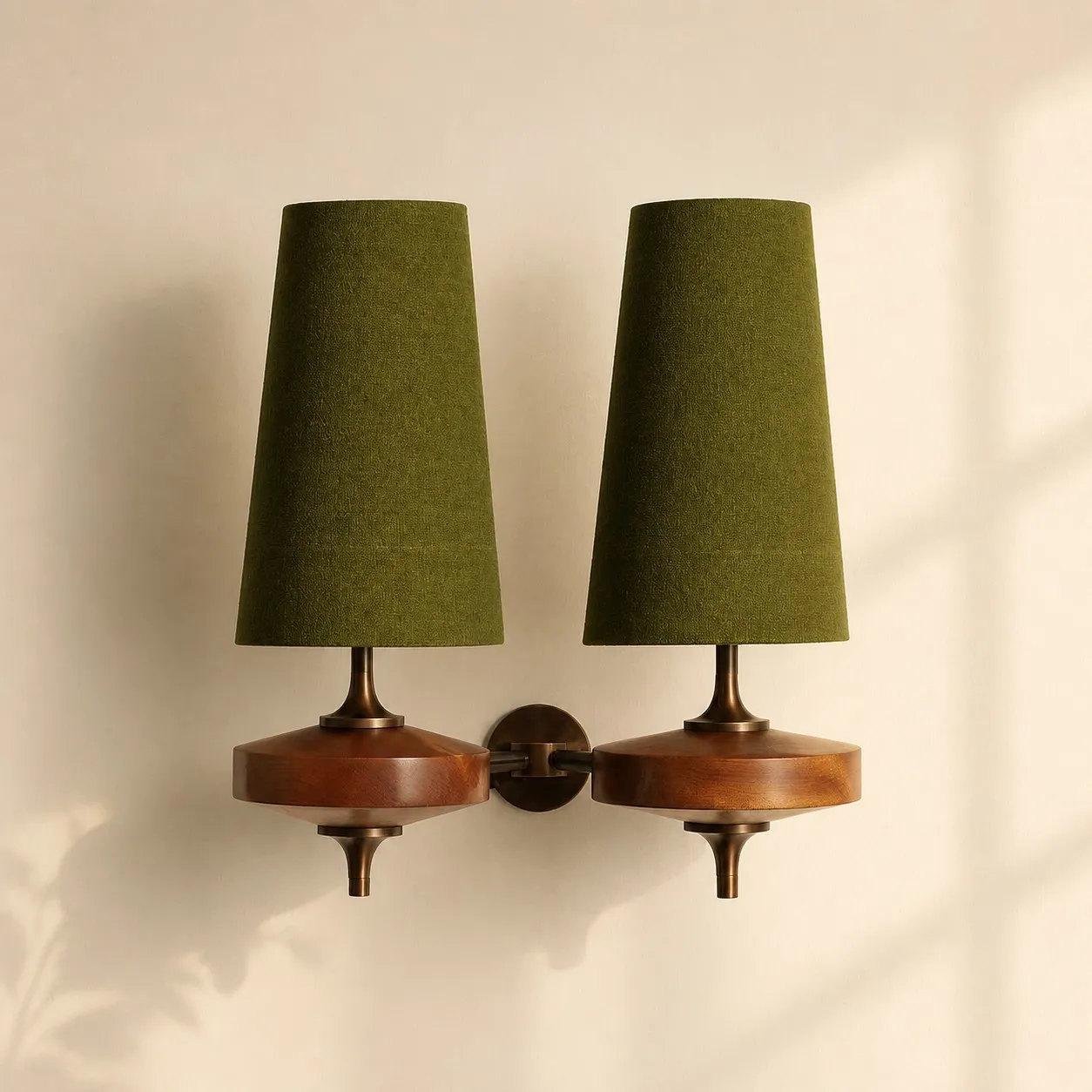
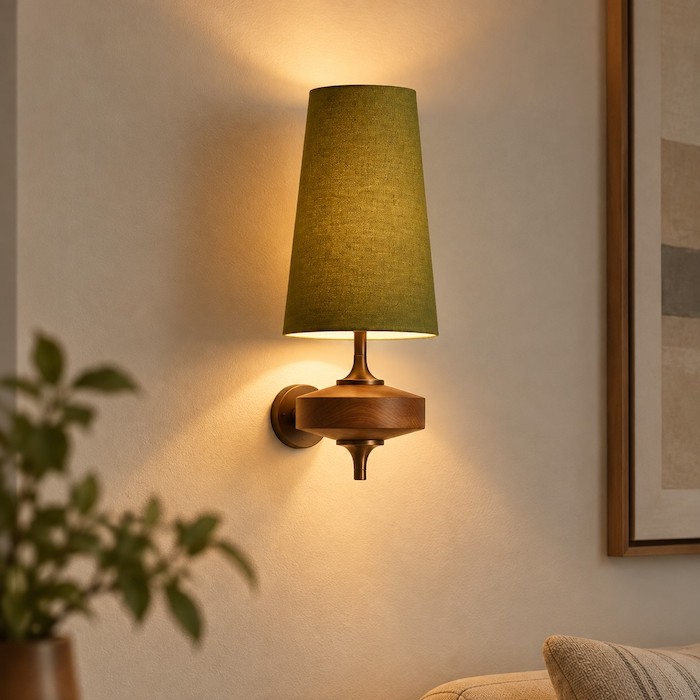
Hour Rho's fabric shade is designed as part of a wood-and-metal wall fixture. Review its one-head and two-head formats before deciding how much of the room's ambient layer it should provide.
Compare Hour Rho FormatsShade Color, Weave and Lining Affect the Look
A pale shade usually appears more luminous because more light is visible through and around it. A darker shade may create a deliberate pool above and below while the textile itself stays restrained. Neither is defective. The decision is whether the distribution matches the room's purpose.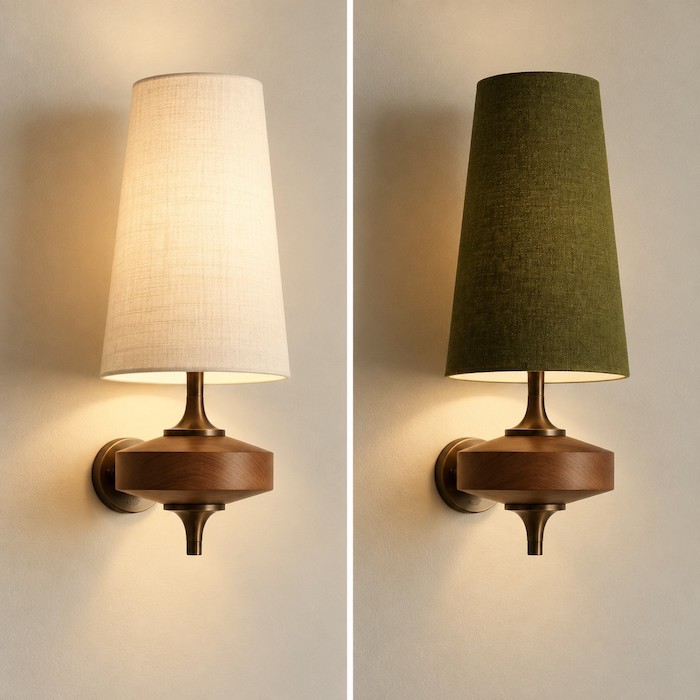
Weave and lining matter too. A dense fabric or opaque lining can direct more light through the openings. A more open textile can glow across a larger surface. Do not remove, puncture or alter a lining to increase transmission; it is part of the shade's construction. If the desired effect differs, select a shade or fixture designed for that effect.
Dust can make a light fabric look gray and reduce its apparent glow. Switch off, let the fixture cool and follow the product's care instructions. Avoid soaking fabric or applying a cleaner without confirmation that it is suitable for the material.
The Wall and Room Can Be the Real Cause
Light walls return more spill into the room. Dark paint, wood paneling and deep-colored upholstery absorb more, so the same fixture may feel moodier. A mirror or pale artwork nearby can also change the impression without changing bulb output. Evaluate the complete wall, not just the shade photographed close up.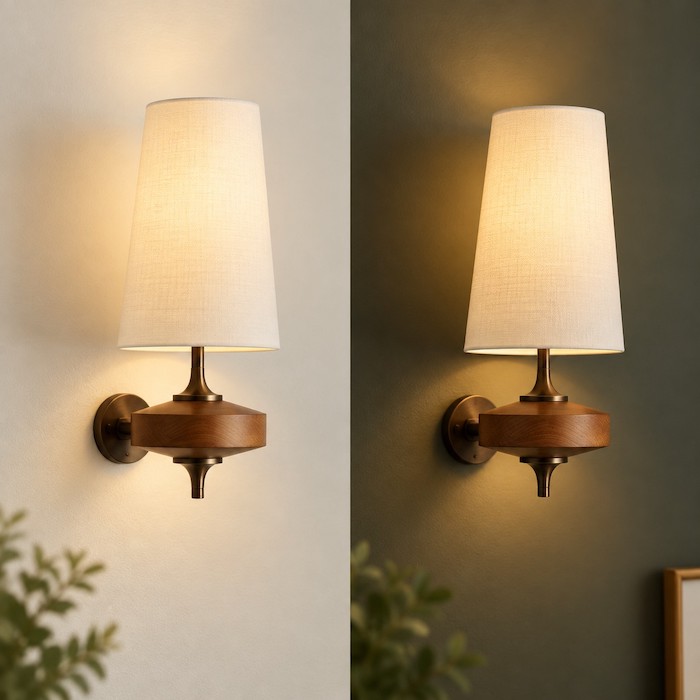
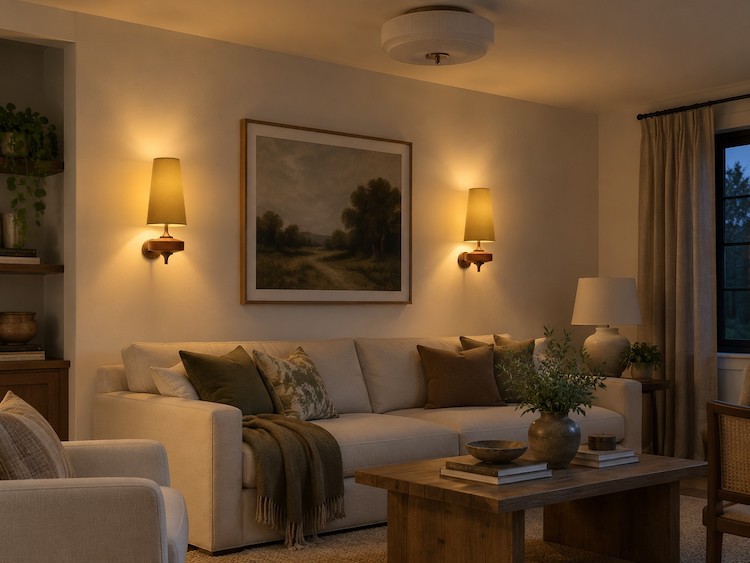
Room size and mounting location change expectations. A single shaded sconce on a large wall may look isolated. Two sources can create a broader rhythm, while a ceiling light supplies general coverage. In a narrow hallway, the same shaded source may be entirely sufficient for orientation when combined with light from adjoining spaces.
Use the Hour Rho dimensions to tape the one-head and two-head outlines on the wall. The exercise helps distinguish a brightness problem from a fixture-scale problem.
Review Hour Rho DimensionsDo Not Trade Comfort for Raw Output
A brighter bulb can make the shade glow more, but it can also expose a harsh point source through the bottom opening. Check the sconce while seated, standing and entering the room. If glare appears in one normal view, changing envelope finish, light position or the surrounding layer may work better than adding output.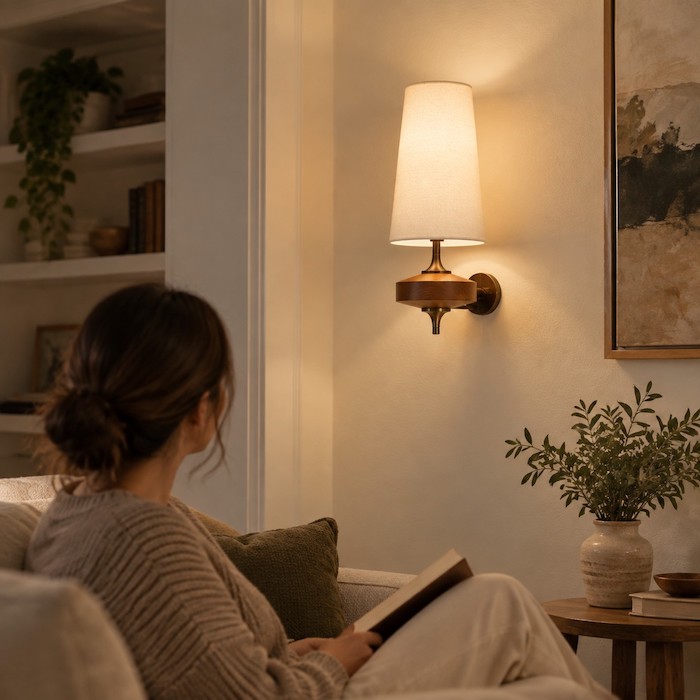
Heat compatibility remains part of the decision. Use only a bulb that meets the fixture instructions and its own stated operating conditions. If higher output brings unusual odor, discoloration, instability or repeated failure, stop using the fixture. Why Do Wall Sconce Bulbs Keep Burning Out or Running Hot? explains what to check next and when to involve an electrician.
A Better Lighting-Layer Plan
- Use ceiling or broad ambient light for safe overall coverage.
- Use a table, floor or reading light where visual work happens.
- Use the fabric sconce to soften the wall and support orientation.
- Keep bulb appearance consistent with lights used at the same time.
- Reassess after dark from real seated and walking viewpoints.
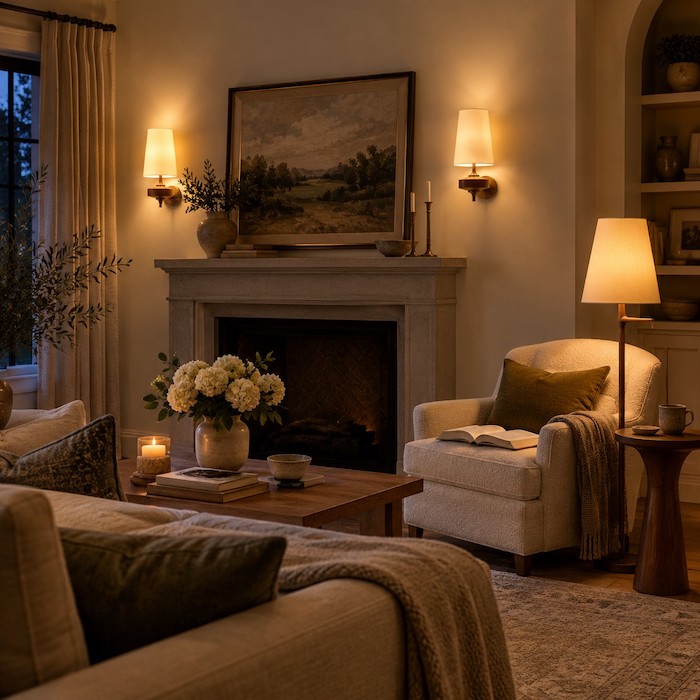
This approach lets the textile do what it does well: soften, distribute and decorate. It also prevents one shaded source from becoming uncomfortably bright because the room lacks another layer.
When a soft ambient wall glow is the goal, check Hour Rho's current materials, E26 socket and available format before building the rest of the lighting plan around it.
View the Hour Rho Wall LampFrequently Asked Questions
Does white fabric transmit more light than dark fabric?
It often appears more luminous, but weave, lining, bulb position and openings also affect distribution.
Should I choose a higher-watt LED for a dim sconce?
Compare lumens for brightness and stay within all fixture requirements. Watts alone are not a brightness measure.
Why is the wall bright above the shade but the room still dim?
The fixture is sending directional ambient light upward. Add general or task lighting where useful illumination is missing.
Can I remove the shade lining?
No. Do not alter the shade construction. Choose a product designed for a more translucent effect.
Can two sconces solve a dim wall?
They can broaden the ambient layer and visual rhythm, but task areas may still need a dedicated source.