



How to Mix a Walnut Wall Sconce with Light and Dark Wood Furniture
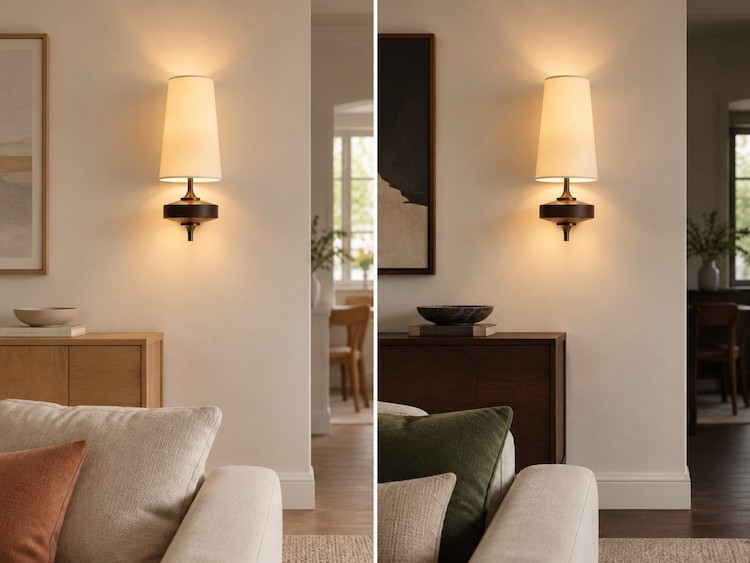
A walnut wall sconce can work with both light and dark wood when you control hierarchy. Compare undertones, decide whether the sconce should blend or contrast, repeat its darkness in a small amount, and place metal or fabric between competing grains. Exact stain matching is usually less convincing than a deliberate relationship.
Step 1: Read Undertone Before Lightness
Place a sample of the fixture finish near the largest wood surfaces. Ask whether each leans golden, red, gray, olive or neutral. Two medium woods with opposing undertones can clash more than one pale and one dark wood that share warmth. View the samples vertically on the wall because light reaches them differently than a tabletop.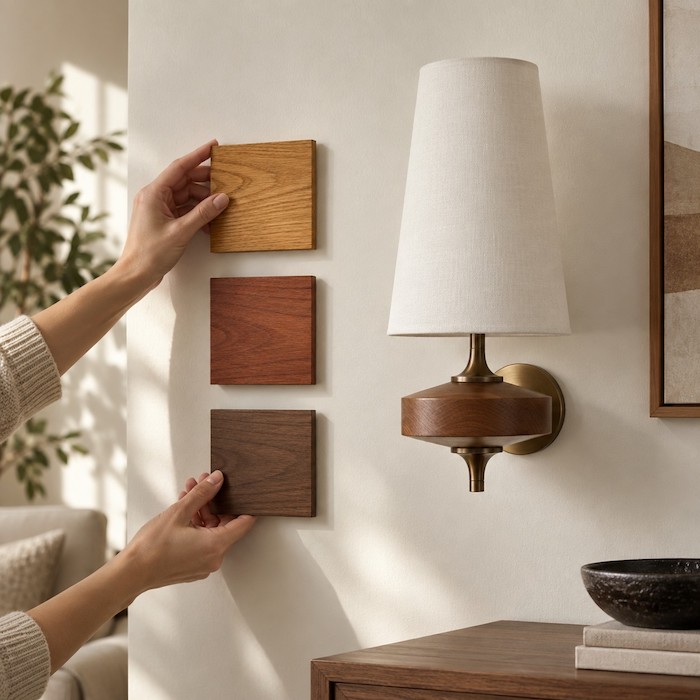
Wood varies naturally, and stain, grain direction and age affect its appearance. The USDA Forest Products Laboratory's Wood Handbook is a useful technical reference for wood's material variability. In practice, approve the actual finish rather than relying on the word walnut.
For the broader room plan, Wood Wall Sconces in Living Rooms: A Mixing & Styling Guide adds shade color, metal and fixture scale to this wood-focused method.
Step 2: Choose Blend or Contrast
A blend uses neighboring woods with related depth and warmth. It feels quiet, but the pieces need separation so slight differences do not look accidental. A contrast uses a noticeable change in lightness while preserving another relationship, such as warmth or repeated shape. It feels more graphic and is often easier than attempting a near match from separate manufacturers.
| Existing room | Walnut sconce role | Repeat | Separation |
|---|---|---|---|
| Mostly light oak or ash | Dark anchor | Thin frame, bowl or table leg | Pale wall and light shade |
| Dark walnut furniture | Related layer | Warm metal or fabric instead of more wood | Clear wall space between pieces |
| Red-toned dark wood | Controlled contrast | Shared warm textile color | Metal detail between grains |
| Several mixed woods | Connection to dominant surface | One secondary tone only | Painted and upholstered areas |
With Light Wood, Preserve the Light Majority
Let the floor, shelving or main table keep the room's pale character. The walnut-colored sconce becomes punctuation, not a signal to add dark wood everywhere. A single dark frame across the room and a small tray below the fixture may be enough to establish repetition.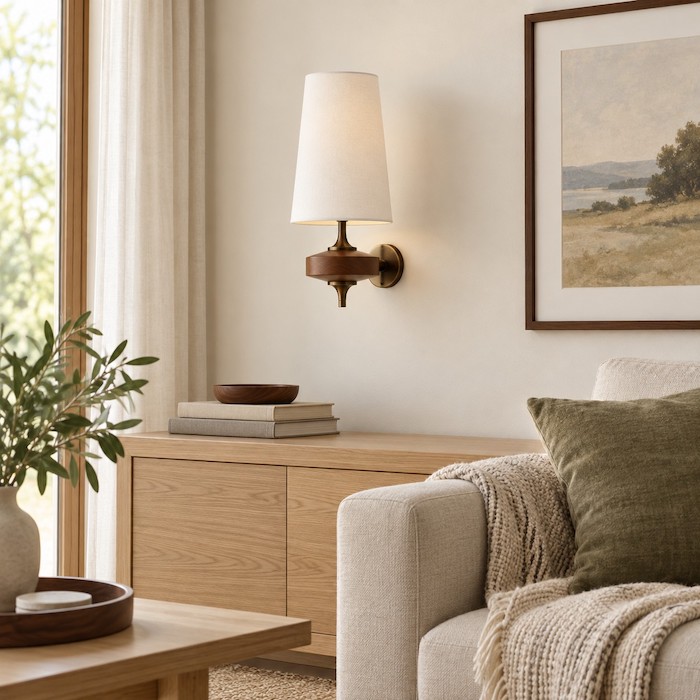
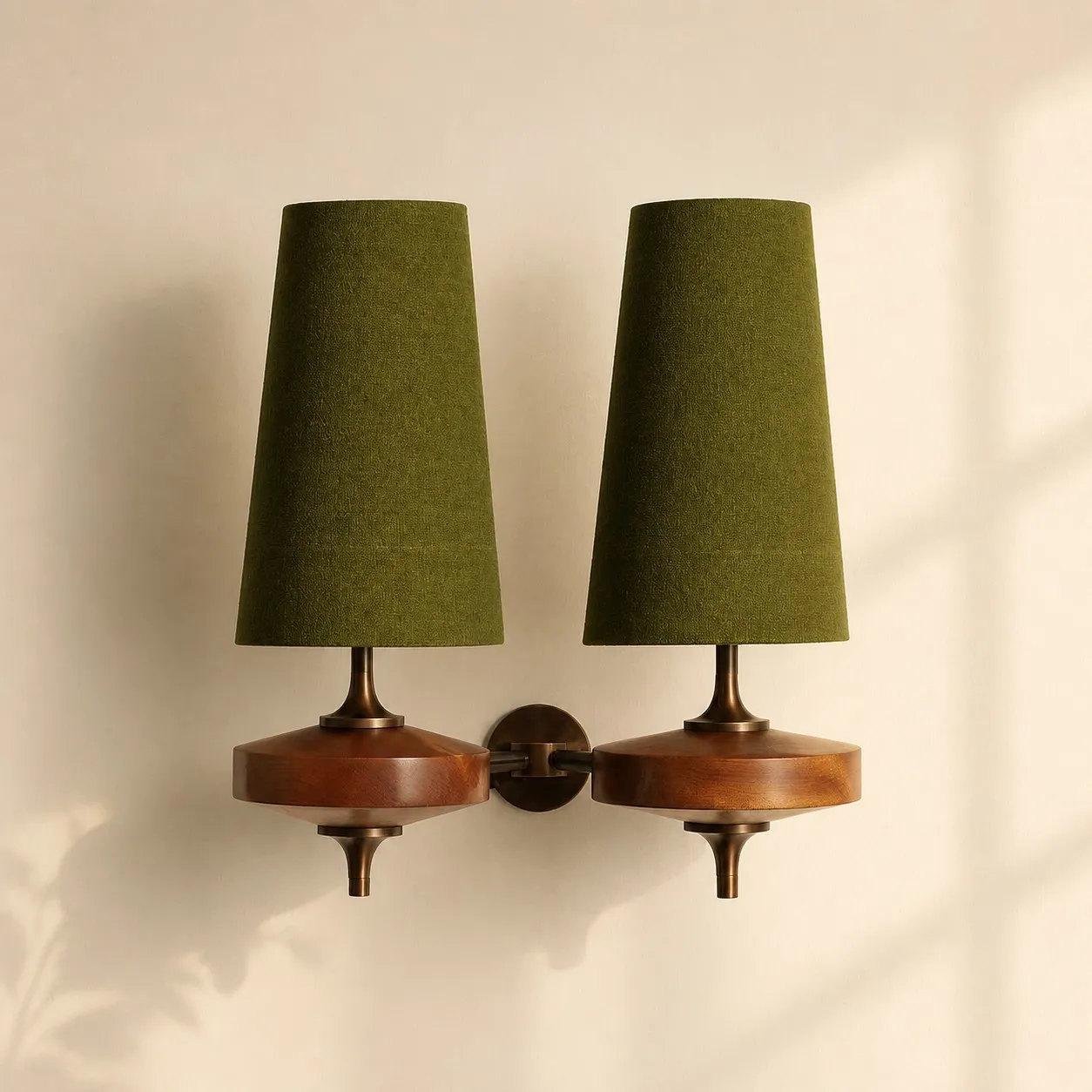
Keep the shade relatively quiet if the contrast is already strong. The current Hour Rho combines a walnut-colored wood element, antique-brass details and fabric. A pale shade can separate the dark body from the wall while the warm metal connects to smaller hardware or accessories.
Use the current Hour Rho images as a finish sample, then compare the selected shade color against your wall, floor and largest furniture piece.
Review Hour Rho Shade ColorsWith Dark Wood, Create Breathing Room
Do not press two almost-matching woods together. Mount the sconce with visible wall around it and avoid aligning its wood body directly against a tall cabinet edge. A light or colored fabric shade helps define the fixture as a separate object while preserving the shared dark foundation.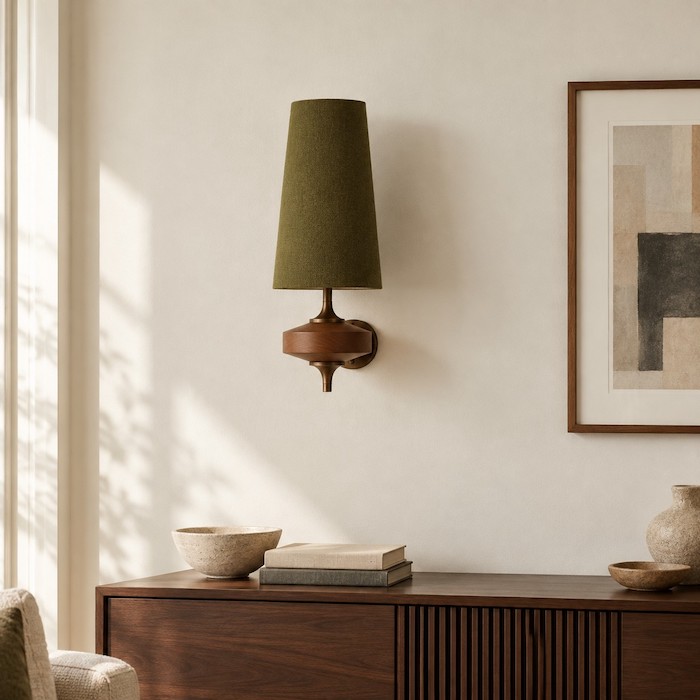
If the room feels heavy, change texture before adding another pale wood. Linen-like fabric, upholstery, a matte painted wall and a rug interrupt hard reflective surfaces. This keeps the dark wood intentional without making every major item compete for attention.
A plain shade keeps the silhouette simple; pleats add repeated shadows. Pleated vs Plain Fabric Shades: Which Looks More Modern? helps decide whether the room needs calm surface area or added detail.
In a Mixed-Wood Room, Set a Clear Rank
Choose the largest visible wood as primary, one supporting wood as secondary, and treat the sconce as either part of the secondary family or a controlled accent. Do not count every small object as a separate finish. Grouping minor accessories by color makes the room easier to read.
Use non-wood bridges. Antique-brass details can relate to hardware; a fabric shade can relate to upholstery; a colored shade can pick up art. This is more flexible than forcing the sconce wood to resemble the floor, table and shelves simultaneously.
Coordinate Metal Without Matching Every Fixture
The sconce's metal is small but close to eye level. Repeat its general warmth in one nearby item if the ceiling light uses another finish. A room can support two metals when one is dominant and the other has a clear supporting role. Similar sheen can also help: two muted finishes tend to relate more quietly than one mirror-polished and one aged finish.
For deciding which existing element should lead, see Should Wall Sconces Match Hardware or Ceiling Lights?. The answer changes with visibility and composition, not with a rule that every fixture must come from one collection.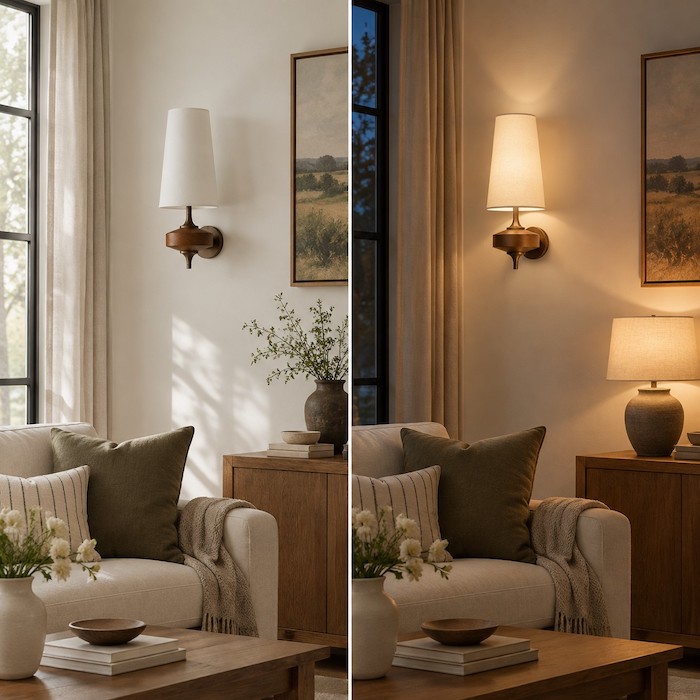
Check the Result in Evening Light
Wood and fabric color can shift under artificial light. The Federal Trade Commission's consumer bulb guide explains that packaging includes a warm-to-cool light appearance scale. Compare the sconce with the ceiling and table lamps that normally operate together. A coordinated material palette can still look fragmented when adjacent bulbs render it differently.
Take one daylight photo and one evening photo from the doorway. Check whether the walnut tone appears once as an isolated spot or participates in a visible path across the room. Remove an unnecessary dark accessory before adding more repetition; restraint usually makes the intended connection easier to see.
Hour Rho provides wood, warm-metal and fabric elements in one hardwired fixture. Confirm the current variant and view it under the lighting conditions used in your room.
Check Current Hour Rho OptionsFinal Mixing Checklist
- Compare actual samples rather than finish names.
- Identify undertone before judging light versus dark.
- Choose whether walnut will blend, anchor or bridge.
- Repeat its dark note in a limited number of places.
- Separate similar woods with wall, metal or fabric.
- Keep one wood and one metal clearly dominant.
- Review the combination in daylight and evening light.
Frequently Asked Questions
Can walnut and light oak work together?
Yes. Preserve oak as the light majority and repeat walnut in one or two smaller accents.
Can I pair a walnut sconce with dark furniture?
Yes. Use wall space and a fabric shade to separate close but nonmatching finishes.
How many wood tones can a living room have?
There is no fixed number, but a clear dominant family and limited secondary roles make several woods easier to coordinate.
Does the sconce metal need to match cabinet hardware?
No. Coordinate temperature, sheen or repetition, and keep one metal visually dominant.
Should I choose the wall sconce before furniture?
Usually choose from the largest existing surfaces first. The sconce can then repeat, contrast or bridge them deliberately.