



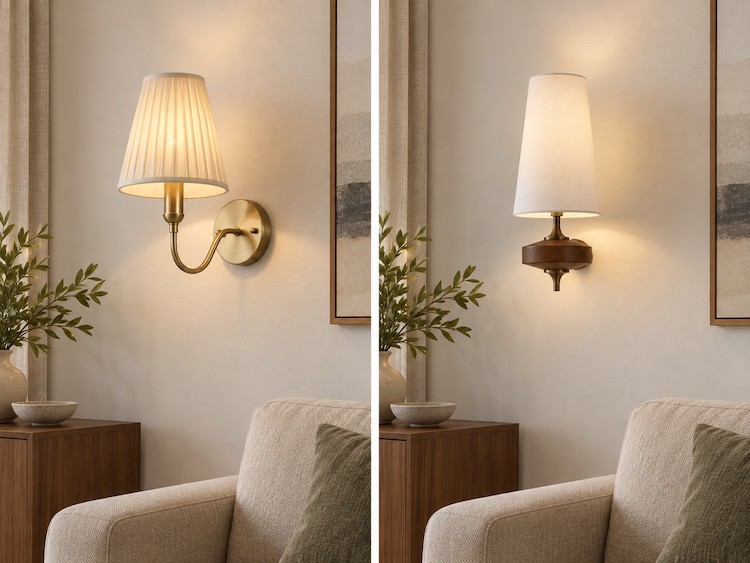
Pleated vs Plain Fabric Shades: Which One Looks More Modern in a Living Room?
A plain fabric shade is the more reliably modern choice when you want a quiet silhouette and minimal visual texture. A pleated shade can look equally current when its shape is simple, its color is restrained and the room needs a repeated line. The right answer depends on how much detail already exists around the wall sconce.
The Main Difference Is Rhythm, Not Age
Pleats create vertical repetition. When the lamp is on, folds can produce narrow changes in light and shadow; when off, they still add a visible pattern. A plain shade reads as one continuous volume, putting more attention on silhouette, fabric color and the fixture body.
This is why a pleated shade is not automatically traditional and a plain shade is not automatically contemporary. Tight, regular pleats on a clean tapered form can feel precise. A plain shade with decorative trim and a complex outline can feel more ornamental.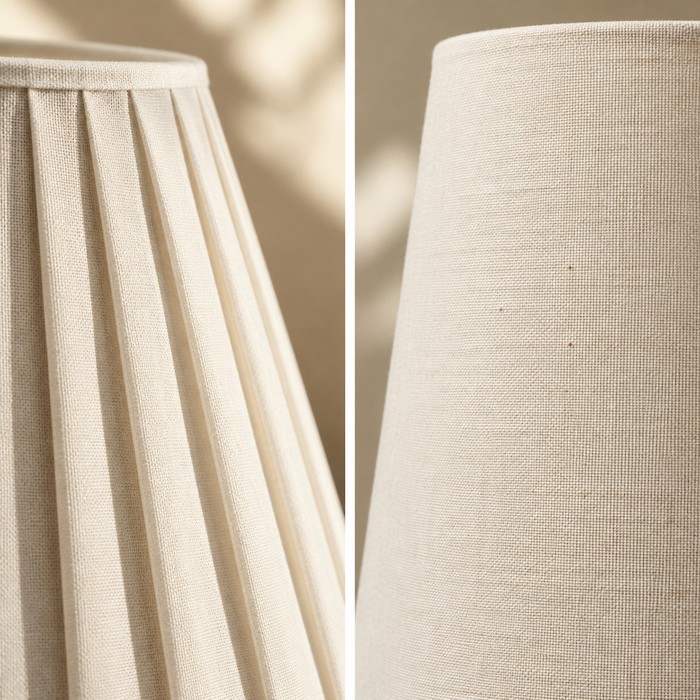
For placing either option within a complete material palette, Wood Wall Sconces in Living Rooms: A Mixing & Styling Guide explains how wood, metal and shade color share visual weight.
Compare Five Practical Dimensions
| Dimension | Pleated shade | Plain shade |
|---|---|---|
| Surface rhythm | Repeated lines and small shadows | Continuous calm surface |
| Visual weight | Can feel fuller at the same size | Often feels lighter and cleaner |
| Color impression | Folds create lighter and darker bands | Color reads more evenly |
| Dust visibility | More edges and recesses to inspect | Simpler surface to dust gently |
| Best supporting role | Add texture to a restrained room | Calm a room with grain or pattern |
Plain Works Best When Other Materials Are Active
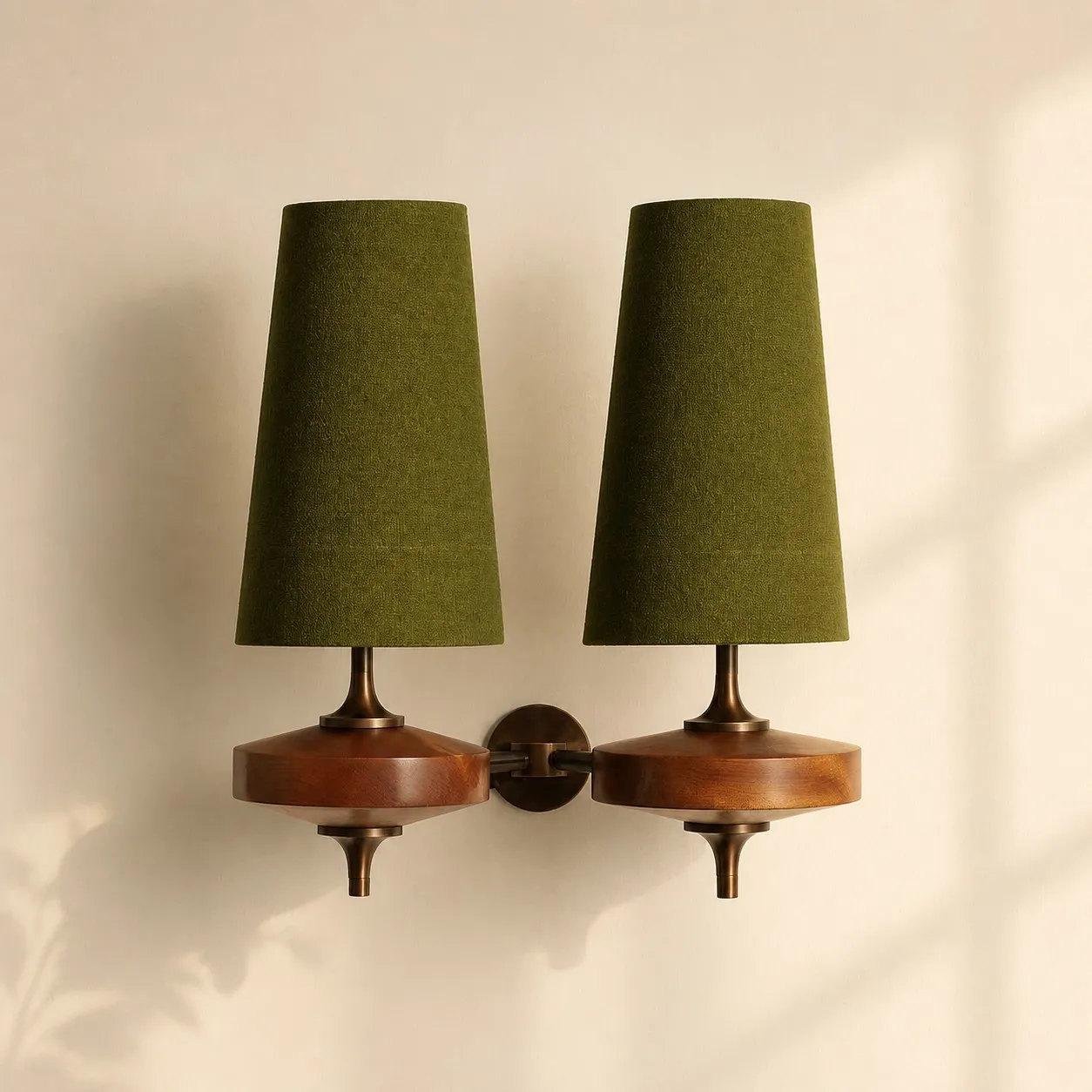
If the living room already has visible wood grain, patterned curtains, textured upholstery or detailed artwork, a plain shade provides a pause. It allows a walnut-colored body or antique-brass detail to remain legible without creating another small-scale pattern.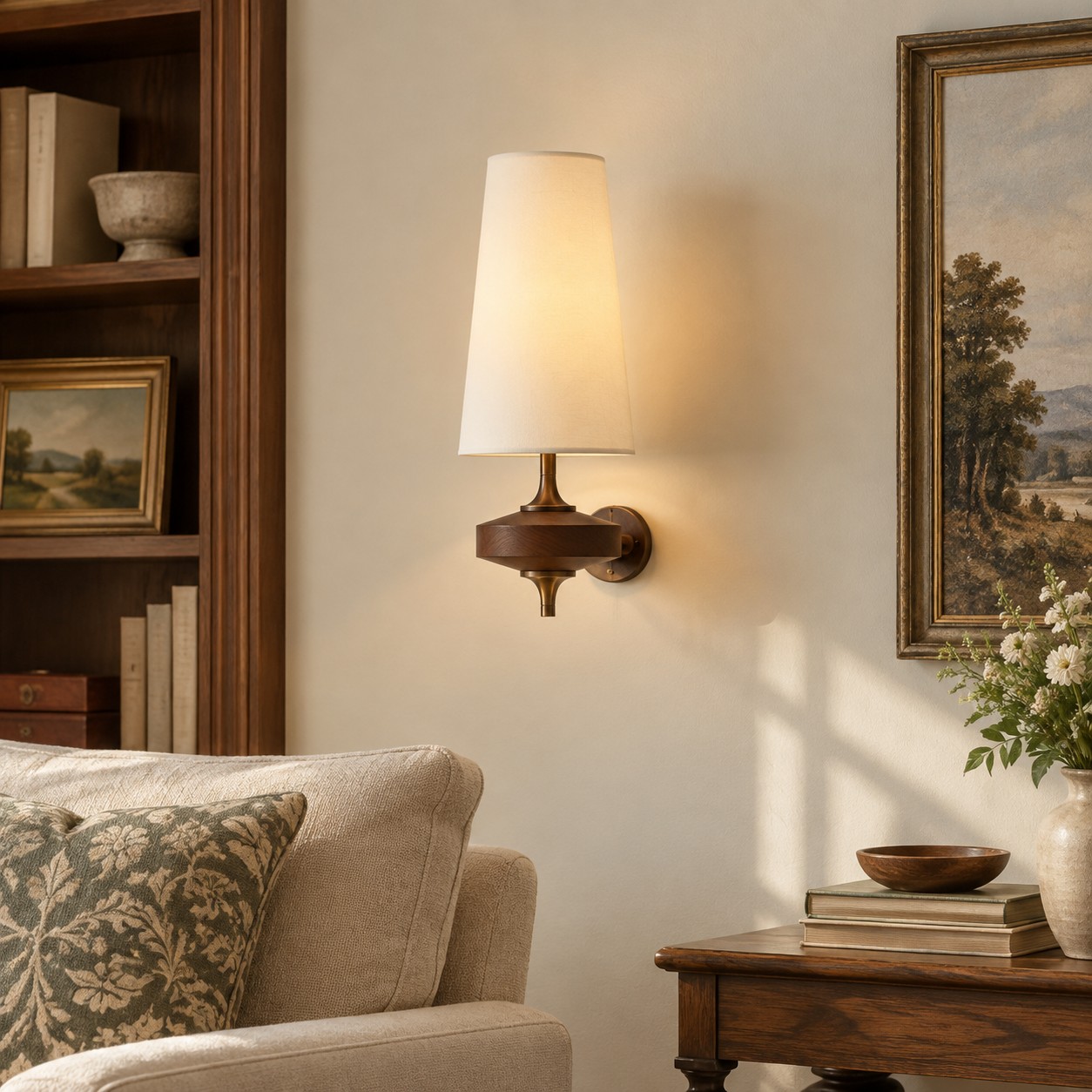
The current Hour Rho product page shows smooth fabric shades, not a pleated option. Its plain shade makes it useful for shoppers who want the quieter side of this comparison. Current color choices can still change emphasis, so treat construction and color as separate decisions.
Review Hour Rho's current smooth fabric shades with its walnut-colored wood and antique-brass details to see how a plain surface supports mixed materials.
View Hour Rho Shade OptionsPleats Work Best When the Room Needs Texture
A restrained room with solid upholstery, plain walls and simple furniture may benefit from the rhythm of pleats. Keep the shade outline uncomplicated and avoid adding heavy trim. The texture should be the feature, not one detail among many competing details.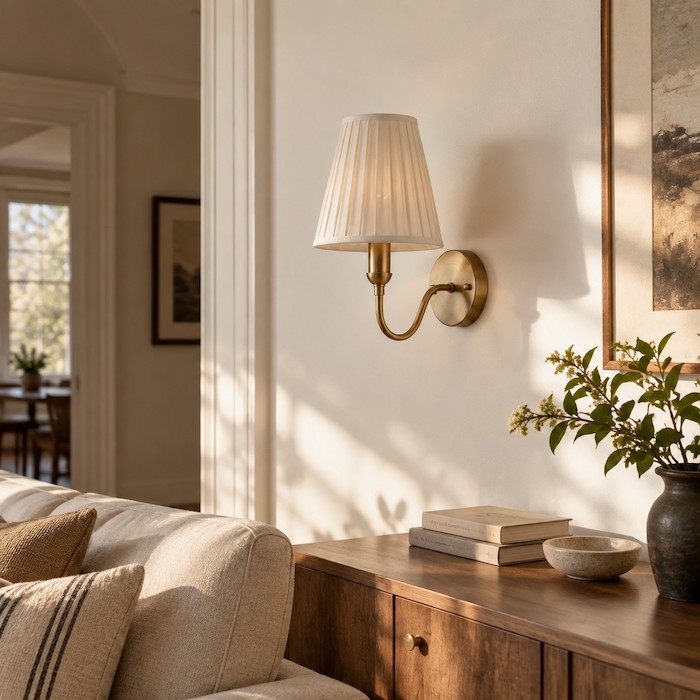
Pleats also need enough viewing distance. On a crowded wall, their texture may merge visually with frames, books and plant leaves. On a clear wall beside a simple console, the repeated lines can be read as intentional.
Cleaning and Maintenance Affect the Decision
Pleated shades have more edges and recesses where dust can settle. Plain shades offer a simpler surface, though fabric still requires gentle care. Always switch the fixture off, allow it to cool and follow the manufacturer's instructions. Do not wet-clean, vacuum aggressively or deform folds without confirmation that the shade construction permits it.
If low maintenance is a priority, inspect the shade from the normal viewing distance rather than assuming one construction will stay visually perfect. Dark fabric may reveal lint; pale fabric may reveal gray dust. Accessibility matters too: a beautiful shade that is difficult to reach safely may not suit the location.
Hour Rho's current smooth shade offers the simpler surface in this comparison. Check the selected color and complete fixture before planning a cleaning routine.
Check Current Hour Rho DetailsKeep the Wood and Shade in Balance
A strongly figured or dark wood body already contributes texture. A plain shade lets it lead. A subtle wood element can support a pleated shade without disappearing, especially when metal separates the two materials. Judge the complete fixture rather than choosing the shade from an isolated close-up.
If walnut must work beside both light and dark furniture, How to Mix a Walnut Wall Sconce With Light and Dark Wood provides the undertone and repetition steps. Shade texture should support that hierarchy, not reset it.
Modern Coordination Does Not Require Identical Fixtures
A room can include a plain wall-sconce shade and a more textured ceiling fixture when their silhouette, color or metal provides a connection. Repeating every detail often produces a showroom set rather than a layered home. Choose one common feature and let scale or texture differ.
Should Wall Sconces Match Hardware or Ceiling Lights? explains how to prioritize visible relationships. That is especially useful when changing the shade texture would create a match with one object but conflict with the wall composition as a whole.
A Fair At-Home Comparison
- Use paper silhouettes of the same size and shape.
- Add vertical pencil lines to only one silhouette to represent pleats.
- View both from the doorway, main seat and beside the fixture.
- Photograph them in daylight and under the room's normal evening lamps.
- Choose the option that brings the wall closer to the desired level of detail.
This simple test does not reproduce the fabric, but it reveals whether repeated lines make the composition richer or busier. Confirm the actual shade material and construction before purchase.
If the plain option wins, compare Hour Rho's current head-count and shade-color choices against the full wall composition.
Compare Hour Rho VariantsFrequently Asked Questions
Are pleated lampshades outdated?
No. Simple shapes, regular pleats and restrained colors can look current in the right room.
Do plain shades always look minimalist?
No. Shape, trim, fabric, color and the fixture body also determine the effect.
Which shade is easier to clean?
A plain surface is generally simpler to dust gently, while pleats require attention to folds and edges.
Can pleated and plain shades appear in one room?
Yes. Connect them through color, silhouette or metal and let one texture remain dominant.
Does Hour Rho currently offer a pleated shade?
The current product page shows smooth fabric shades rather than a pleated Hour Rho option. Confirm the live variant list before ordering.