



Should Wall Sconces Match Hardware or Ceiling Lights? Coordinate Instead of Copying
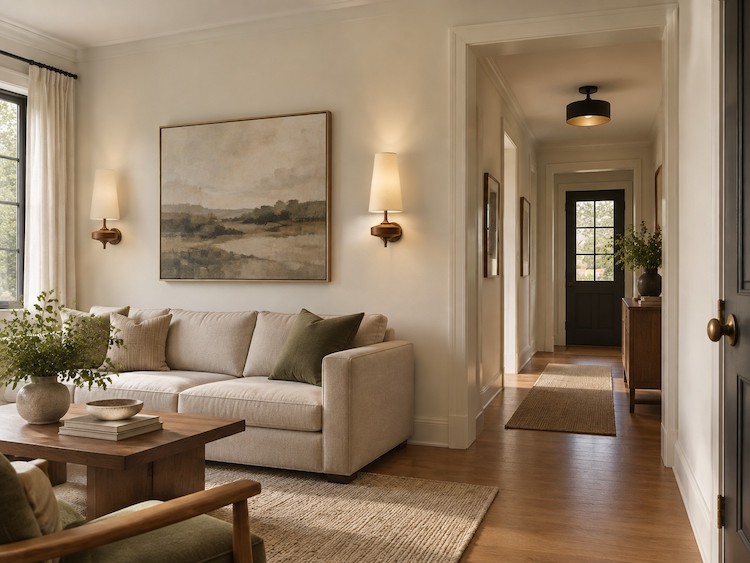
Wall sconces do not need to match door hardware or ceiling lights exactly. They should participate in a clear finish hierarchy. Match one visible characteristic, such as warm versus cool tone, muted versus polished sheen, or repeated shape, then allow another characteristic to differ. Prioritize the element that shares the same view and composition.
First Decide Which Existing Element Matters Most
Stand at the room entrance and identify what appears with the proposed sconce. A ceiling light may be central and visually dominant, or it may be small and outside the main composition. Door hardware may repeat around the room, while a single handle beside the sconce has little influence.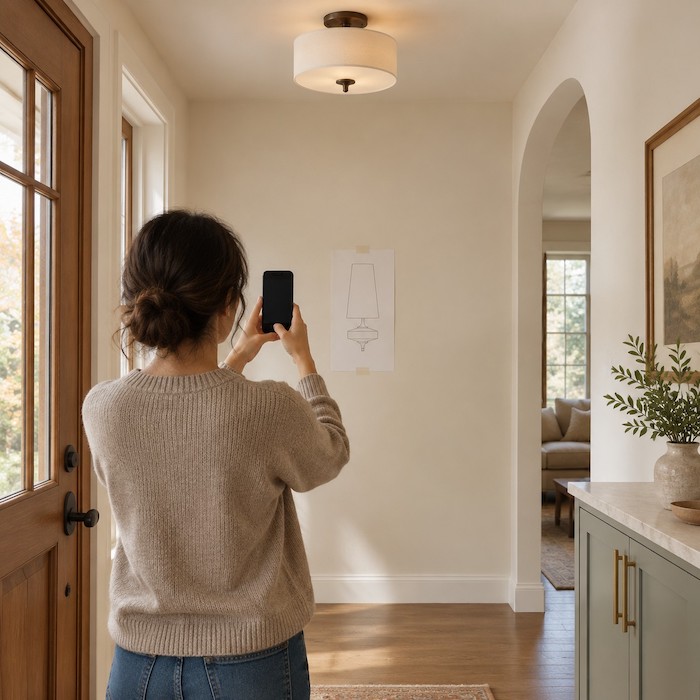
Use proximity, repetition and visual weight as the ranking criteria. The strongest relationship is not automatically the most expensive or permanent object. A pair of sconces flanking art can form its own complete group even when the ceiling light differs.
For coordinating the fixture's wood, metal and fabric together, see Wood Wall Sconces in Living Rooms: A Mixing & Styling Guide.
Match Temperature Before Exact Color
Metals often read as generally warm, cool or neutral-dark. Antique-brass details usually sit in the warm group; chrome and many silver-toned finishes read cooler; black can act as a neutral outline. Finishes within one temperature family can relate without being identical.
Sheen matters too. A muted aged finish beside highly polished metal creates stronger contrast than two softly reflective finishes. If their colors differ, a shared low sheen can still make them feel compatible. Compare real samples because product photography and screen settings can shift color.
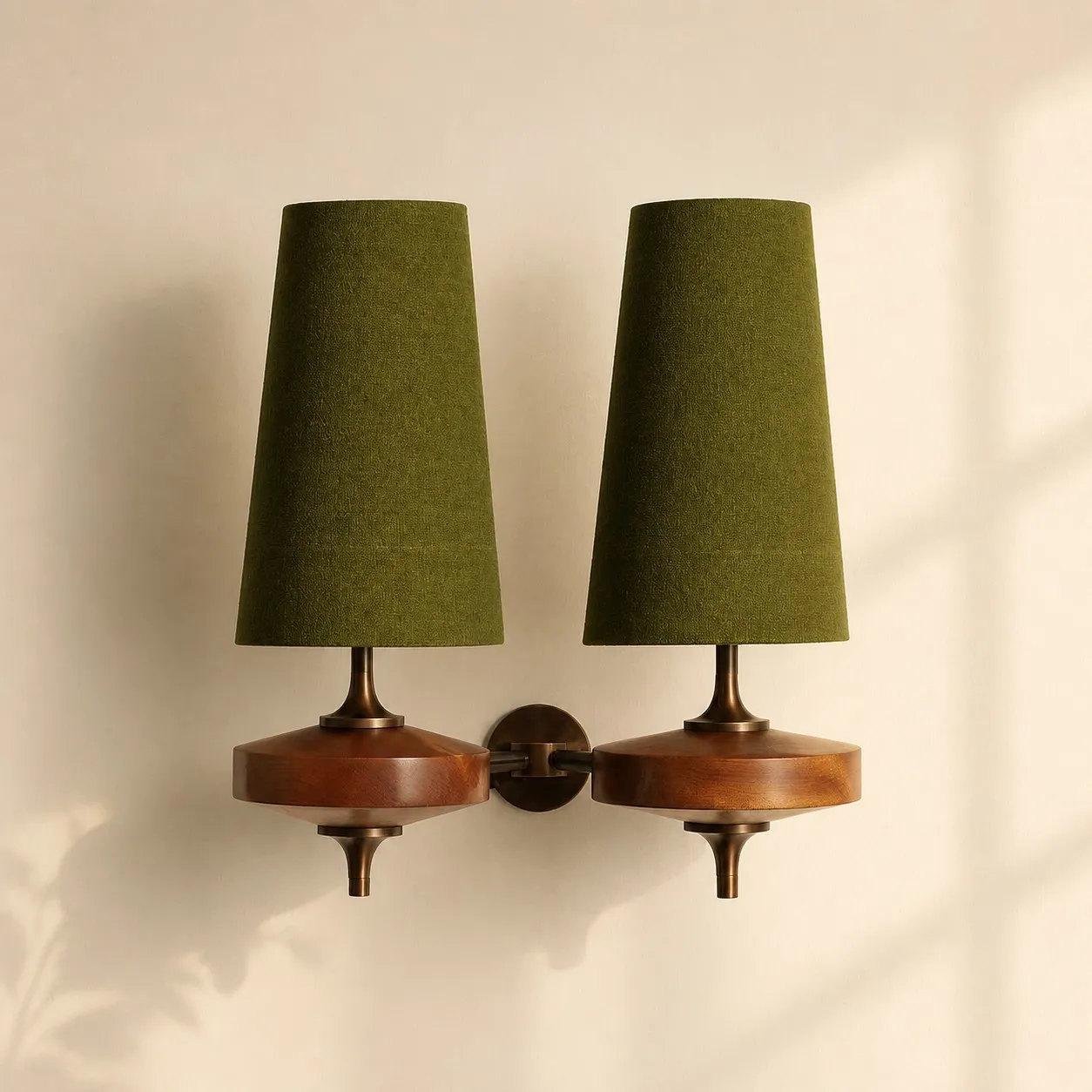
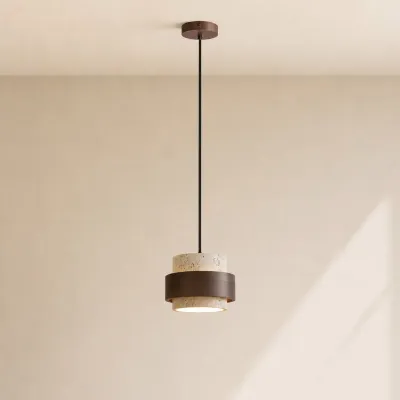
Hour Rho combines antique-brass details with a walnut-colored wood element and fabric shade. Use those materials to connect with more than one existing finish.
View the Hour Rho Wall LampWhen to Follow the Ceiling Light
Give the ceiling fixture priority when it is large, low, sculptural or clearly visible with the sconces. Repeat its metal temperature or a simple shape, but avoid copying every detail. A broad plain ceiling shade can pair with smaller fabric wall shades when the metal and color relationship is clear.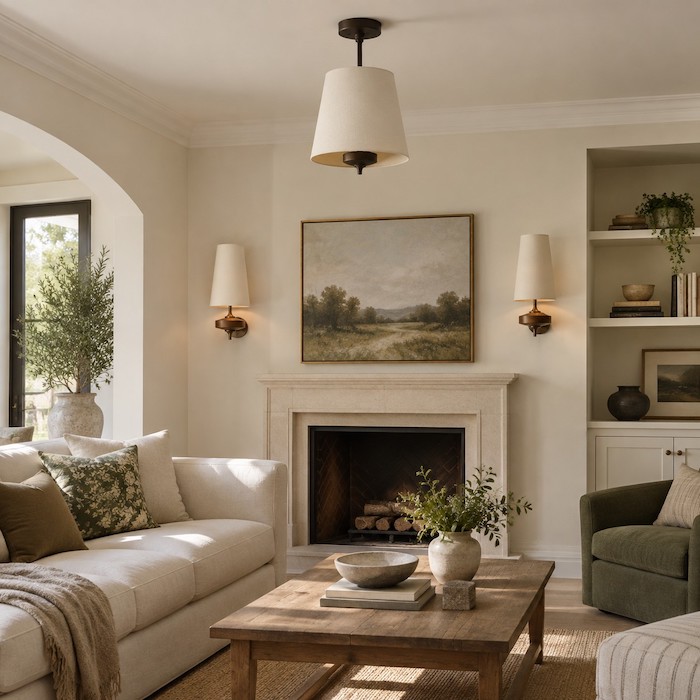
If the ceiling light contains several finishes, choose the one that is most visible from the room rather than a hidden connector or canopy. The sconce can echo that finish and introduce wood or fabric as a secondary material.
When to Follow Door or Cabinet Hardware
Hardware deserves more influence when it repeats around the sconce: several doors in a hallway, a media cabinet below the wall light, or built-ins that occupy the same elevation. Matching the general warmth and sheen can make the vertical composition coherent.
Do not let one tiny knob dictate the whole room. If the hardware is visually minor, treat it as a background neutral. The sconce can instead connect to furniture legs, a frame or curtain hardware that has more presence.
How to Mix Two Metals Deliberately
- Choose the dominant metal by area and repetition.
- Use the sconce metal as either part of that family or a clear accent.
- Repeat the accent once or twice in separated locations.
- Keep a shared property, such as warmth, soft sheen or rounded shape.
- Remove small unrelated finishes that make the mix look accidental.
A warm sconce detail can coexist with black hardware when black remains the architectural base and the warmer finish appears in a frame or tray. A cooler ceiling light can coexist with warm sconces when the fixtures share a clean silhouette and each finish has repetition.
| Situation | Best relationship | Reason |
|---|---|---|
| Prominent ceiling fixture in same view | Share temperature or silhouette | Creates a clear lighting family |
| Repeated doors around sconces | Relate to hardware sheen | Connects the eye-level rhythm |
| Black architectural frames | Keep black dominant; repeat warm accent | Preserves structure while allowing depth |
| Mixed-metal ceiling light | Repeat its most visible finish | Avoids introducing a third isolated metal |
Wood Can Resolve a Metal Mismatch
A wood wall-sconce body separates its metal detail from nearby hardware. This buffer makes exact matching less important because the fixture reads as a mixed-material object. Connect the wood to furniture and let the metal relate loosely to hardware or the ceiling light.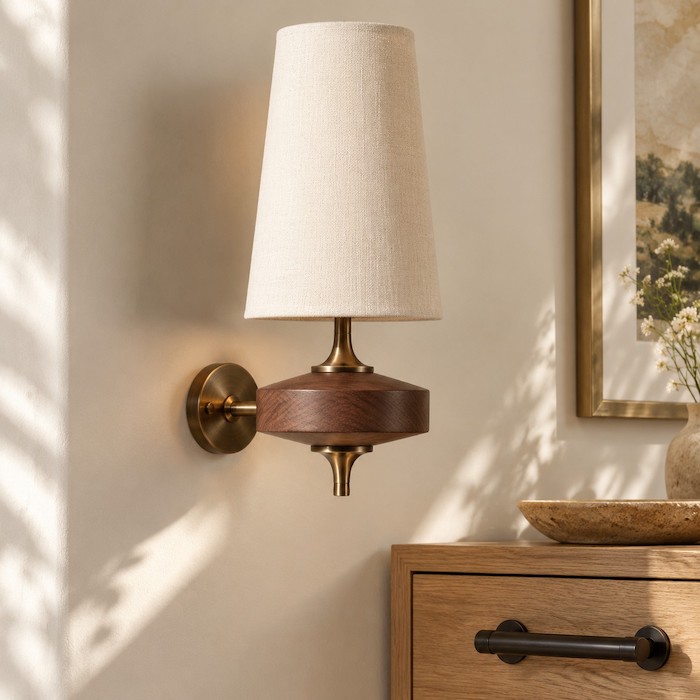
How to Mix a Walnut Wall Sconce With Light and Dark Wood gives a step-by-step method for that approach. It is useful when matching the sconce metal would weaken a more important relationship with flooring or furniture.
Hour Rho's wood body and fabric shade visually separate its antique-brass details from other room metals, supporting a coordinated rather than identical finish plan.
Review Hour Rho MaterialsShade Texture Can Be the Common Thread
When metals differ, repeated fabric color or shade silhouette can unite the lighting. Two fixtures can feel related because both use tapered light shades, even if one metal is dark and the other warm. This is often calmer than adding another metallic accessory solely to force a match.
For choosing the amount of textile detail, Pleated vs Plain Fabric Shades: Which Looks More Modern? compares surface rhythm and visual weight. The current Hour Rho page shows smooth shades, which can help keep a mixed-finish room quiet.
Check the Palette Under the Lights You Use
Metal, wood and paint can look different after dark. The Federal Trade Commission's light-bulb shopping guide explains that packaging includes a warm-to-cool light appearance scale. Use compatible bulbs with a coordinated appearance when the wall and ceiling fixtures operate together.
Photograph the room from the doorway with all usual lamps on. If one finish appears as a lone bright spot, repeat it once or reduce its prominence. If the lighting family feels too matched, allow shade texture, wood or scale to vary.
Common Matching Mistakes
- Ordering by finish name alone. Compare samples and sheen.
- Matching an element outside the main view. Prioritize shared sightlines.
- Giving every metal equal emphasis. Establish a dominant finish.
- Adding too many bridge accessories. One or two repetitions are usually clearer.
- Ignoring wood and fabric. They can connect fixtures more naturally than metal.
- Judging only with the lights off. Review the actual evening combination.
Compare Hour Rho's current wood, metal and shade choices with the hardware and ceiling light visible from your main room entrance.
Check Current Hour Rho OptionsFrequently Asked Questions
Should wall sconces match door handles exactly?
No. Shared temperature, sheen or repetition can create a clear relationship without an exact match.
Can sconces and a ceiling light use different metals?
Yes. Keep one finish dominant and connect the fixtures through silhouette, shade color or one repeated accent.
Can I mix black and antique-brass finishes?
Yes. Black can remain the architectural base while the warmer finish repeats in a limited number of accents.
Which should I choose first, sconces or hardware?
Start with the most visually important fixed elements, then choose sconces that relate to the composition rather than one small item.
Do all light fixtures need the same shade style?
No. A shared color, silhouette or metal can connect different shade textures and sizes.