



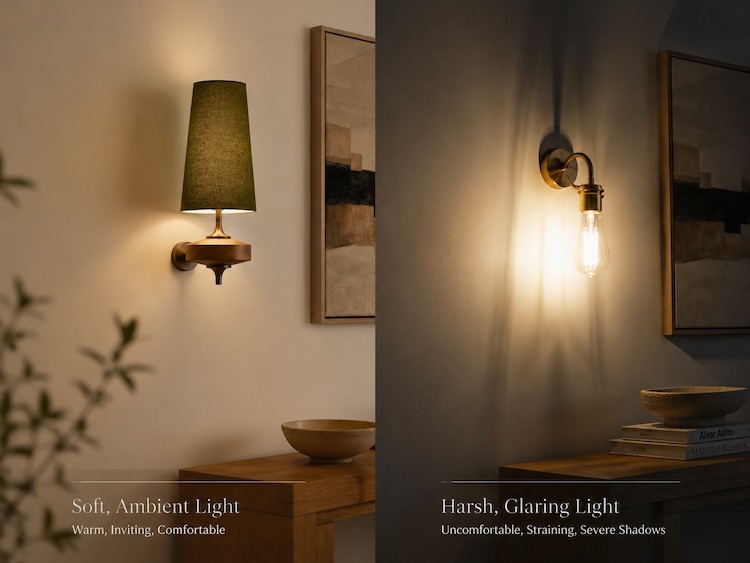
Soft Fabric Shade vs. Exposed Bulb: Why You Need a Fabric Shade to Solve Harsh Glare
Picture this: It is late in the evening. You have just turned off the television, the house is quiet, and you are walking down the hallway to your bedroom. Suddenly, the exposed Edison bulb on your hallway wall sconce blasts your tired eyes with an unforgiving, direct beam of light. Instead of feeling relaxed and ready for sleep, you are squinting, temporarily blinded by the harsh glare.
If this scenario sounds familiar, you have become a victim of a common interior design trend that prioritizes heavily-edited social media photos over actual living comfort. While exposed bulbs have dominated the industrial aesthetic for years, they present a significant problem when placed in spaces where humans actively live, sit, and walk: severe visual fatigue.
The direct answer to solving this problem is simple yet crucial: Exposed bulbs at everyday eye levels create unavoidable, uncomfortable glare. To soften the light, eliminate harsh shadows, and foster a truly comfortable atmosphere, a fabric shade is the ultimate necessity. The key factors dictating this choice are the installation height relative to your eyes, the function of the room (relaxation versus task-oriented), and the specific diffusion qualities of the fixture's material.
Quick Answer
If your lighting fixture sits at or near eye level—typically around 5 to 5.5 feet off the ground for wall sconces, or bedside table heights—you absolutely must choose a fixture with a fabric shade to diffuse the light and prevent harsh glare. Save the trendy exposed bulbs for high-vaulted ceilings, large industrial chandeliers, or extremely low-lumen decorative settings where the light source remains far outside your direct line of sight.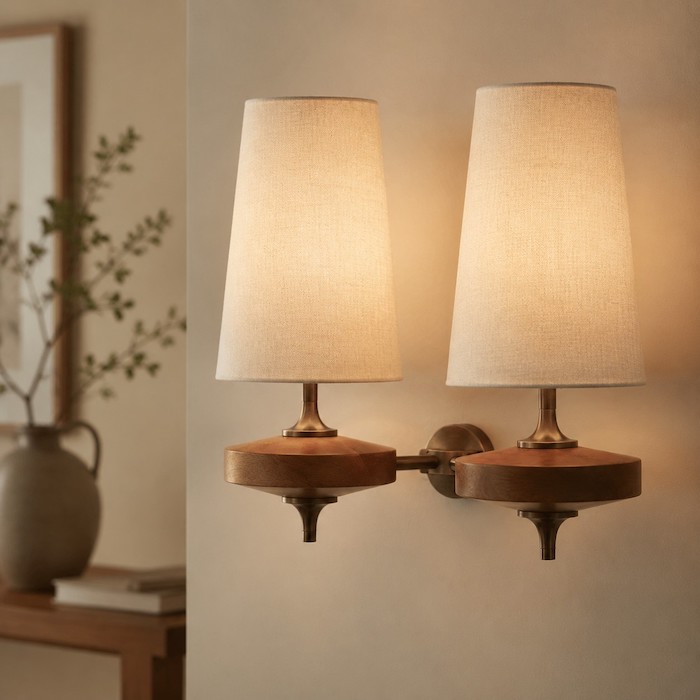
The Basic Rule of Eye-Level Lighting
To make the right lighting choices for your home, you need actionable standards, not just vague design advice. The decision between a soft fabric shade and an exposed bulb comes down to what we call the "Eye-Level Rule" alongside necessary lumen compensation.
The Eye-Level Rule
The human field of vision is highly sensitive to lateral glare—light that hits our eyes from the side. As a steadfast rule, any light fixture installed between 5 feet and 5.5 feet (1.5 to 1.7 meters) from the floor requires a shading or diffusing medium. This is the average standing eye level for adults. Furthermore, if the sconce is installed next to a sofa or an armchair, your seated eye level drops to roughly 3.5 to 4 feet. If a bare bulb is placed within this horizontal visual field, your pupils are forced to constantly constrict, causing rapid eye strain and headaches. A fabric shade acts as a necessary optical buffer, transforming a sharp pinpoint of light into a gentle, glowing surface.
Brightness and Lumen Compensation
It is a fact that a fabric shade will filter out a portion of the light emitted by the bulb—typically reducing the output by 10% to 20%, depending on the thickness and color of the fabric. Therefore, when utilizing a fabric shade, you must compensate by choosing a slightly brighter bulb.
Here is an actionable guide for choosing the right bulb for your fabric-shaded fixtures to achieve a "bright but not blinding" effect:
- Hallway Accent Lighting: Bare Bulb Output (For context) 200 - 400 Lumens | Recommended Output with Fabric Shade 300 - 500 Lumens | Ideal Color Temperature 2200K - 2700K (Warm)
- Living Room Ambient Sconce: Bare Bulb Output (For context) 400 - 600 Lumens | Recommended Output with Fabric Shade 600 - 800 Lumens | Ideal Color Temperature 2700K - 3000K (Warm White)
- Bedside Reading Light: Bare Bulb Output (For context) 500 - 700 Lumens | Recommended Output with Fabric Shade 700 - 900 Lumens | Ideal Color Temperature 3000K (Soft White)
Want to dive deeper into choosing the perfect warmth for your space? Read our complete Kelvin Guide / Color Temperature Guide to master your home's ambiance.
When to Choose a Fabric Shade
Fabric shades are not just a functional tool for blocking glare; they are a profound design statement that brings organic texture into a space. They are particularly essential when your interior design leans toward popular aesthetics like Scandi-minimalism, Japandi, or Warm Minimalism. These styles reject the cold, clinical feel of bare metal and glass, favoring natural materials that evoke calm and serenity.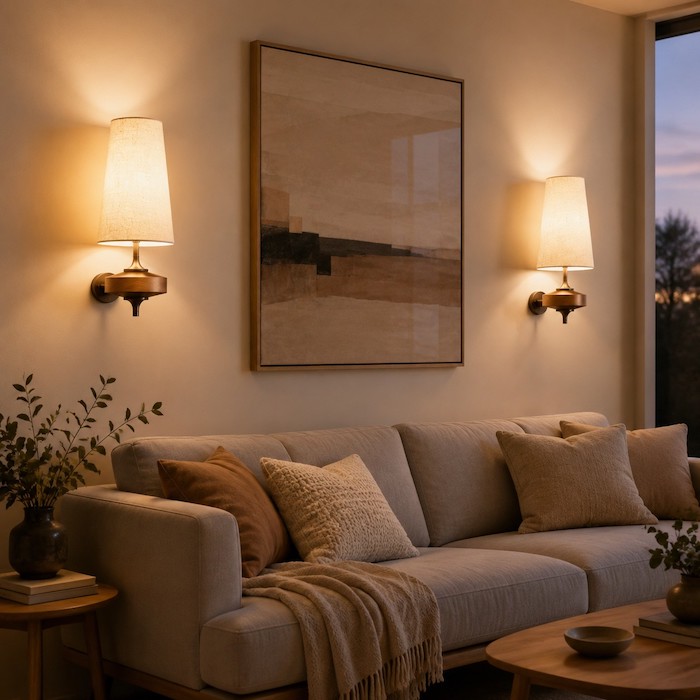
Here is exactly when and where you should prioritize a fabric shade:
- Hallways and Corridors: Hallways act as transitional spaces. You need enough light to guide your way safely, but you do not want an intense beam hitting you as you move from a brightly lit living room to a dark bedroom. Fabric shades create a soft wash of light against the wall, providing excellent navigational illumination without the visual assault.
- Living Room Lounge Areas: The living room is meant for unwinding. Harsh light destroys ambiance. Sconces flanked beside a fireplace or above a sofa should always feature fabric shades. They provide a beautiful, diffused ambient light that complements the glow of a television or a fire, making the room feel cozy and inviting.
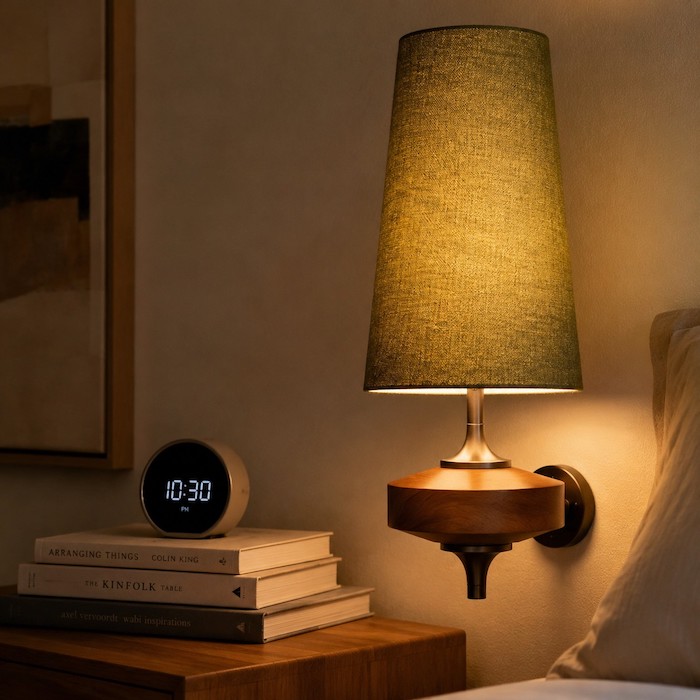
- Bedrooms and Nightstands: This is arguably the most critical area. Exposure to harsh, direct light before bed suppresses melatonin production, disrupting your sleep cycle. A fabric wall sconce near the bed provides the softest, most forgiving light, preparing your brain for rest while still allowing enough illumination to read a book.
Looking to upgrade your minimalist decor? Explore our When Scandi Meets Japanese: A Textbook Application of Wood Fabric Sconces in Japandi Style for more inspiration.
When Exposed Bulbs Actually Work
To be completely objective, exposed bulbs are not inherently bad; they are simply misused in modern residential applications. There are specific architectural conditions and design styles where an exposed bulb is not only acceptable but functionally and aesthetically superior.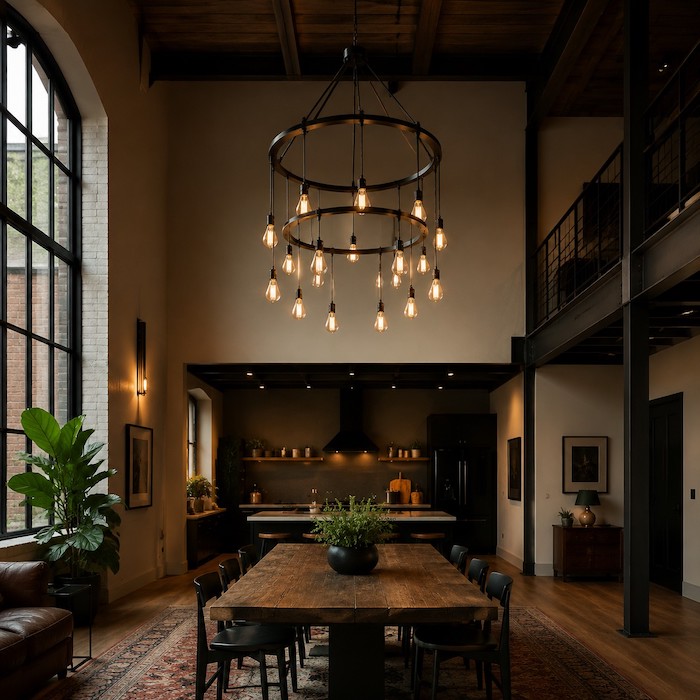
You should opt for exposed bulbs in the following scenarios:
- Ultra-High Ceilings: If you live in a loft or have vaulted ceilings that exceed 10 to 12 feet, hanging a large, industrial-style chandelier with exposed Edison bulbs works beautifully. Because the light source is suspended far above your natural eye level, the glare is minimal, and the raw look of the filament adds tremendous visual drama to the empty vertical space.
- Dedicated Task Lighting: In environments where absolute clarity and maximum brightness are required, fabrics can be a hindrance. For instance, over a kitchen island where you are chopping vegetables, or in a garage workspace, clear glass pendants or exposed bulbs deliver the unfiltered directional light necessary for safety and precision.
- High-Humidity or Greasy Environments: Fabric absorbs moisture and traps airborne grease. For spaces right next to a kitchen stove or inside a bathroom without proper ventilation, exposed bulbs or easy-to-wipe glass fixtures are much more practical from a maintenance standpoint.
Common Lighting Mistakes You’re Making
Even when homeowners recognize the need to upgrade their lighting, they frequently fall into a few predictable traps. Here are the most common mistakes people make when choosing between shades and raw bulbs, and how to fix them:
- Mistake 1: Using Clear Glass Sconces at Eye Level.
The Issue: Many people buy clear glass wall sconces thinking they look "modern and sleek," only to realize that clear glass offers zero light diffusion. It is exactly the same as having a bare bulb on the wall.
The Fix: If you love the look of glass but hate the glare, opt for frosted glass, seeded glass, or switch entirely to a white fabric shade that offers true diffusion. - Mistake 2: Choosing Opaque, Dark-Colored Fabric Shades.
The Issue: To make a bold statement, some homeowners select stark black or heavy, dark-green velvet shades. While stylish, these thick, dark materials block almost all horizontal light, turning the fixture into a strict "up/down" wall washer. You lose all the ambient room glow.
The Fix: Stick to light, neutral fabrics like oatmeal linen, crisp white cotton, or soft beige. These allow a warm, diffused omnidirectional glow to permeate the room. - Mistake 3: Putting High-Wattage LED Bulbs in Vintage Fixtures.
The Issue: Putting a modern 1000-lumen LED bulb into a fixture designed for an old, dim 40-watt incandescent bulb. The result is blindingly bright and completely ruins the aesthetic.
The Fix: Always check the lumen output. If you must use an exposed bulb, use a highly dimmed, low-lumen vintage reproduction bulb (under 300 lumens).
The Perfect Solution: Hour Rho Wall Lamp
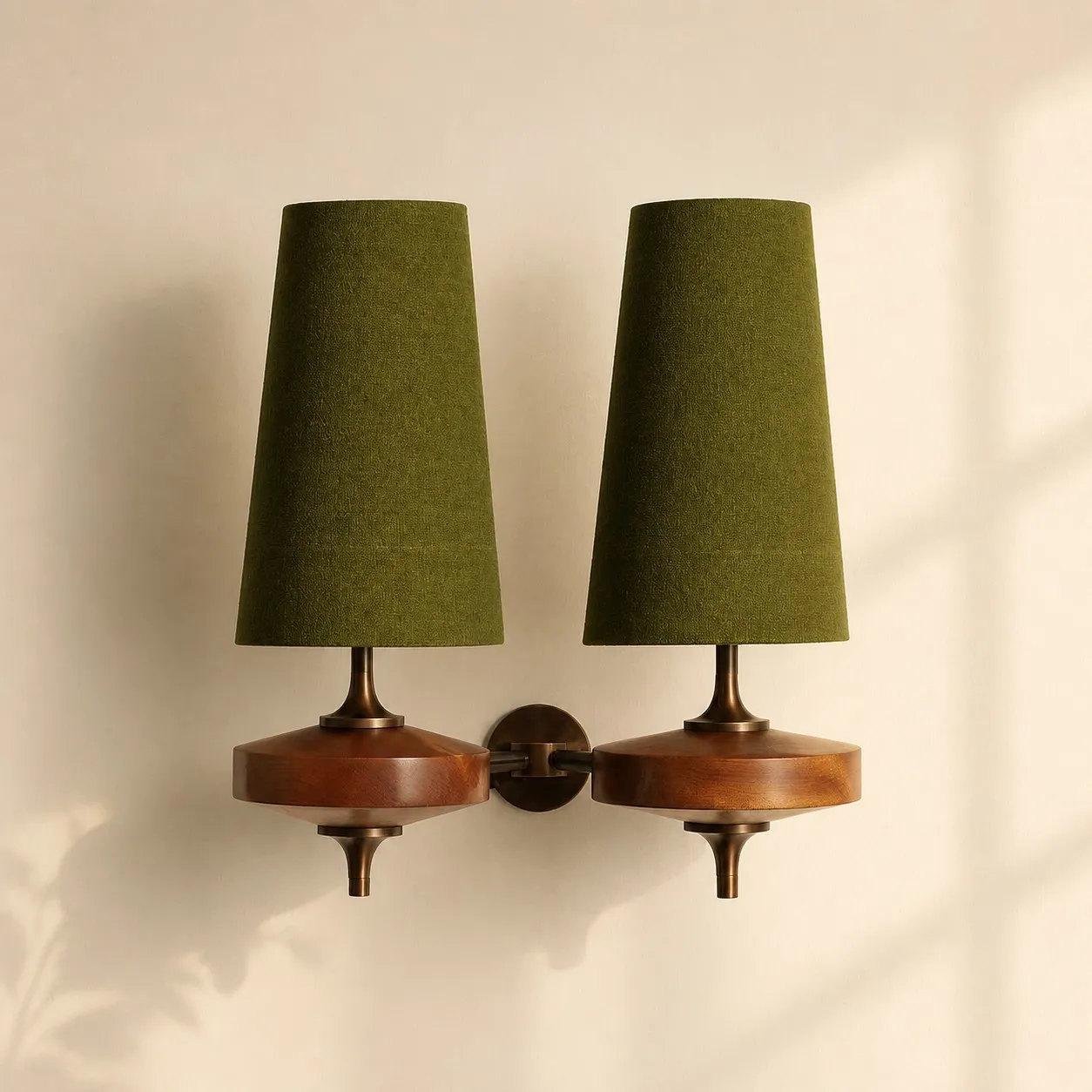
Understanding the necessity of diffused light is the first step; finding a fixture that beautifully executes this rule is the next. If you are looking to eliminate hallway glare or add a touch of warm minimalism to your living room, the Hour Rho Wall Lamp represents the perfect synergy of form and function.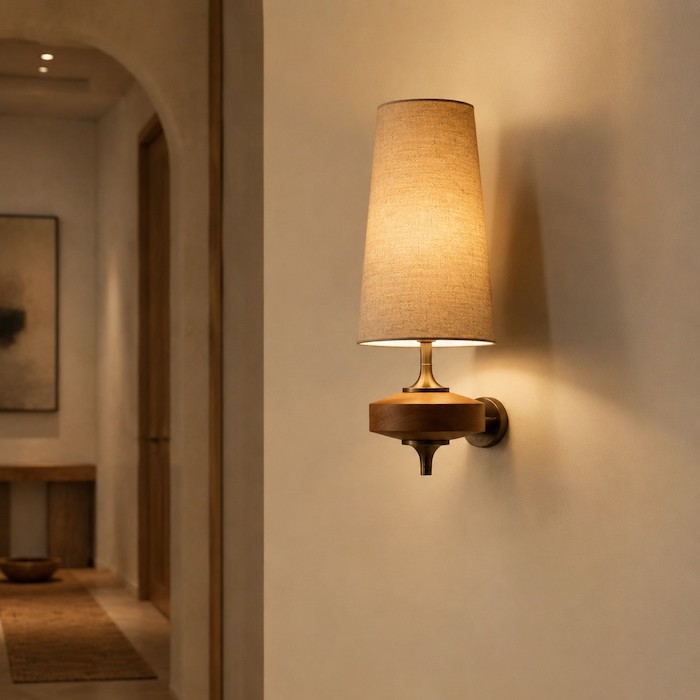
This fixture directly addresses the "Eye-Level Rule." By utilizing a high-quality, light-toned fabric shade, it expertly filters out harsh glare, transforming the light from your LED bulb into a soft, atmospheric glow that is incredibly easy on the eyes. It is specifically designed to be mounted in spaces where you walk or relax, guaranteeing that you will never be blinded by a bare filament again.
Beyond its optical benefits, the Hour Rho Wall Lamp excels in its aesthetic execution. The integration of modern wood elements provides a natural, grounded texture that elevates the fixture from a simple light source into a piece of art. It perfectly encapsulates the Scandi-minimalist ethos: clean lines, honest materials, and undeniable comfort. Whether framing a living room sofa, illuminating a long corridor, or serving as a gentle bedside companion, this lamp solves your glare problem while instantly upgrading your home's interior styling.
FAQ
1. Does a fabric shade dim the room too much?
Not if you plan accordingly. A fabric shade is designed to diffuse light, not eliminate it. While a standard linen shade might reduce the raw light output by 10% to 20%, it distributes the remaining light much more evenly across the room, eliminating harsh shadows. To ensure your room remains bright, simply install a bulb with a slightly higher lumen count (e.g., swapping a 600-lumen bulb for an 800-lumen bulb) to compensate for the diffusion.
2. What kind of bulb is best for a fabric sconce?
Always opt for LED bulbs, as they do not emit the high heat of traditional incandescent bulbs, making them perfectly safe to use in close proximity to fabric. For the best aesthetic result, choose a standard A19 shape LED bulb with a warm white color temperature (between 2700K and 3000K). This specific warmth interacts beautifully with linen and cotton, enhancing the cozy, inviting nature of the shade.
3. How do I clean and maintain a fabric wall lamp?
Maintaining a fabric shade is incredibly simple and does not require harsh chemicals. For weekly cleaning, use a standard lint roller or a clean microfiber cloth to gently lift away surface dust. Once a month, you can use the upholstery brush attachment on your vacuum cleaner on the lowest suction setting to remove any deeper dust particles. Never use wet sponges or liquid spray cleaners on fabric shades, as this can cause water stains or uneven discoloration.
Need more tips on keeping your fixtures looking brand new? Read our comprehensive guide on How to Clean and Maintain Lighting Fixtures.