



Say Goodbye to Gloom: 3 Design Secrets to Improve Your Bedroom Environment with Fabric Shade Wall Sconces
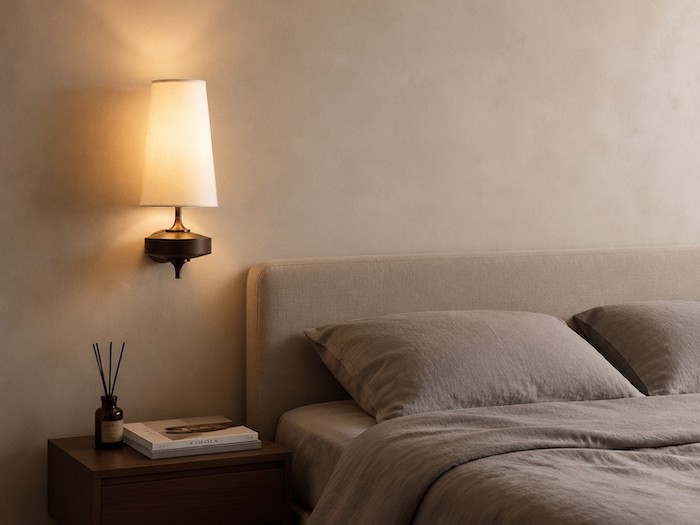
To banish gloom from a bedroom, you do not need a brighter light bulb; you need diffused light distribution and organic material textures. The fastest, most effective way to eliminate a depressing, shadowed bedroom atmosphere is to install fabric-shade wall sconces at eye level on either side of your bed. This configuration instantly replaces harsh overhead glare with a soft, wrapping ambient glow, eradicating dark corners and casting a soothing, visually expansive warmth across the entire space.
Many homeowners mistakenly try to solve a dark, uninspiring bedroom by screwing a higher-wattage LED into their central ceiling fixture. The result is inevitably a cold, clinical environment that mimics an office or a hospital room—the exact opposite of a restorative sanctuary. True psychological and visual warmth comes from how light is scattered and the textures it interacts with before reaching your eyes. When a bedroom feels gloomy, it is rarely due to a lack of raw lumens; rather, it is a symptom of poor light quality, sharp shadows, and cold, unresponsive surface materials.
Below are three specific, designer-vetted secrets to transforming a gloomy bedroom environment using the unique physics and design advantages of fabric-shaded wall sconces.
1. Why Fabric Shades are the Ultimate Cure for Bedroom Visual Fatigue
The primary reason a bedroom feels gloomy or uninviting often tracks back to two lighting extremes: high-contrast shadows or aggressive glare. Exposed bulbs or metal-shaded fixtures throw light downward in a harsh, restrictive cone, leaving the upper corners of the room in deep shadow—a phenomenon interior designers call the "cave effect"—while blinding you when you try to lie down and relax. Fabric shades completely rewrite this dynamic through the principle of multi-directional diffuse reflection.
When raw light passes through a woven fabric shade, the individual fibers scatter the light rays in thousands of different directions. Instead of a single, piercing point of light that strains the eyes, the entire shade becomes a soft, glowing canvas. Furthermore, standard open-top and open-bottom fabric sconces create an elegant wall-washing effect, casting light simultaneously upward toward the ceiling and downward toward the nightstand. This vertical distribution visually stretches the height of your walls, making a cramped or dim room feel immediately airy, open, and clear.
To make an informed choice for your space, it helps to understand how fabric shades systematically solve the design flaws inherent in other popular lighting materials:
Material Performance Comparison
| Lighting Attribute | Fabric Shade Sconces | Metal / Industrial Sconces | Clear Glass Sconces |
|---|---|---|---|
| Light Distribution | 360-degree soft diffusion with vertical wall-washing | Directional, down-focused spotlighting | Unfiltered, multi-directional direct light |
| Glare Prevention | Excellent. Completely conceals the bulb filament | Moderate. Protects top view but has high contrast below | Poor. High risk of eye strain and sleep disruption |
| Shadow Quality | Fades out harsh wall shadows into soft gradients | Casts sharp, dramatic shadows that darken corners | Creates hard lines and emphasizes wall imperfections |
| Daytime Texture | Adds tactile softness (linen/cotton) when unlit | Looks clinical, cold, or highly industrial | Invisible or prone to showing dust and fingerprints |
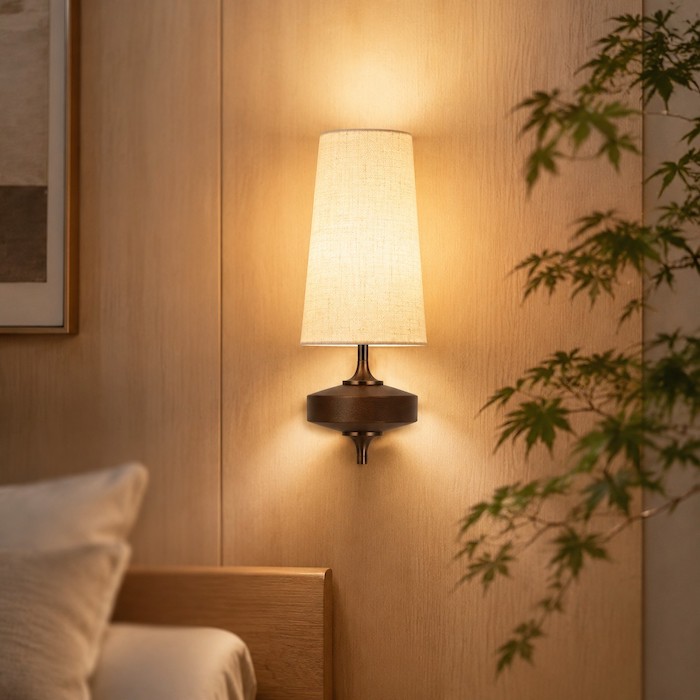
If your bedroom suffers from low natural light or north-facing windows that feel perpetually gray, a metal or glass fixture will only compound that coldness. A high-quality fabric shade provides a permanent baseline of visual warmth, even when the lamp is turned off during the afternoon. The woven texture interacts beautifully with whatever ambient daylight is available, ensuring the wall never looks flat or dead.
For a comprehensive breakdown of how to map out all the light sources in your sleeping space to eliminate shadows entirely, read our Lighting Affects Mood: How Soft Diffused Light from Linen Shades Helps Ease Bedtime Anxiety.
2. How the Synergy of Wood and Fabric Restores Warmth to a Cold Bedroom
To successfully neutralize a gloomy room, your light fixtures must provide both active warmth when turned on and passive warmth when turned off. This is where material selection becomes critical to your emotional well-being. Modern interior design heavily leverages biophilic design principles—the practice of incorporating natural elements into the home to instinctively lower human cortisol levels, reduce stress, and trigger feelings of security.
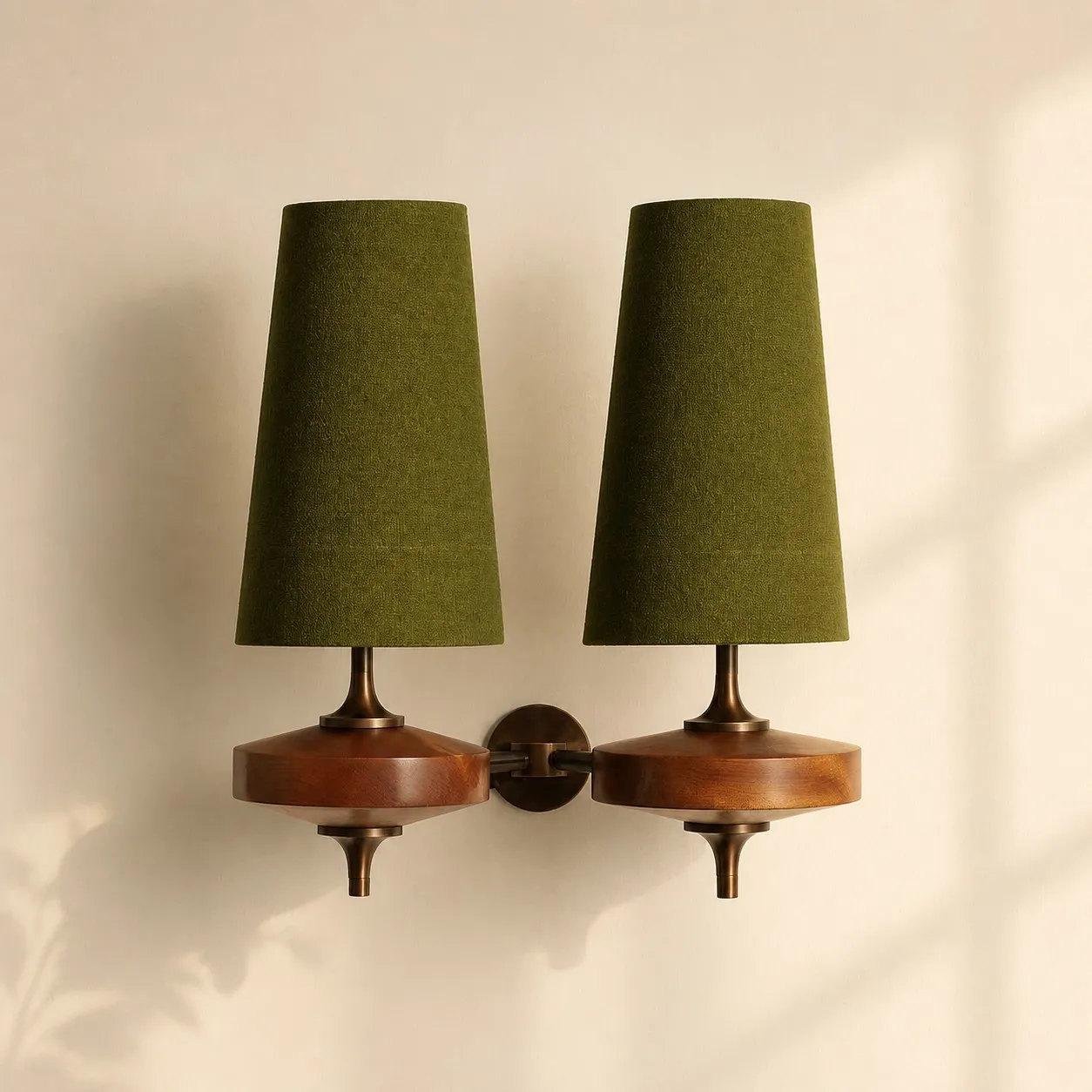
The combination of solid, natural wood with a soft fabric linen shade creates a powerful sensory synergy. The wood components ground the fixture, adding structural warmth and an earthy element to bare drywall, while the fabric shade provides an elegant, soft counterpoint. This specific material pairing acts as a visual anchor. It is particularly crucial if your bedroom features cold modern elements like gray paint, minimalist laminate furniture, or exposed metal bed frames, which can collectively drain the life out of a space.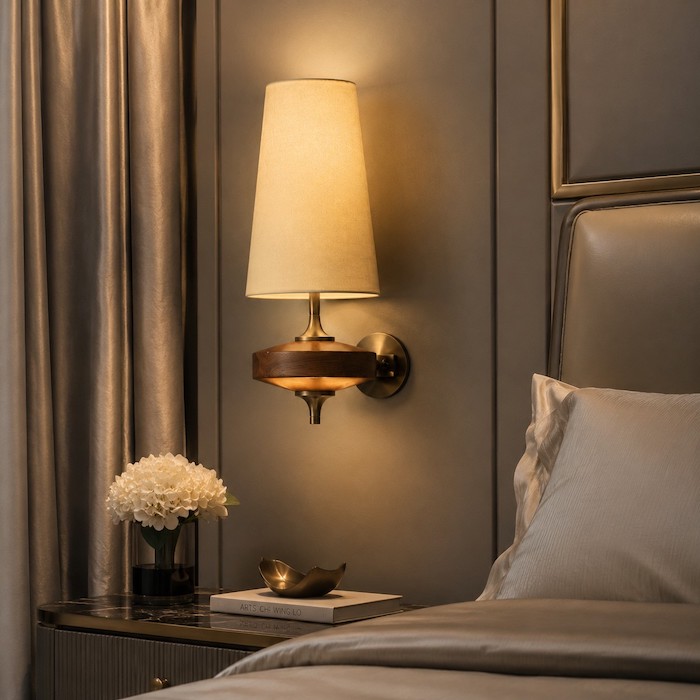
When these materials work together, they establish a balanced atmosphere. The natural wood base provides a grounding, organic texture that gives the wall structural depth, while the fabric linen shade delivers soft light scattering and tactile comfort. Together, they eliminate bedroom gloom both day and night, ensuring that the room feels curated rather than sterile.
Many homeowners assume that architectural, wooden light fixtures are reserved strictly for transitional zones like hallways, entryways, or living rooms. However, importing this specific aesthetic into the bedroom is a highly effective design secret.
For example, implementing a fixture like the Hour Rho Wall Lamp - Modern Wood Wall Sconce with Fabric Shade for Hallway and Living Room right at your bedside brings immediate structural sophistication. While its clean geometric lines make it incredibly versatile for transitional spaces like corridors, its real magic happens next to a bed. The natural timber backing plate breaks up the monotony of flat bedroom walls, while the classic cream-toned fabric shade ensures that the emitted light is entirely devoid of cold, blue undertones. It transitions seamlessly from a sculptural wall feature by day to a deeply relaxing ambient light source by night.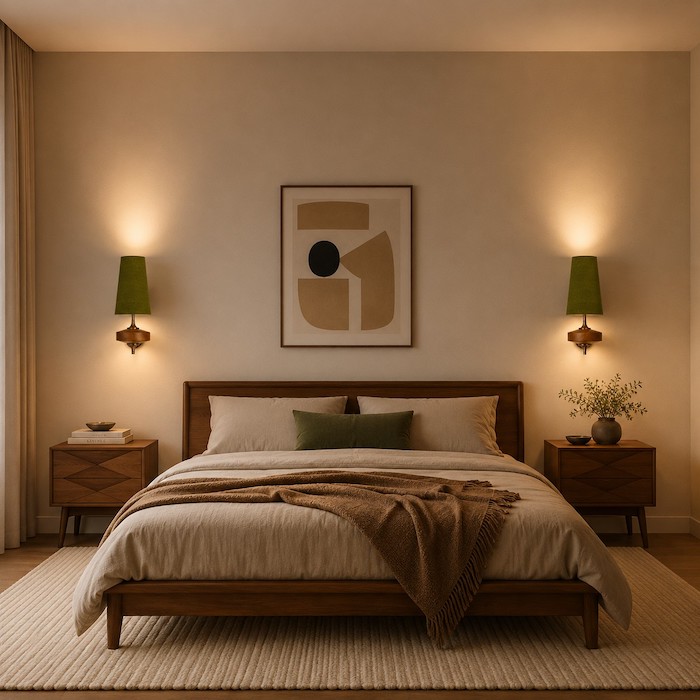
When adopting this look, remember this definitive design rule: Match the undertone of your woodwork, not necessarily the exact color. If you have light oak floors, a warm ash or walnut wood accent on your sconce will provide a beautiful, intentional contrast without clashing, provided both woods share a warm, natural undertone.
To explore more organic contemporary options that bring nature indoors, view our full Wall Lighting Collection.
3. What is the Exact Geometric Formula for Placing Bedside Wall Sconces?
Even the most beautiful fabric sconce will fail to cure bedroom gloom if it is installed at the wrong height or distance. Mount them too high, and you will look directly up into an exposed bulb while lying down; mount them too low, and the light gets trapped behind your pillows, shrinking the room’s visual boundaries and failing to wash the upper wall.
To create an expansive, luxury-hotel feel that completely eliminates dark corners around the bed, you must position the fixtures so that the light interacts perfectly with your sightlines. Follow this precise installation checklist to guarantee success:
The Bedside Sconce Placement Checklist
- The Vertical Sweet Spot (Height from Floor): Measure exactly 60 to 64 inches from the finished floor to the center of the fixture’s backplate. This ensures that when you are sitting up in bed, the fabric shade perfectly shields your eyes from direct bulb glare, while allowing the upward light to bounce effectively off the ceiling to maximize room volume.
- The Lateral Spacing (Distance from Mattress): Install each sconce 8 to 12 inches away from the outer edge of your mattress. Mounting them too far out leaves a gloomy dead-zone over your pillows where you need light most; mounting them too close crowds the headboard and risks accidental bumps when changing your sheets.
- The Proportional Rule for Nightstands: Ensure the maximum width of your sconce shade does not exceed half the total width of your nightstand. A massive shade over a tiny table creates visual top-heaviness, while an overly petite sconce looks lost and fails to cast enough light to illuminate the bedside wall properly.
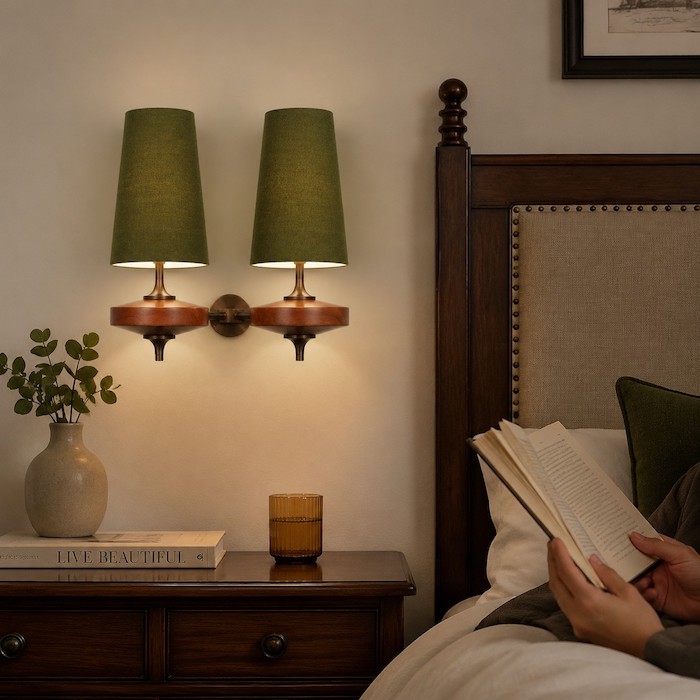
By following this geometric formula, you maximize the vertical wall-washing effect of the fabric shade. The light reaches high enough to blend with your ceiling volume and low enough to illuminate your nighttime reading material without casting your face in harsh shadow. This structured arrangement creates a sense of symmetry and purpose, which visually stabilizes the room and makes it feel instantly more inviting.
If you are currently renting your home or want to avoid cutting into your drywall to run new electrical wires, you can easily opt for a plug-in conversion. For a step-by-step breakdown on how to install these fixtures safely and cleanly using cord covers without hiring an electrician, check out our Step-by-Step DIY Guide to Installing Plug-In Wall Sconces.
4. Selection Criteria: Choosing the Perfect Bulb for Your Fabric Sconce
An excellent fabric shade can only do so much if it is paired with an incorrect light bulb. To maintain a cozy, gloom-free environment, you must make a firm, uncompromising choice regarding color temperature, brightness, and color accuracy.
- Color Temperature (The Non-Negotiable): Choose bulbs rated strictly between 2700K (Warm White) and 3000K (Soft White). Anything above 3500K introduces blue light waves that mimic midday sunlight, halting your body's natural production of melatonin and giving your fabric shade an uninviting, sickly greenish-gray tint.
- Lumens vs. Watts: Look for an LED bulb that outputs roughly 450 to 800 Lumens (the energy equivalent of a traditional 40W to 60W incandescent bulb). This provides ample illumination to banish bedroom shadows without overpowering the fabric shade and causing it to bleed blinding light through the weave.
- CRI (Color Rendering Index): Select a bulb with a CRI of 90 or higher. High-CRI bulbs render colors accurately, meaning your bed linens, natural wood furniture, and wall paint will look rich and true to life under evening light, rather than washed out, dull, or muddy.
Transform Your Sanctuary Today
Overcoming a gloomy bedroom is entirely achievable once you stop fighting against dark corners with aggressive overhead lighting and start working with soft, texturized layers. By prioritizing the high-diffusion capabilities of woven shades, embracing the grounding presence of organic wood accents, and sticking to precise geometric installation rules, you shift the entire energy of your room from isolating to wrapping.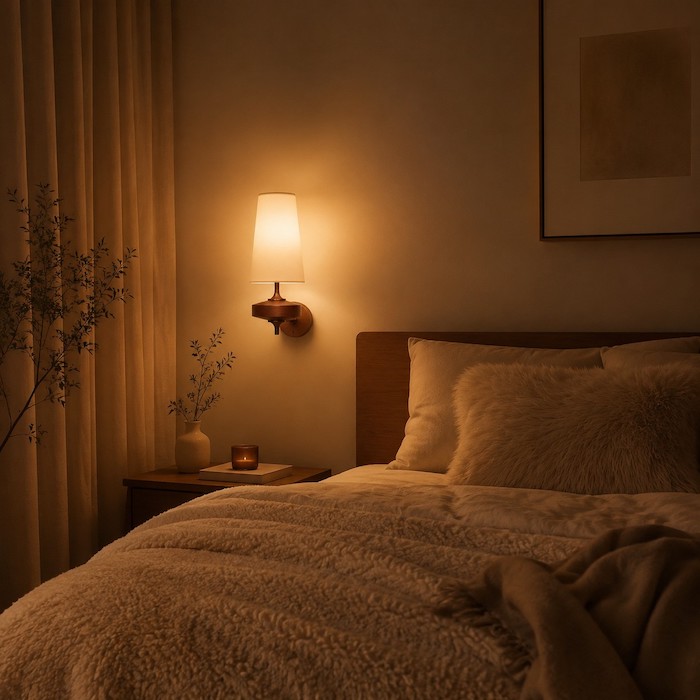
Ready to completely redefine your bedroom environment? Elevate your bedside decor by introducing the stunning, minimalist silhouette of the Hour Rho Wall Lamp - Modern Wood Wall Sconce with Fabric Shade for Hallway and Living Room. Its balance of mid-century warmth and clean, modern lines will bring your walls to life, turning your bedroom into the bright, tranquil retreat you deserve.
Frequently Asked Questions (FAQ)
Q1: Can fabric shade wall sconces provide enough light for reading in bed?
Yes, absolutely. When positioned according to the design rules (60–64 inches from the floor and 8–12 inches from the mattress edge), a fabric shade sconce paired with a 600–800 lumen bulb offers excellent, localized task lighting for reading without straining your eyes or causing glare.
Q2: How do I properly clean and maintain fabric lamp shades?
To keep fabric shades looking vibrant and dust-free, gently wipe them weekly with a clean microfiber cloth or a lint roller. For deeper accumulated dust, you can use the soft brush attachment of your vacuum cleaner on low suction. Avoid wet cloths, as moisture can stain or warp the delicate woven liner.
Q3: Are fabric shade sconces compatible with smart home ecosystems and dimmable bulbs?
Yes, most premium fabric wall lamps, including the Hour Rho Wall Lamp, utilize standard bulb sockets (such as E26/E27). You can easily install dimmable smart bulbs (like Philips Hue or Lifx) to dynamically adjust the brightness and fine-tune the warmth of your bedroom atmosphere via voice commands or automation apps.
Q4: Will a wood and fabric wall lamp clash if my bedroom furniture is made of metal?
Not at all. In fact, interior designers recommend mixing textures to avoid a sterile look. The natural wood base and soft linen shade of a fixture provide a necessary visual counterpoint to cold metal frames or minimalist laminate case goods, instantly balancing the room's sensory weight.