

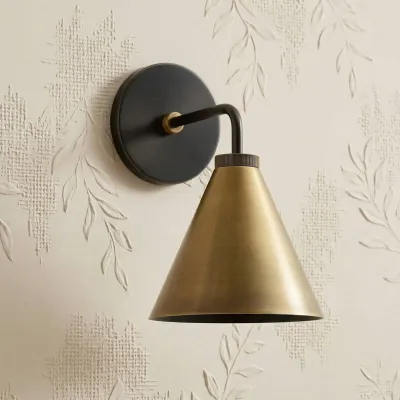


Bottom line: A hardwired wall sconce is a wiring-and-layout decision, not only a style purchase. Before ordering, confirm where a junction box can sit, how the switch will be controlled, which voltage and certification apply in your market, and whether the chosen bulb and dimmer are compatible. The Bellina Wall Lamp is hardwired, uses an E26 or E27 socket, accepts two bulbs and is listed for 110–240V markets, so a qualified electrician should translate the product page into the final installation.
What Hardwired Actually Commits You To
Hardwired means the fixture connects to building wiring rather than a plug at the wall. That can create a clean bedside or hallway result, but it also fixes the electrical point in the wall. Moving the furniture later may not move the light with it. A renter may need written permission, a homeowner may need a permit or inspection depending on local rules, and anyone uncertain about the existing circuit should pause before buying.
The Bellina Wall Lamp product page identifies a hardwired construction, E26 or E27 socket, dimmer compatibility, two light sources and a 28 cm diameter by 25 cm height with about 13 cm projection. It also says the order does not include bulbs or a dimmer. These are product facts, not a wiring diagram. Use them to plan the space and give the final circuit work to a qualified electrician.
Junction Box: The First Purchase Check
A junction box must be supported by the wall structure and positioned so the fixture's canopy or mounting plate covers it. For the Bellina, tape a 28 × 25 cm template at the proposed center and mark the 13 cm projection. Check the backplate area, screw access and the path of the cable before anyone opens the wall.
- Existing box: confirm its location, condition, box type and whether it is centered for the fixture.
- New box: confirm the wall material, stud or approved support, cable route and patching access.
- Bedside box: keep the glass clear of pillows, curtains, doors and the user's shoulder zone.
- Hallway box: check the narrowest passage, door swing and impact risk before choosing height.
Do not treat a decorative wall anchor as a substitute for an electrical box. The fixture weight, box rating, grounding method and local code all matter. If the wall is tile, masonry, plaster or a fragile panel, ask the electrician how the box and finish will be protected.
Choose the Switch Before the Wall Is Closed
Decide whether the sconce will use a wall switch, a bedside switch, a two-way arrangement or a dimmer. A beautiful fixture becomes frustrating when the control is behind the bed, outside the room or too far from the reading position. Sketch the bed, nightstand and door on the wall plan, then mark the reach zone from the normal sitting position.
The Bellina page lists dimmer compatibility but notes that the dimmer is not included. The bulb must also be dimmable, and the control must be rated for the LED load. Ask the electrician to confirm neutral, grounding, traveler and load requirements rather than selecting a control from appearance alone. Flicker, buzzing or a narrow usable dimming range is a compatibility problem, not a reason to keep raising the brightness.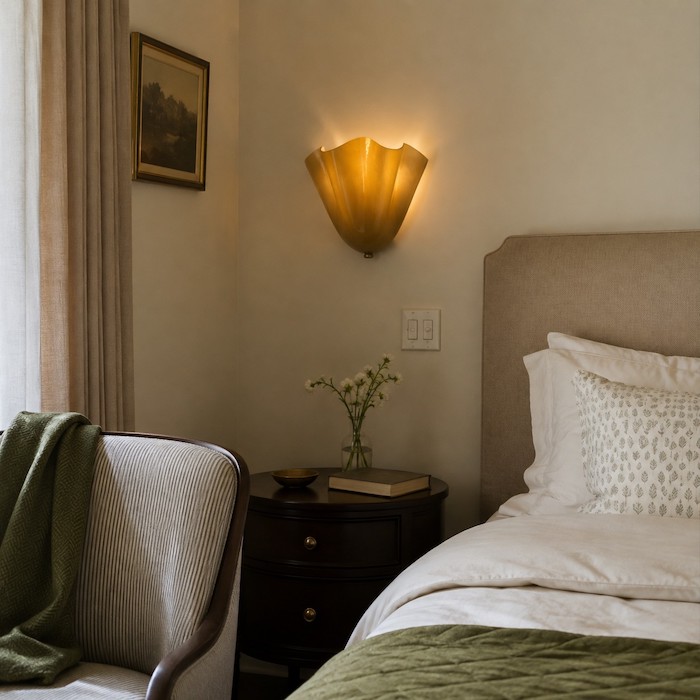
Voltage and Certification Are Market Checks
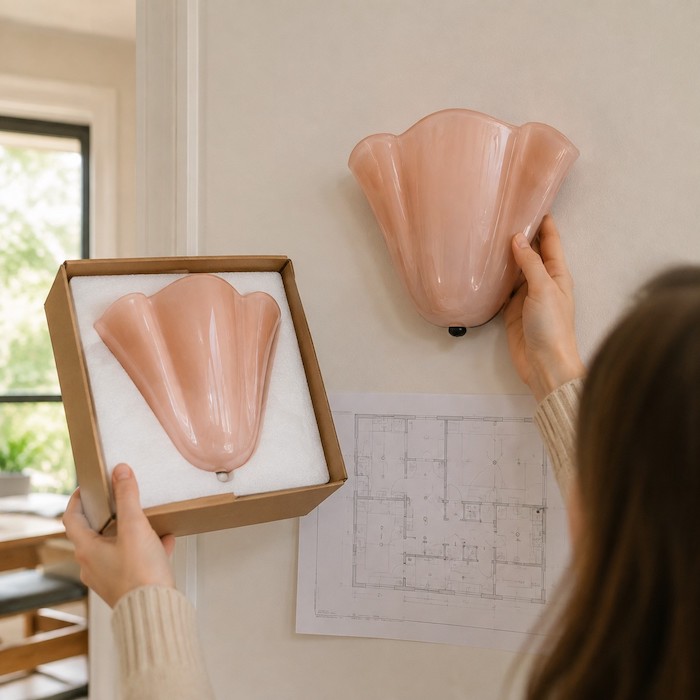
Voltage is not a styling option. The product page lists compatibility with North America, Australia, Europe and the Middle East certification markets, and shows a 110–240V range. Match the exact regional variant, lamp marking, bulb voltage and local installation rules. Never infer that a socket or a plug adapter converts a fixture into a safe cross-border installation.
Certification marks should be read as evidence for a particular product and market, not as a blanket promise that every installation is safe. Ask for the current product documentation if the mark, model or voltage on the delivered item differs from the order. OSHA's electrical safety information explains why qualified people and de-energized work matter around electrical systems.
Bulbs, Wattage and Heat Still Belong on the Plan
Bellina uses two sockets and the page specifies two 10W incandescent bulbs or LED equivalents. That does not mean you must fill both sockets with the brightest bulbs available. Compare lumens, shape, Kelvin, color rendering, dimmability and actual wattage. ENERGY STAR's LED lighting guide is a useful primer for reading efficiency and output labels.
Measure the glass opening before ordering a bulb. An E26/E27 base can accept an A15, A19 or decorative envelope that is still too long or wide for the hand-blown petals. Leave clearance so the bulb does not press against glass or hardware. Record the bulb envelope, output and dimmer model in the electrician hand-off, and keep the order details available for the delivery inspection.
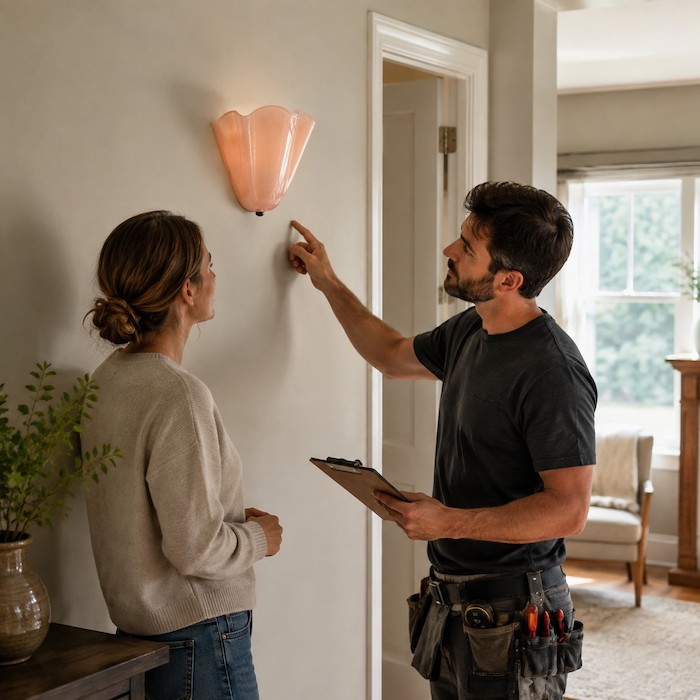
What a Safe Pre-Order Conversation Sounds Like
- “Here is the product page, template, projection and the exact wall elevation.”
- “Here is the existing circuit, switch location and any uncertainty about the box.”
- “Here is the market voltage, certification information and bulb plan.”
- “Here is how the bed, door, curtains and walking path stay clear.”
- “Here is the test plan for dimming, glare and final tightening.”
ESFI's home electrical safety guidance is a sensible general reference, but it does not replace local code or an on-site assessment. A qualified electrician should decide whether the circuit can accept the load, whether a new box is permitted, and how the fixture is grounded.
Budget the Work Behind the Fixture
The purchase price is only one part of a hardwired wall-light decision. A new box may require cable, access holes, patching, paint, a switch or dimmer, inspection and the electrician's time. A difficult route through masonry or a finished wall can cost more than the fixture itself. Ask for a written scope that separates the electrical work, wall repair and final mounting so a low product price does not hide an incomplete installation. Include disposal of old hardware, final cleanup, a functional switch test and confirmation that the glass remains stable after mounting in that scope before final payment. Also ask who supplies approved connectors and replacement fasteners if a part is found missing during installation.
Plan the sequence as well. The electrician should see the product dimensions and mounting method before the wall is opened; the wall repair should happen before the delicate glass is unpacked for final fitting; and bulbs should be selected before the dimmer is commissioned. If the project is part of a bedroom renovation, keep a temporary reading light available because the circuit may be off for more than one visit. This simple schedule protects the glass and makes it easier to test the finished light without rushing.
Red Flags That Mean “Do Not Order Yet”
- The seller's page and delivered model show different voltage, socket or certification information.
- No one can identify a supported box location behind the intended mounting point.
- The only proposed control is a dimmer with no confirmed LED compatibility.
- The glass template collides with bedding, a door, a curtain or the clear walking path.
- You are being asked to open an energized wall, improvise a plug or hide a cable in an unsafe way.
Use the Bellina Page as the Starting Document
Review Bellina's current dimensions, socket and material notes before the electrician visit. For the practical installation hand-off, read How to Plan a Hardwired Wall Sconce Before the Electrician Arrives. If there is no existing wiring, compare Can You Install a Hardwired Wall Sconce Without Existing Wiring?. After delivery, use What Should Be Included with a Glass Wall Sconce? Bulbs, Mounting Hardware and Damage Checks before booking final installation.
FAQ
Does a hardwired sconce need a junction box?
Usually yes: the electrician must provide a supported box or approved wiring method that matches the fixture and local code.
Can I install Bellina with a plug?
The product page identifies it as hardwired. Do not improvise a cord conversion; ask a qualified electrician about a permitted alternative.
Is a dimmer included?
No. The page lists dimmer compatibility but says the dimmer is not included. The bulb and control must both be LED-compatible.
What voltage does the lamp use?
The current page lists a 110–240V range and several certification markets. Confirm the exact regional variant before installation.
Can I do the wiring myself?
Only a person legally qualified for that work in the local jurisdiction should perform it. The safer default is to use a qualified electrician.