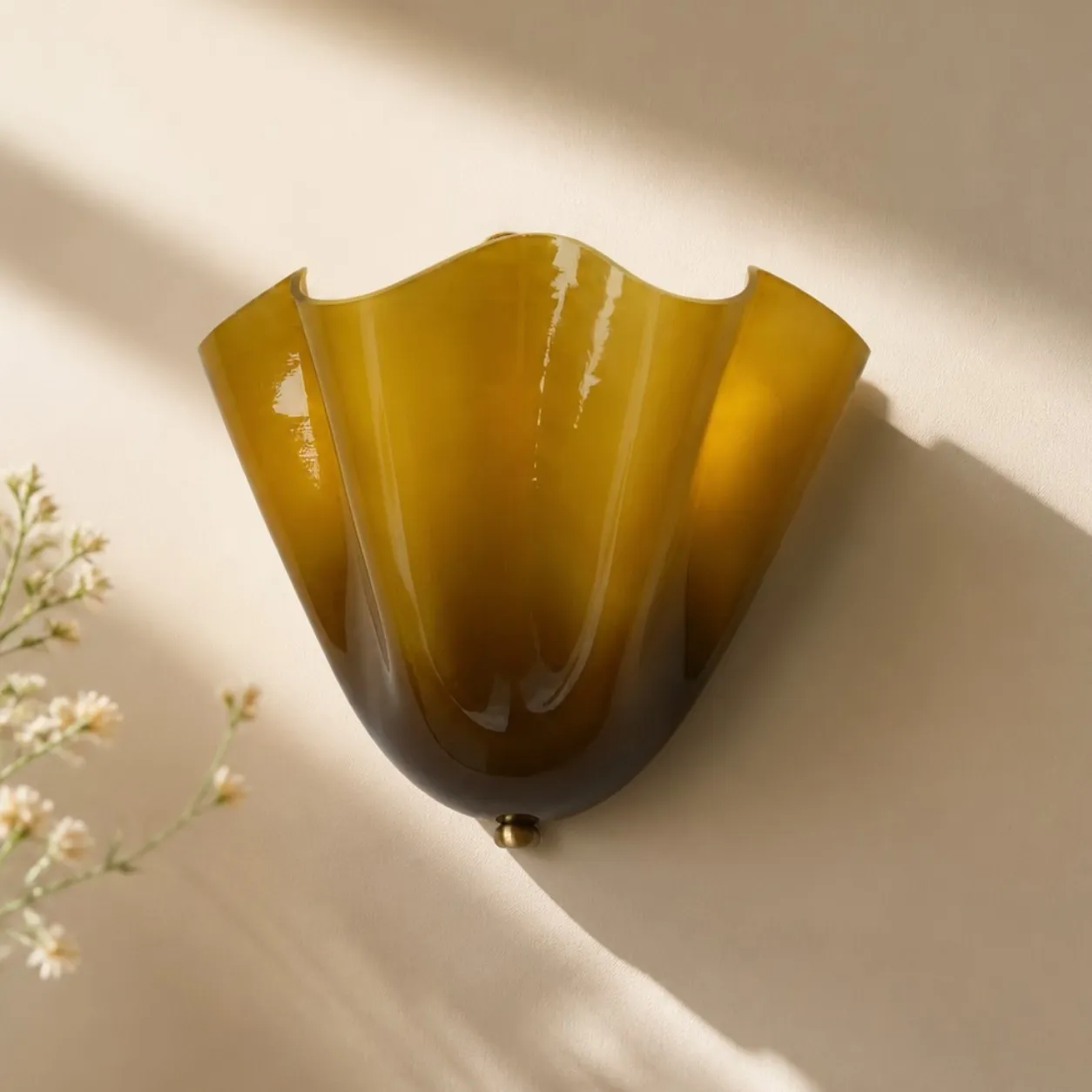




Short answer: Start with a dimmable E26 or E27 LED whose physical shape fits fully behind the glass, whose lumen output suits the job, and whose 2700K-3000K color temperature looks natural through the selected glass color. The Bellina Wall Lamp uses two sockets and does not include bulbs, so judge the combined output of both lamps rather than shopping by an old 40W or 60W label alone.
First Match the Socket, Then the Fixture Rating
E26 and E27 identify the screw-base family, not the complete bulb. Their base diameters are close, but voltage, local certification, bulb length, width and electronics still matter. Buy the base specified for your market and the installed fixture, then check the bulb package against the circuit voltage and the lamp's stated limit. Do not assume that every bulb with the right screw thread is an appropriate fit.
The current Bellina Wall Lamp product page lists a hardwired fixture, an E26 or E27 socket, two light sources, dimmer compatibility, and no bulbs in the order. It also states that the lamp accommodates two 10W incandescent bulbs or an LED equivalent. Treat that product specification as the ceiling for selection, not a target you must reach, and confirm it again before ordering because variants and regional specifications can change.
If the fixture, wall box or local wiring is uncertain, stop at the packaging check. The Electrical Safety Foundation International publishes practical home electrical safety guidance; hardwired work and an uncertain dimmer circuit are sensible reasons to use a qualified electrician.
Use Lumens for Light Output, Not Watts
Watts describe power consumption; lumens describe visible light output. That distinction matters with LEDs because two bulbs using similar power can produce different amounts of light. ENERGY STAR's guide to LED lighting explains the efficiency, long life and labeling features that make LEDs easier to compare.
For a bedroom accent, begin at the lower end of the available lumen choices and use a dimmer to tune the result. For a hallway or a bedside reading task, choose enough combined lumens to reveal faces, floor edges and a page without turning the translucent petals into two bright points. Because Bellina takes two bulbs, add their lumen ratings together when you compare options. A pair of moderate-output bulbs can feel smoother than two high-output bulbs set near full brightness.
Do not choose output from room size alone. Wall color, nearby mirrors, mounting height and the opacity of the glass all change the experience. Tape a sample bulb temporarily into one side, view the lamp from the bed and doorway, and test after dark before buying a full set.
Choose 2700K or 3000K by Mood and Glass Color
2700K generally reads warmer and more amber; 3000K remains warm but usually looks a little cleaner and more neutral. In a bedroom, 2700K is a useful starting point when the goal is a soft evening atmosphere. In a hallway or mixed-use room, 3000K can make wall color and objects easier to distinguish without looking cold.
Colored glass modifies what reaches the eye. Amber or brown glass may deepen a 2700K effect, while green or beige-white glass may retain more apparent clarity with 3000K. This is a visual starting rule, not a guarantee: hand-blown glass varies, wall paint reflects color, and two manufacturers can label similar-looking LEDs differently. Buy one returnable sample bulb and test the exact shade rather than choosing Kelvin from a screen.
For the bedroom, lower evening light is also easier to manage than leaving a bright fixture on near sleep. A peer-reviewed study in PNAS reported overnight physiological changes under moderate room light; it does not prescribe one Kelvin number, but it supports using lower output and a reachable dimmer during the wind-down period. Read the open-access study and methods.
Prevent Glare Before It Becomes an Installation Problem
A translucent glass shade softens light but does not automatically hide a bright LED. Glare is most likely when the bulb is visible through a clear opening, the light source sits near seated eye level, or the bulb has a clear envelope with exposed decorative filaments. Frosted or opal LEDs usually spread the bright area over a larger surface and are a practical first test for bedside use.
- Look from the real seat: sit against the pillows or stand at the hallway entrance.
- Check both bulbs: one hidden source may be comfortable while the second is visible through another petal.
- Dim to the lowest useful level: confirm the bulbs do not flicker, drop out or buzz.
- Watch reflections: mirrors and glossy paint can create a second bright image even when the shade itself feels soft.

Confirm Shape, Dimming and Color Quality
An A15, A19 or decorative LED can share the same base and still fit differently. Measure the shade opening, its narrowest internal width and the distance from socket to glass before deciding. Keep clearance around the bulb and never force the glass over a bulb that touches it. The detailed shape workflow is covered in What Bulb Shape Fits a Glass Wall Sconce: A15, A19 or Decorative LED?.
For a dimmer, the bulb package must say dimmable and the control must be compatible with LED loads. Test the same bulb model in both sockets. Also prefer a bulb with a high color-rendering rating when the sconce illuminates skin, artwork or saturated glass; Kelvin describes the white-light appearance, while color rendering describes how faithfully colors appear under that source.
Read the Label Before You Read the Room
A good bulb choice is a stack of small checks rather than one impressive number. Read the maximum wattage or lamp rating first, then confirm the bulb's actual wattage, lumens, Kelvin, dimmable status and physical dimensions. “LED equivalent” on a package is only a comparison phrase; it does not override the Bellina's fixture limit or tell you whether the driver will behave well on your dimmer. Keep a photo of the package or save the product page so a replacement can match the original instead of becoming an accidental experiment.
Color rendering is worth checking when the sconce sits beside a mirror, art print or colored bedding. A high CRI label can make those surfaces look more natural, but it does not guarantee that a bulb will match another brand's 2700K or 3000K appearance. For an even pair, buy both bulbs from the same model and batch when possible. If one bulb appears noticeably brighter or greener, swap positions once to rule out a socket issue before changing the whole lighting plan.
Finally, run the fixture long enough to notice heat and behavior. LEDs are cooler than comparable incandescent bulbs in many applications, but the envelope and electronics still warm during operation. The bulb must not press against the glass, retaining parts or a closed cavity. Listen for buzzing at several dimmer levels and watch for flicker when the room is quiet. A comfortable light that stays stable is a better result than a brighter bulb that makes the shade hot, the dimmer noisy or the bedroom visually restless.
A Five-Point Buying Checklist
- Confirm E26 or E27, local voltage, fixture rating and two-bulb total.
- Measure the internal glass space and choose a bulb shape that clears it.
- Select a modest lumen output for the task, then plan to dim rather than overpower.
- Sample 2700K for a softer bedroom effect or 3000K for a cleaner warm appearance.
- Test glare, flicker, color and glass temperature after the fixture has operated normally.
Check Bellina's current socket, colors and dimensions before purchasing bulbs. For a close comparison of the two common bedroom color temperatures, see Is 2700K or 3000K Better Behind a Colored Glass Sconce in a Bedroom?. To protect the shade after installation, keep How to Clean a Hand-Blown Glass Sconce Without Scratching or Loosening the Shade with the care notes.
FAQ
Can I use an E26 bulb in an E27 socket?
The bases are dimensionally close, but voltage, certification and the fixture specification still control the choice. Use the base listed for the installed product and region.
Should I choose bulbs by 40W or 60W equivalent?
Compare lumens for output and stay within the fixture's actual wattage rating. Equivalent-watt wording is only a familiar brightness reference.
Is a clear LED too glary behind glass?
It can be. Test from the normal viewing angle; a frosted or opal LED usually makes a safer first choice for a translucent bedside shade.
Do both Bellina bulbs need to match?
Use the same model, lumen output, Kelvin and dimming behavior for an even result unless a lighting professional designs a deliberate difference.
What Kelvin is best for a bedroom wall sconce?
Start with 2700K for a softer evening mood or 3000K for a cleaner warm look, then test through the actual glass color.