



Best practical answer: An A15 is often the easiest shape to hide inside a compact glass sconce, an A19 offers more choices but needs more room, and a decorative LED should be chosen only after checking both its silhouette and glare. The socket base can match while the bulb envelope is still too wide, too long or too visible.
Base Size and Bulb Shape Are Different Measurements
E26 or E27 tells you the screw-base family. A15 and A19 describe the familiar A-shaped outer envelope, with the number indicating its approximate diameter in eighths of an inch. A15 is therefore smaller across than A19, but the exact length, neck and electronics housing still vary by manufacturer. Decorative globe, candle and filament forms use different envelopes even when they share the same screw base.
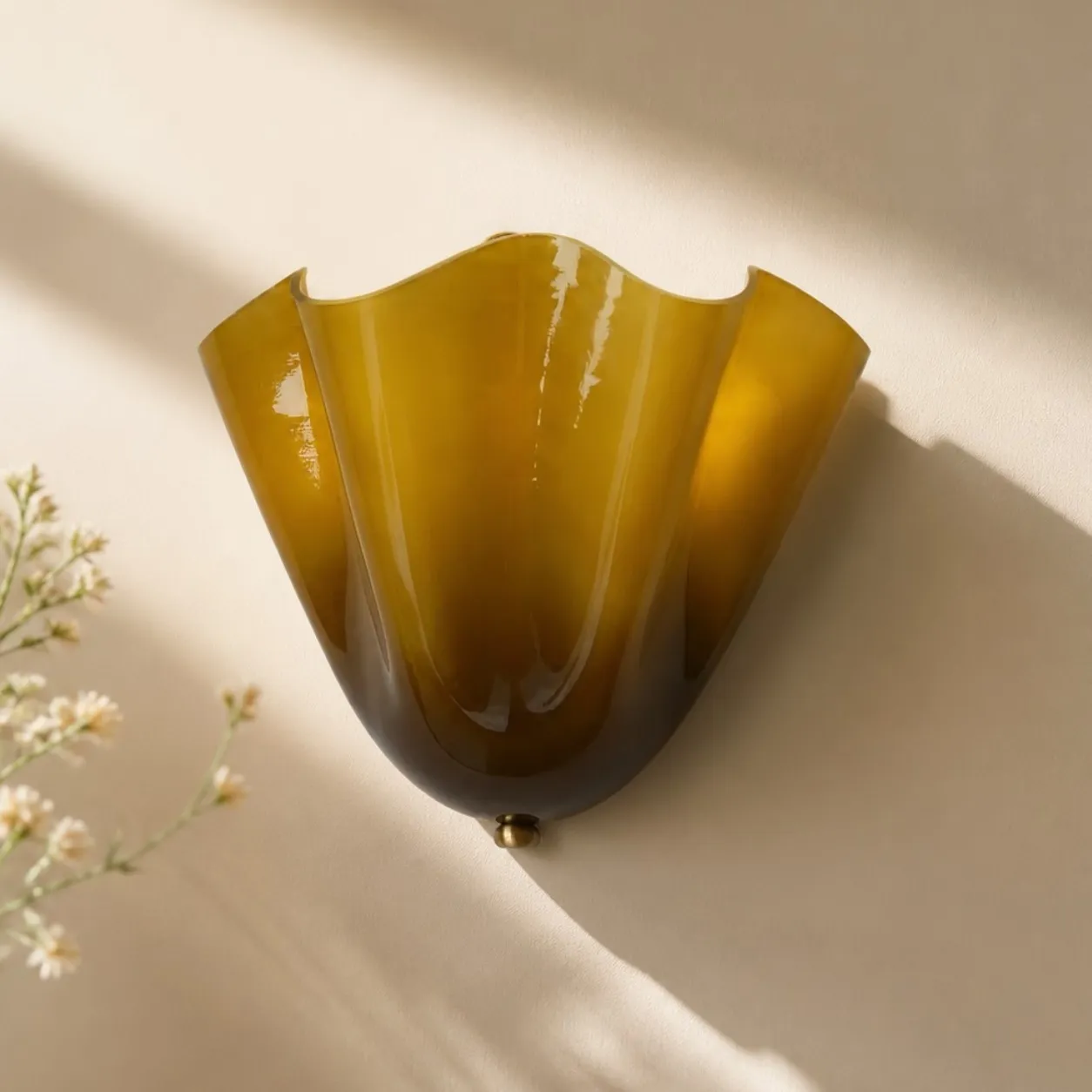
The Bellina Wall Lamp lists two E26 or E27 sockets, a hand-blown glass body and no included bulbs. That confirms the connection family, not a universal A15 or A19 fit. The shade has sculptural petals and natural variation, so measure the actual fixture you receive rather than relying on one catalog photograph.
Take Four Measurements Before Ordering
- Opening: measure the narrowest clear path the bulb must pass through.
- Internal width: measure the closest glass-to-glass distance around the bulb's widest point.
- Usable length: measure from the socket face to the nearest petal or closed end.
- Viewing line: note how much of the envelope can be seen from the bed, doorway and below.
Leave usable clearance rather than choosing a bulb that merely squeezes through. A lamp should install without pressing the envelope against the glass, twisting the shade, or loading the socket sideways. Because hand-blown pieces can vary slightly, repeat the check for both sockets instead of assuming the two internal spaces are identical.
Turn off power before handling a hardwired fixture, let the bulb cool and avoid working by pulling on the glass. ESFI's home electrical safety resources provide a sound baseline for safe household electrical decisions; damaged sockets, loose wiring or uncertainty at the wall box belong with a qualified electrician.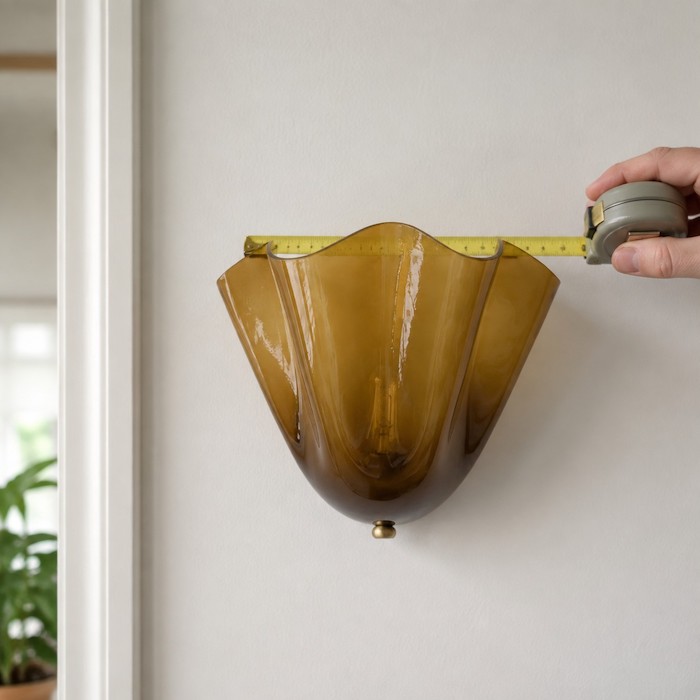
A15: The Compact, Low-Visibility Starting Point
A15 is useful when the glass narrows quickly, when the bulb must sit deep inside the petal shape, or when you want less of the envelope visible. Its smaller diameter can create more air around the bulb and make installation easier. It is often a good first sample for bedside glare control because a frosted A15 presents a smaller, softer visible area than a large clear decorative lamp.
The trade-off is selection. A15 bulbs may offer fewer lumen, Kelvin, dimming and high-color-rendering combinations than the common A19 category. Do not accept poor dimming or the wrong color just to gain a compact outline. Check the full package specifications and the actual dimensions listed by the bulb maker.
A19: More Choice, More Clearance Required
A19 is widely available and often provides the broadest choice of output, 2700K or 3000K color temperature, dimmable drivers and frosted finishes. ENERGY STAR's LED lighting guide is helpful when comparing efficiency and labeling, but the shape still needs a physical test in this fixture.
An A19 can be too wide at the shoulder, too long behind a shallow petal, or too visually dominant through translucent glass. Make a cardboard circle matching the bulb's maximum diameter and slide it through the proposed path. Then mark its overall length on a strip of paper held from the socket face. This simple mock-up catches both opening and depth conflicts without risking the shade.
Decorative LED: Choose the View, Not Just the Style
Clear filament bulbs can look attractive when the envelope is deliberately visible, but every bright filament may also be visible from the bed. Small globes can echo rounded glass petals, while candle forms may leave more side clearance. Neither choice is automatically better. The correct shape is the one that stays within the shade, avoids contact and produces a comfortable image from normal viewing angles.
For a translucent colored sconce, begin with a frosted decorative bulb if the source can be seen. If the bulb is fully screened by glass and the lamp is primarily decorative, a clear envelope may work at a low dimmed level. Do a night test before committing to two matching bulbs.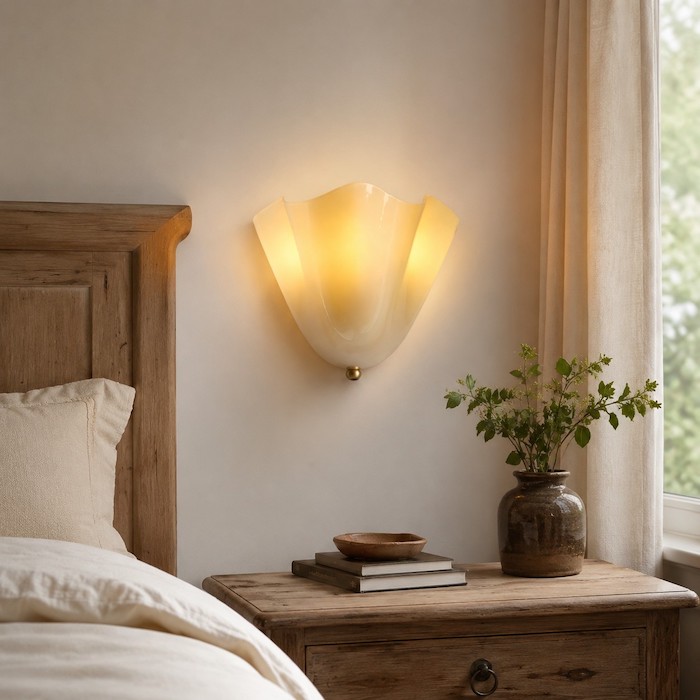
Fit Is Only One Part of Compatibility
After the envelope passes the measurement test, check local voltage, fixture wattage, LED dimmability, total lumens, Kelvin and color rendering. The Bellina product page states compatibility with a dimmer, but the bulb itself and the installed control must also be designed to work together. Buzzing, flicker at low levels or uneven behavior between the two sockets means the combination needs review.
For the complete selection sequence, use How to Choose a Bulb for a Petal Glass Wall Sconce: E26/E27, Lumens, Kelvin and Glare. If the envelope fits but the color looks wrong, continue with Is 2700K or 3000K Better Behind a Colored Glass Sconce in a Bedroom?. Keep How to Clean a Hand-Blown Glass Sconce Without Scratching or Loosening the Shade for safe access after installation.
The One-Bulb Sample Test
- Confirm the socket base, voltage and fixture limit.
- Record the candidate bulb's maximum width and overall length.
- Install one bulb only with power off and the fixture cool.
- Check glass clearance and whether the shade can be secured without pressure.
- Restore power and inspect glare, dimming and color from every normal viewpoint.
Review Bellina's current specifications and available glass colors, then purchase the second bulb only after the first sample passes. The small delay is cheaper than forcing an oversized bulb or living with a visible bright point.
FAQ
Will any A19 fit an E26 wall sconce?
No. The base may fit while the envelope is too wide or long for the shade. Measure the exact bulb and fixture.
Is A15 always dimmer than A19?
No. Shape does not set brightness; compare the lumen rating on each bulb.
Can a decorative filament bulb work behind colored glass?
Yes, if it clears the glass and does not create uncomfortable glare. Test one bulb after dark from the actual viewing position.
Should the bulb touch the glass shade?
No. Choose a shape with clearance and never use the shade to force or hold the bulb in place.
Do both sockets need the same bulb shape?
Matching bulbs normally give the most even appearance and dimming behavior, but verify clearance in both hand-blown sections.