



When Scandi Meets Japanese: A Textbook Application of Wood Fabric Sconces in Japandi Style
Japandi lighting isn't just about hanging a paper lantern and calling it a day; it is the deliberate, architectural collision of natural materials. The ultimate expression of this aesthetic is the solid wood and fabric wall sconce. Wood provides the structural, grounded "Zen" of Japanese design, while fabric delivers the soft, diffused "Hygge" that Scandinavian interiors are famous for. If you want to achieve this sought-after style without looking cliché, upgrading your hallway, living room, or bedroom with a dual-texture sconce is the most effective first step.
Quick Answer: Why the Wood and Fabric Combination Wins
When combining Scandinavian and Japanese design principles, the ultimate goal is always "warm minimalism." You need fixtures that feel inherently organic but look incredibly intentional. The materials you choose profoundly affect the psychological weight of the room.
The wood and fabric wall sconce is the textbook solution because it acts as a visual and textural bridge. Metal fixtures can often feel too cold, sharp, and industrial for a relaxing space. On the other hand, all-glass fixtures lack the tactile warmth needed to make a large room feel cozy. A solid wood base introduces an earthy, wabi-sabi element to your plain walls, anchoring the space. Meanwhile, a high-quality fabric shade ensures the light source is 100% diffused, eliminating harsh glares and casting a shadow-free glow.
Core Judgment: If your modern space feels too sterile or clinical, add wood. If your lighting feels too aggressive or bright, add fabric. The combination of both is the ideal solution for spaces that require ambient, relaxing illumination—specifically lounge areas and transitional spaces.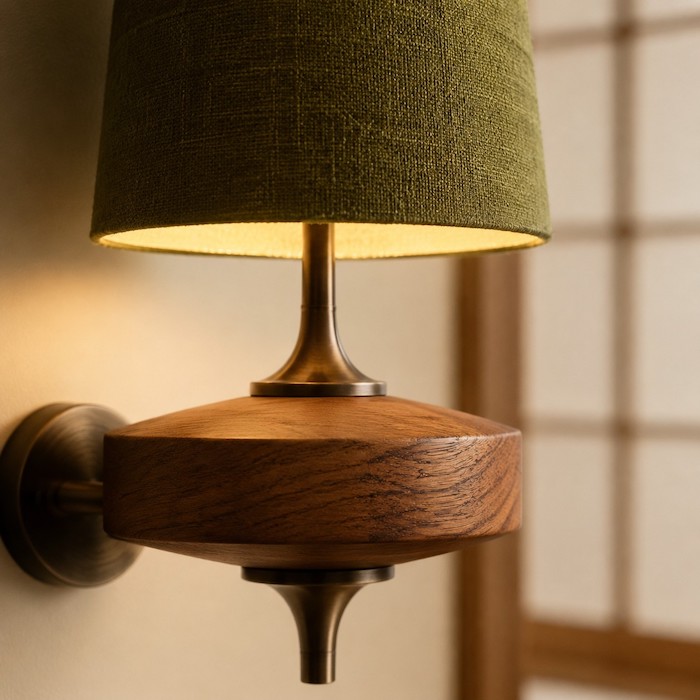
The Core Standard: How to Judge a Japandi Wall Sconce
Not every light fixture made of wood qualifies as Japandi. American homeowners often make the mistake of buying fixtures that lean too far into rustic farmhouse or heavy industrial territory simply because they feature timber. To ensure your lighting stays strictly within the elegant boundaries of modern minimalism, use the following rigorous criteria before making a selection.
| Selection Criteria | The Japandi Standard | What to Avoid |
|---|---|---|
| Material Authenticity | Solid ash, walnut, or oak with natural oil finishes. Linen or raw cotton shades. | Fake wood grain, shiny glossy veneers, or plastic "fabric-look" PVC shades. |
| Color Temperature | Strictly 2700K to 3000K (Warm White). Essential for the "Hygge" feeling. | 4000K or above (Cool/Daylight). It instantly kills the Zen atmosphere. |
| Geometric Shape | Clean lines, soft curves, balanced asymmetry. Cylinders, drums, and cones. | Overly ornate carvings, sharp jagged edges, or excessive decorative metal hardware. |
| Light Diffusion | 360-degree soft glow. The light should wash gently against the wall texture. | Exposed bare bulbs, direct downward spotlights, or harsh directional lighting. |
The Verdict: Your chosen lighting should look like a piece of quiet, unassuming sculpture during the day and provide a comforting, sunset-like glow at night. Prioritize tactile integrity over complex or flashy designs.
Textbook Placement: Room-by-Room Strategies
Knowing what fixture to buy is only half the battle; knowing exactly where and how to mount it is what separates amateur setups from high-end, magazine-quality interior designs. Before pulling out your tools, you can consult our technical guide on what height you should choose for your wall lamp to select the appropriate height for different spaces in your house.
Strategy 1: The Rhythmic Hallway
Hallways are often the most neglected spaces in modern homes, treated merely as dark functional tunnels between rooms. Japandi design, however, treats the hallway as a journey.
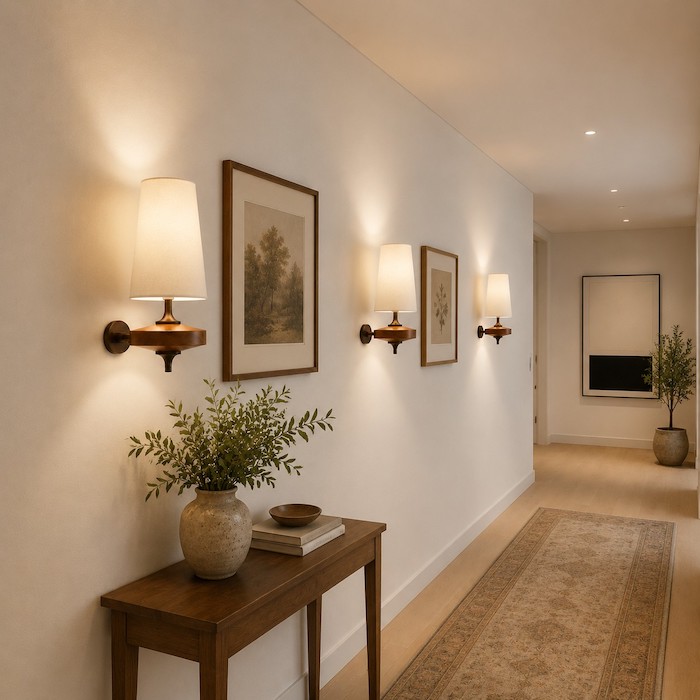
- The Spacing Rule: Do not rely on a single, glaring flush mount light in the center of the ceiling. Instead, install wood and fabric sconces along the wall to create a rhythm. Space them approximately 6 to 8 feet apart depending on the length of the hall.
- The Height Rule: Mount them so the center of the fixture sits around 60 to 64 inches from the floor (roughly standard eye level).
- The Visual Effect: The fabric shades will cast soft pools of light against the wall, highlighting architectural textures like lime wash or matte paint, while the wooden bases serve as repeating, grounding visual waypoints.
Strategy 2: The Living Room Lounge
In the living room, a Japandi sconce shouldn't compete with your main overhead lighting; it should create a dedicated, intimate zone of relaxation.
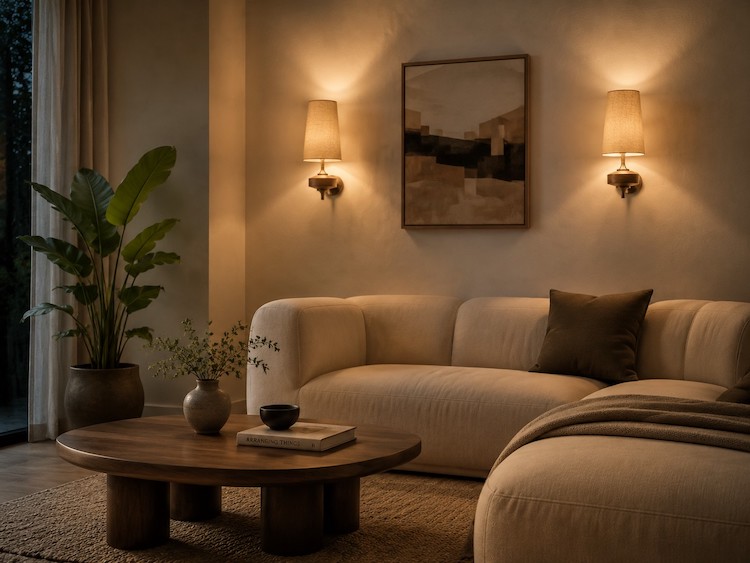
- The Sofa Flank: Position a pair of sconces on either side of a low-profile sofa. This replaces the need for clunky end-table lamps, freeing up valuable surface space—a core tenet of minimalism.
- The Height Adjustment: Because living room lighting is often enjoyed while seated, lower the installation height. Aim for 50 to 55 inches from the floor. The bottom of the fabric shade should sit just above the shoulder height of someone sitting on the couch.
- The Pairing: Match the wood tone of the sconce to the legs of your coffee table or your hardwood flooring to create a cohesive, grounded energy throughout the room.
Strategy 3: The Bedroom Sanctuary
The bedroom is where the Japandi philosophy shines brightest, prioritizing rest and digital detox.
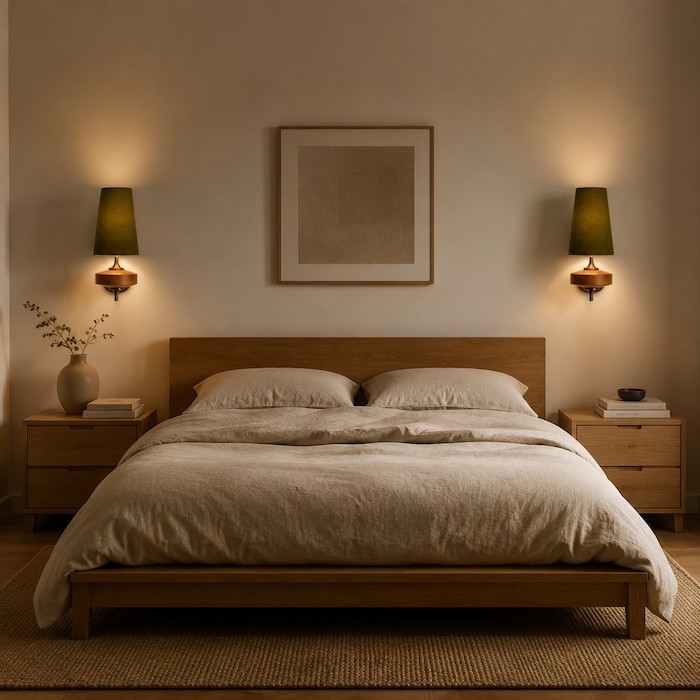
- The Bedside Alternative: Flank your bed with wood and fabric sconces instead of standard table lamps. Mount them slightly wider than the width of your headboard.
- The Functionality: Ensure the fabric shade is thick enough to prevent glare when you are lying down reading. The natural wood element will bring a touch of the outdoors inside, promoting a calmer state of mind before sleep.
For compact rooms, this layout strategy acts as a genuine small bedroom lifesaver, swapping traditional table lamps for sleek wood sconces to free up nightstand space completely.
Common Traps: What to Avoid in Japandi Lighting
Even with the right materials, execution can fall flat if you aren't paying attention to the surrounding environment. Here are the most common mistakes users make when trying to implement this style.
1. The "Too Shiny" Trap
Japandi is deeply rooted in the wabi-sabi appreciation of raw, imperfect nature. If you buy a wooden sconce finished with a high-gloss polyurethane clear coat, it will reflect light aggressively and look cheap. Always insist on matte or rubbed-oil finishes that allow you to literally feel the grain of the wood.
2. Ignoring the Wall Texture
A beautiful wood and fabric sconce will lose its entire visual impact if mounted on a high-gloss, stark white hospital wall. Japandi thrives on muted contrast and texture. Ensure your wall color is a warm off-white, beige, or soft greige. Matte, eggshell, or textured plaster paint finishes work best to absorb the soft light spilling from the fabric shade.
3. The Proportions Disconnect
Buying a sconce that is too tiny for a large, vaulted American living room will make the fixture look like a mistake. Conversely, an oversized, bulky sconce in a narrow hallway will feel claustrophobic. Always measure your space. A standard Japandi sconce should hold enough visual weight to be noticed, typically measuring around 10 to 16 inches in total height.
4. Over-Illuminating the Space
The goal is not to flood the room with maximum lumens. Trying to use a wall sconce as the primary light source for an entire large room will force you to use overly bright bulbs, destroying the mood. Keep the lumen output modest and rely on layering your lighting.
The Perfect Formula in Practice: Meet the Hour Rho
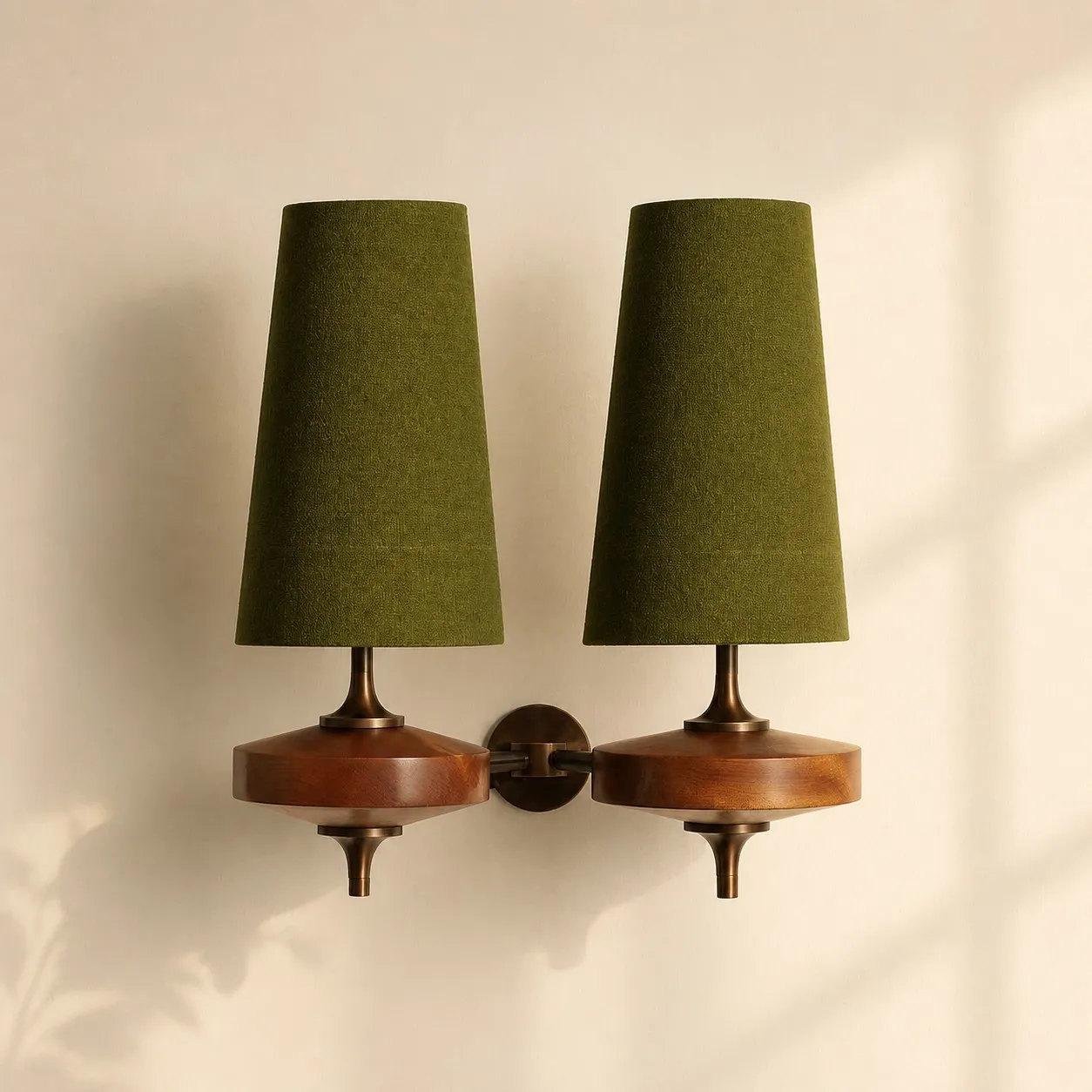
When searching for a fixture that perfectly encapsulates the strict rules of material authenticity, soft diffusion, and minimalist geometry, you don't need to look any further than the Hour Rho Wall Lamp - Modern Wood Wall Sconce with Fabric Shade.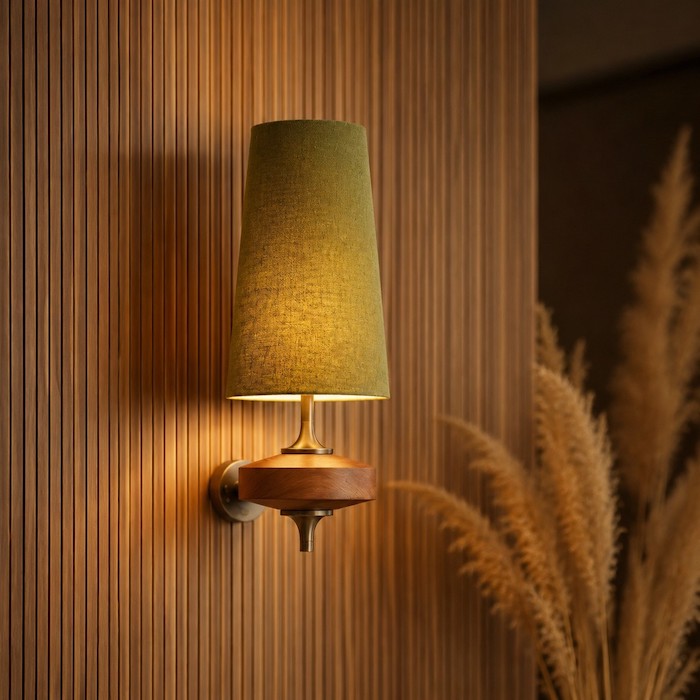
This specific fixture serves as a textbook application of the Scandi-meets-Japanese design philosophy, executing every requirement flawlessly.
- Architectural Stability: The solid walnut arm provides the unmistakable grounding effect required by Japanese design. It doesn't try to hide its materiality behind paint; it celebrates the natural, swirling grain of the timber, making it an excellent companion piece to mid-century modern or minimalist oak furniture.
- Hygge Diffusion: The crisp, tailored fabric shade wraps the light source entirely. When illuminated, the Hour Rho doesn't just light up a corner; it crafts a deliberate atmosphere. It softens the starkness of bare walls and provides the exact type of low-glare, ambient light needed for winding down in the evening.
- Versatile Scale: Its elegant proportions are deliberately engineered to be highly versatile. It works just as beautifully in a repeating pattern down a long corridor as it does framing a living room art piece or acting as a sophisticated bedside reading light.
If you are actively transitioning your home into a quiet, Japandi sanctuary, the Hour Rho acts as the perfect, effortless anchor point for your walls.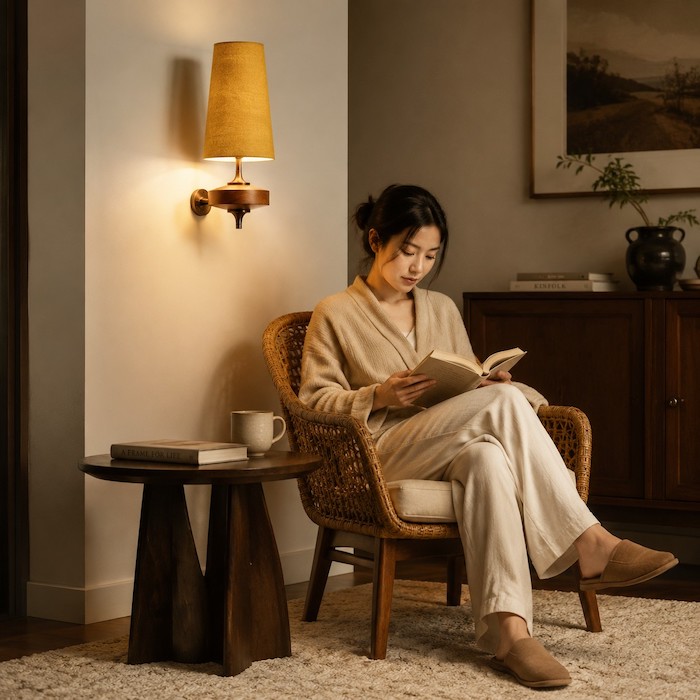
Frequently Asked Questions (FAQ)
Q: Can I use plug-in sconces for a Japandi style, or do they absolutely need to be hardwired?
A: Hardwired is always the premium choice for a clean, distraction-free minimalist look. However, if you are renting or cannot open your walls, plug-in sconces are perfectly acceptable. The trick to keeping it Japandi is strict cord management—use cord covers painted to match your wall color perfectly, or choose a fixture with an aesthetically pleasing fabric-wrapped cord that looks like an intentional design choice.
Q: Is walnut or oak better for achieving the Japandi look?
A: Both are excellent and historically accurate, but they serve different moods. Oak (lighter wood) leans heavily into the Scandinavian side, keeping the space bright, airy, and uniform. Walnut (darker wood) leans into the Japanese side, providing striking contrast and deep, grounding visual weight. Choose based on what existing furniture you want to complement.
Q: Do I absolutely need a dimmer switch for wood and fabric sconces?
A: Yes. A core philosophy of Japandi design is attunement to nature, meaning your interior lighting should mimic the natural progression of the sun. Being able to dim your sconces from a functional evening brightness down to a low, moody night glow is non-negotiable for achieving true Zen.
Q: What is the best way to clean and maintain the fabric shade without ruining the aesthetic?
A: Dust is the enemy of minimalism. Never use wet chemicals or harsh cleaning sprays on natural fabric shades, as it can cause permanent water rings or discoloration. Use a standard sticky lint roller once a week, or use the soft brush attachment on your vacuum cleaner on the absolute lowest suction setting to keep the fabric looking crisp and fresh.
Q: Can I use smart bulbs in a fabric sconce?
A: Absolutely. In fact, it is highly recommended for modern homes. Using a smart bulb allows you to lock the color temperature exactly at a warm 2700K and control the dimming seamlessly via an app or voice control, ensuring your wood and fabric sconce always emits the perfect relaxing glow. Just ensure the physical bulb is standard sized and does not touch the interior of the fabric shade.