

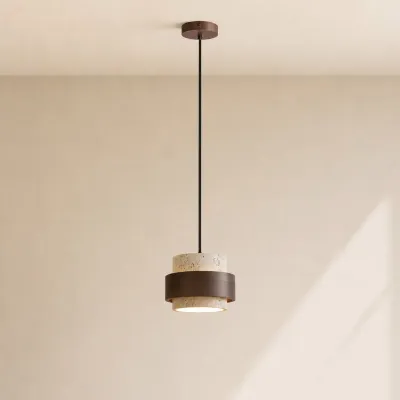


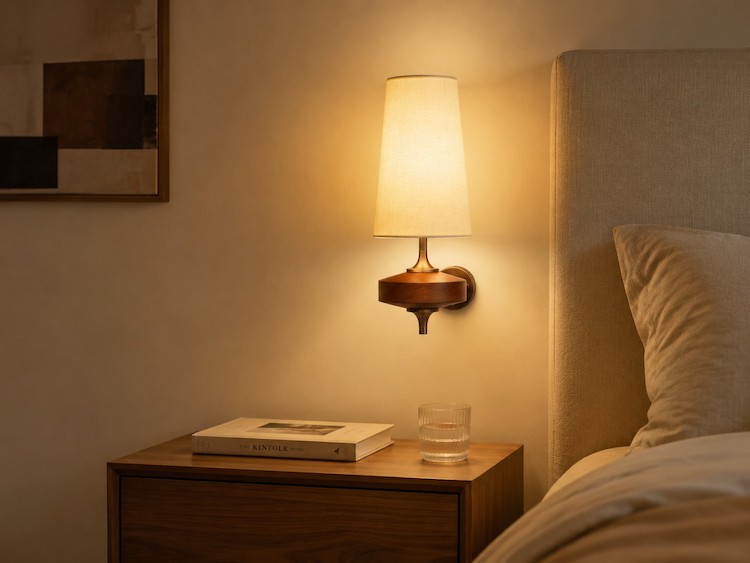
Small Bedroom Lifesaver: Swapping Table Lamps for Wood Sconces to Free Up Nightstand Space
If you are dealing with a tiny bedroom, your nightstand is likely a constant battleground. A bulky traditional table lamp, a glass of water, your phone, an alarm clock, and a book are all fighting for a few square inches of precious real estate. The most effective, instant way to reclaim that surface area and reduce visual clutter is to swap your table lamp for a wall-mounted wood sconce. By migrating your light source to the wall, you instantly free up 100% of your nightstand surface while introducing a warm, natural design element that elevates the entire room's aesthetic.
Quick Answer
For small bedrooms, wall sconces unequivocally beat table lamps.
- The Core Verdict: Ditching the table lamp in favor of a wall-mounted fixture is the fastest way to make a cramped bedroom feel intentionally designed and vastly more spacious. Specifically, a combination of natural wood and a fabric shade provides the ultimate cozy, sleep-inducing atmosphere.
- Best Application: Ideal for primary bedrooms with narrow nightstands (under 20 inches wide), compact guest rooms, or anyone striving for a minimalist, uncluttered bedside table.
- Key Takeaway: Prioritize sconces with a soft, diffused light output. Ensure you mount them at the correct height (eye level when sitting up in bed) and select a wood finish that subtly complements your existing bed frame or flooring.
Core Judgment Criteria: How to Choose the Right Wood Sconce
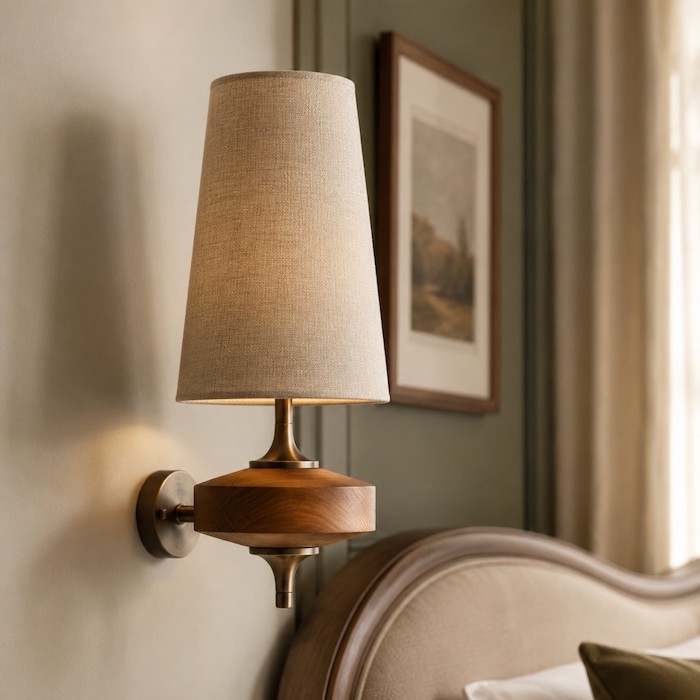
Not all wall lights belong next to a bed. When you are shopping for a bedside sconce, you are not just looking for illumination; you are looking for a fixture that serves a highly specific functional purpose without overwhelming your limited space. Here are the precise criteria you should use to make your selection:
1. Size and Proportion
In a small bedroom, scale is everything. A massive, industrial-style swing arm lamp will dwarf a narrow nightstand and make the ceiling feel lower.
- The Rule of Thumb: The backplate of the sconce should not be wider than one-third of the width of your nightstand. Additionally, the outward extension (how far it sticks out from the wall) should generally stay under 12 inches to prevent you from bumping your head when getting in and out of bed.
2. Material and Vibe: The Case for Wood
While brass and matte black metal are incredibly popular in modern decor, they can sometimes feel visually "cold" or overly clinical in a bedroom setting. Wood, on the other hand, grounds the space. It introduces organic texture and warmth, which psychologically signals relaxation. When choosing a wood sconce, consider whether you want a light oak finish for a breezy, Scandinavian look, or a rich walnut finish for a mid-century modern or moody aesthetic.
3. Installation Method: Hardwired vs. Plug-in
This is often the biggest hurdle for homeowners and renters alike when making the switch.
- Hardwired: Offers the cleanest, most seamless look with no visible cords. However, it requires an electrician, cutting into drywall, and is generally not an option for renters.
- Plug-in: The renter-friendly lifesaver. You simply mount it to the wall like a picture frame and plug it into your existing bedside outlet. If you are unsure which route to take, you can read our deep dive into choosing between plug-in vs. hardwired wall sconces to help you decide on the best installation method for your home.
4. Lighting Needs: Task vs. Ambient
Do you read dense novels in bed every night, or do you just need a soft glow to help you wind down before sleeping?
- For dedicated readers, an adjustable spotlight or a swing-arm sconce might be necessary.
- For winding down and general comfort, a fixture with a fabric shade is paramount. Fabric diffuses the bulb's glare, washing the wall in a soft, ambient glow rather than acting like an interrogation spotlight.
Specific Solutions & Styling Advice: The Step-by-Step Transition
Transitioning from a table lamp to a wall sconce isn't just about screwing a fixture into the drywall; it is about completely reimagining how your bedside functions. Here is how to execute the swap flawlessly.
Step 1: Determine the Perfect Mounting Height
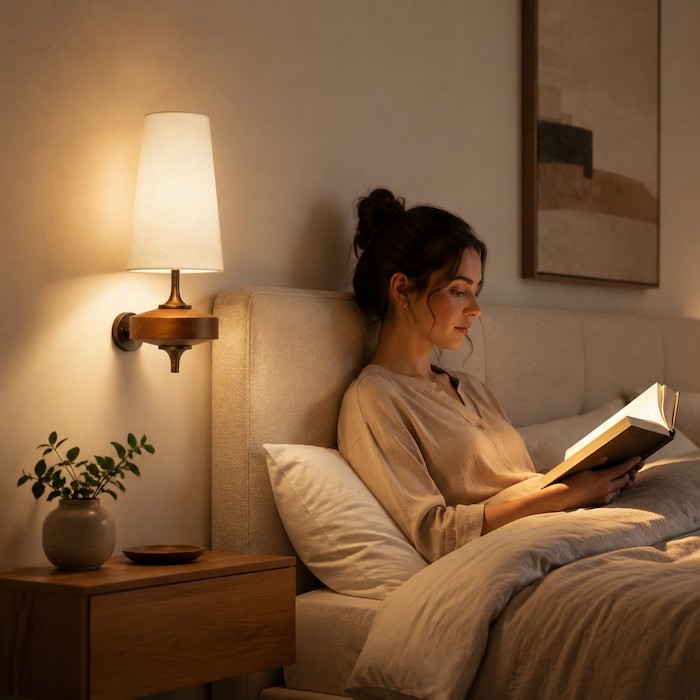
The most common mistake people make is treating a bedside sconce like a hallway sconce and hanging it way too high near the ceiling.
- The Standard Measurement: Aim to mount the sconce so the bottom edge of the shade is roughly 55 to 60 inches from the floor.
- The Custom Measurement (Better): Sit comfortably in your bed, leaning against the headboard in your normal nighttime reading position. The bottom of the sconce's lampshade should be exactly at your eye level. This ensures the light falls perfectly onto your book or lap without shining directly into your eyes. If you are curious about the technical nuances of lighting placement across other areas of your home, check out our guide on what height should you choose for your wall lamp to ensure every room in your home is perfectly illuminated.
Step 2: Embrace the Wood and Fabric Combo
When finalizing your design, strongly consider the pairing of a wooden armature with a fabric shade (such as linen or heavy cotton). Wood brings a tactile, grounding element that harmonizes beautifully with fabric headboards and plush bedding. The fabric shade acts as a natural light diffuser. Unlike clear glass, which exposes the harsh filament of the bulb, or metal domes, which create a severe and limiting spotlight effect, a cream or white fabric shade creates a 360-degree gentle halo of light. This is scientifically proven to be better for producing melatonin and preparing your brain for sleep.
Step 3: Restyle Your Freed-Up Nightstand
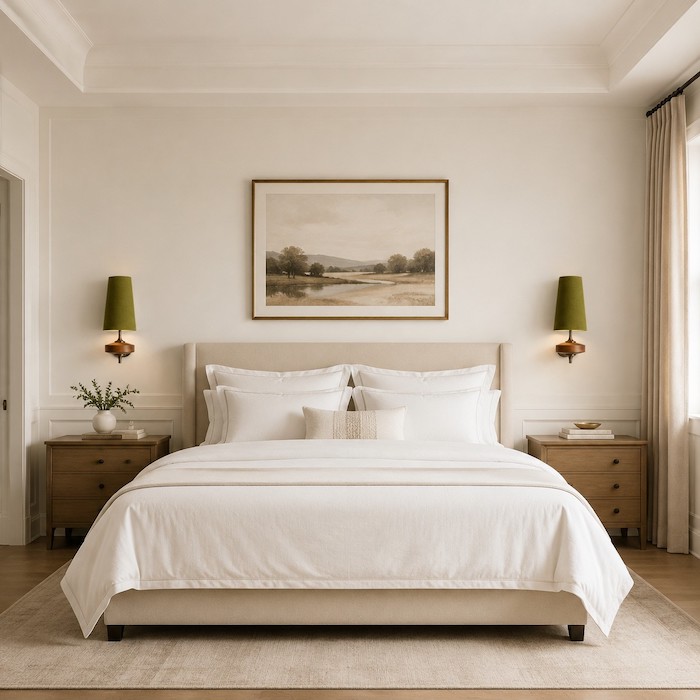
Now that you have reclaimed 100% of your nightstand surface, resist the urge to immediately clutter it with new items. Instead, use an intentional, minimalist styling approach to maintain that airy feeling.
- The Minimalist Formula: Limit the surface to a maximum of three items. One functional item (a sleek carafe of water or a wireless charging pad), one personal item (the book you are currently reading), and one decorative item (a small potted succulent or a calming lavender candle).
Common Mistakes to Avoid When Installing Bedside Sconces
Even with the perfect product, poor execution can ruin the cozy bedroom vibe you are trying to create. Avoid these frequent pitfalls to ensure your space remains a relaxing sanctuary.
| The Mistake | The Consequence | The Fix |
|---|---|---|
| Wrong Color Temperature | Using a "Daylight" bulb (4000K-5000K) suppresses melatonin and makes the bedroom feel stark and sterile. | Always choose warm white LED bulbs. 2700K to 3000K is the absolute sweet spot for bedrooms. |
| Inconvenient Switch Placement | You are falling asleep, but you have to physically get out of bed to reach the wall switch by the door to turn off the light. | Choose a sconce with a switch directly on the backplate, use an inline cord switch within arm's reach, or install smart bulbs controlled via your smartphone. |
| Ignoring the Headboard Scale | Installing tiny, delicate sconces next to a massive, tall, tufted king-size headboard makes the room look awkward and disproportionate. | Match the visual weight. Taller, heavier headboards require slightly larger sconces; low-profile platform beds pair beautifully with sleek, minimal wood fixtures. |
| Placing Them Too Far Apart | If the sconce is mounted too far outside the edge of the nightstand, the light will not reach you effectively while in bed. | Center the sconce vertically above the midpoint of your nightstand. If your nightstand is particularly wide, align the sconce slightly closer to the bed frame. |
Recommended Product: Elevate Your Bedroom with the Hour Rho Wall Lamp
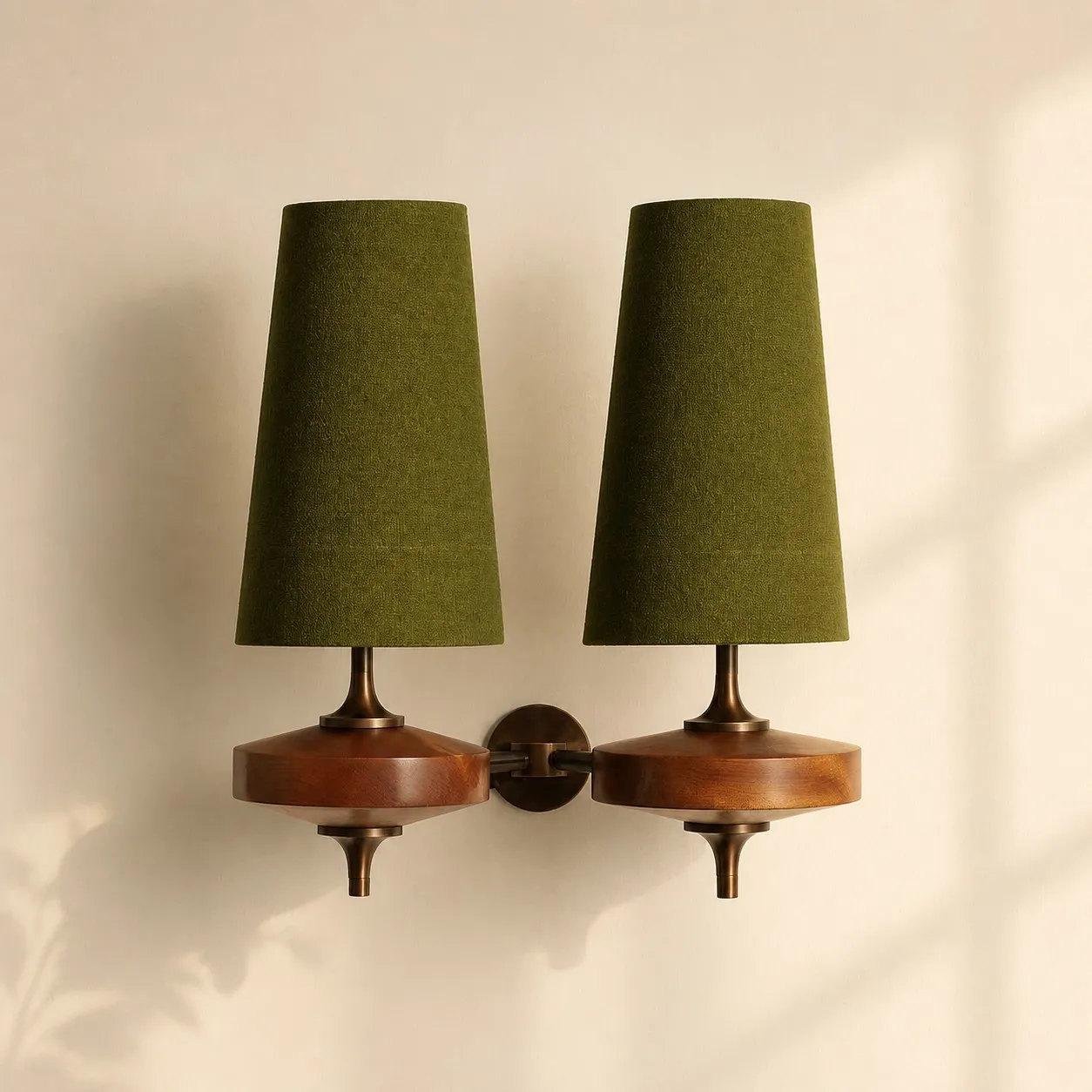
If you are looking for the perfect fixture that checks every single box mentioned above—the right proportions, natural materials, soft light diffusion, and an elegant organic aesthetic—look no further than the Hour Rho Wall Lamp - Modern Wood Wall Sconce.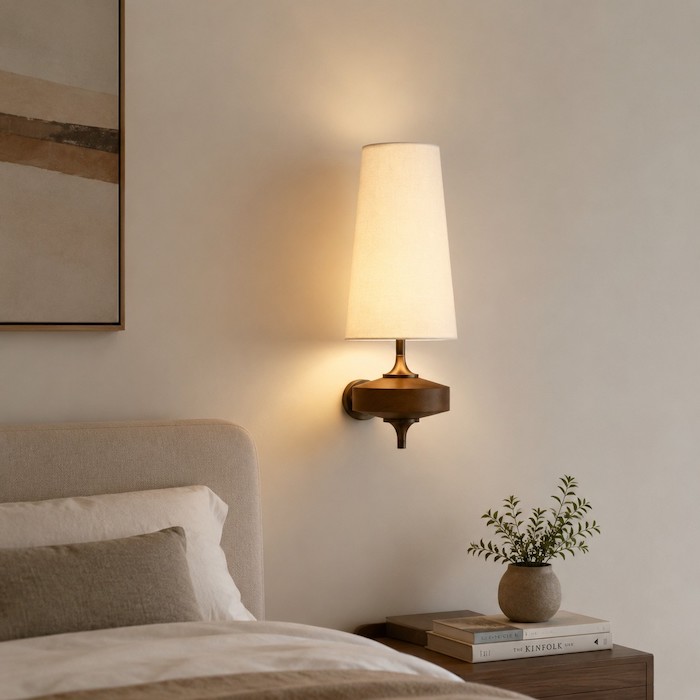
While it is frequently utilized in hallways or living rooms to add architectural interest, its core design makes it a secret weapon for small bedrooms. The sturdy, beautifully finished wood bracket provides that essential touch of nature, seamlessly bridging the gap between modern design and cozy, rustic warmth. The classic fabric shade is exactly what you need to filter the light into a soothing, bedroom-appropriate glow.
Furthermore, because of its elegant, vertical profile, it naturally draws the eye upward. This creates an optical illusion that makes your bedroom ceilings feel taller, all while keeping a remarkably slim footprint on your wall. It perfectly embodies the "function meets tranquility" philosophy required for a truly restful sleeping space.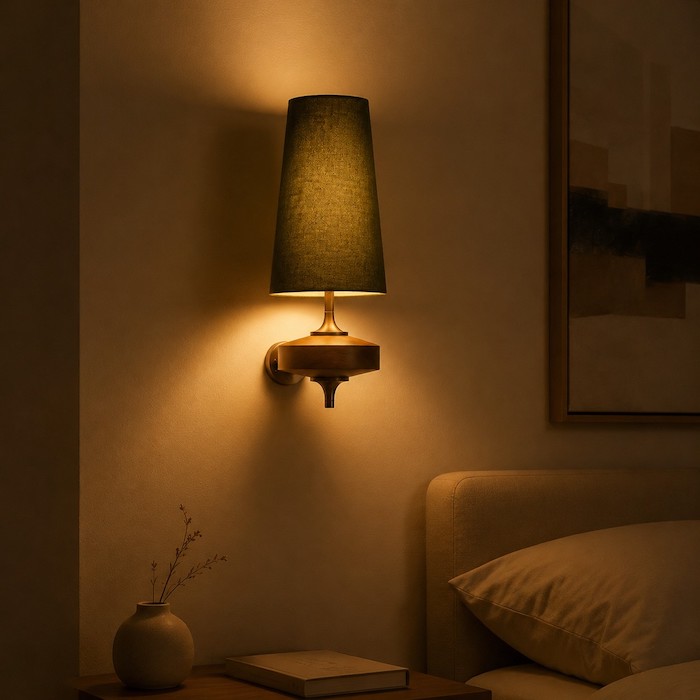
Frequently Asked Questions (FAQ)
1. How high should I hang a sconce next to my bed?
As a general rule, the bottom of the sconce shade should be roughly 55 to 60 inches from the floor. For the best personal comfort, it should be perfectly aligned with your eye level when you are sitting up in bed reading. This prevents direct glare while providing adequate illumination.
2. Can I install a wall sconce without hardwiring?
Absolutely. You have two highly practical options: buy a plug-in sconce that simply mounts to the wall and plugs into a standard wall outlet, or use the popular battery-operated puck light hack. This involves mounting a hardwired sconce to the wall strictly for aesthetics, without connecting any wires, and sticking a remote-controlled LED puck light inside the shade.
3. Is a fabric shade really better than glass for a bedroom?
Yes. In a bedroom setting, a fabric shade is functionally superior to clear or seeded glass. Glass allows raw, unfiltered light to hit your eyes, which can be jarring when you wake up in the middle of the night or are trying to wind down. Fabric diffuses the light evenly, creating a much softer, ambient environment.
4. Does the wood tone of the sconce need to match my nightstand exactly?
No, and in fact, it often looks much better if it doesn't match perfectly. Aim for complementary tones rather than a strict "matchy-matchy" look. If you have a dark walnut nightstand, a lighter oak sconce can provide beautiful visual contrast. Just ensure the underlying undertones (warm vs. cool) of the different woods are somewhat similar.
5. Can I read in bed comfortably with a fabric-shaded wood sconce?
Yes, provided you pair it with the right light bulb and mount it at the correct height. A 40W to 60W equivalent LED bulb (which outputs around 400 to 800 lumens) in a warm 2700K color temperature will provide plenty of light for reading without causing eye strain or keeping your partner awake.