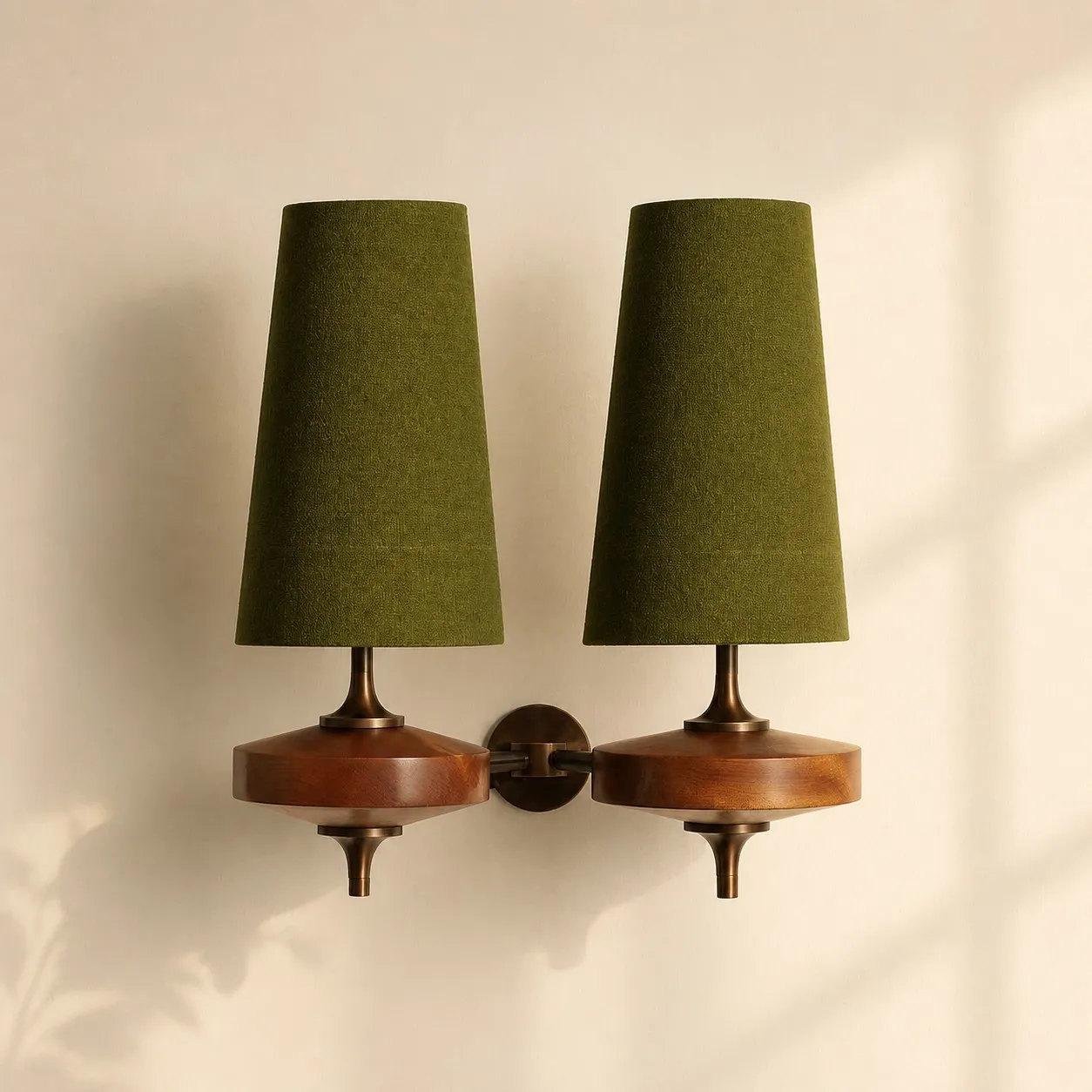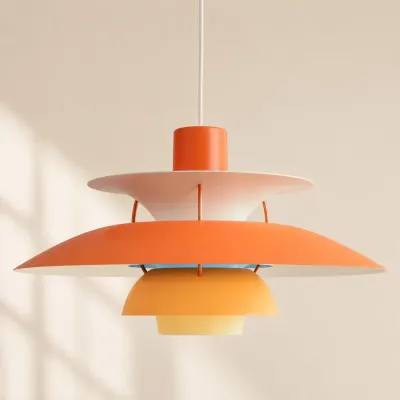


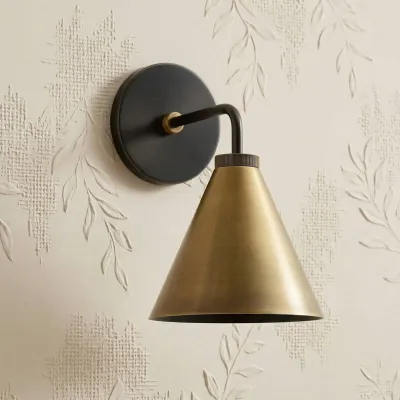


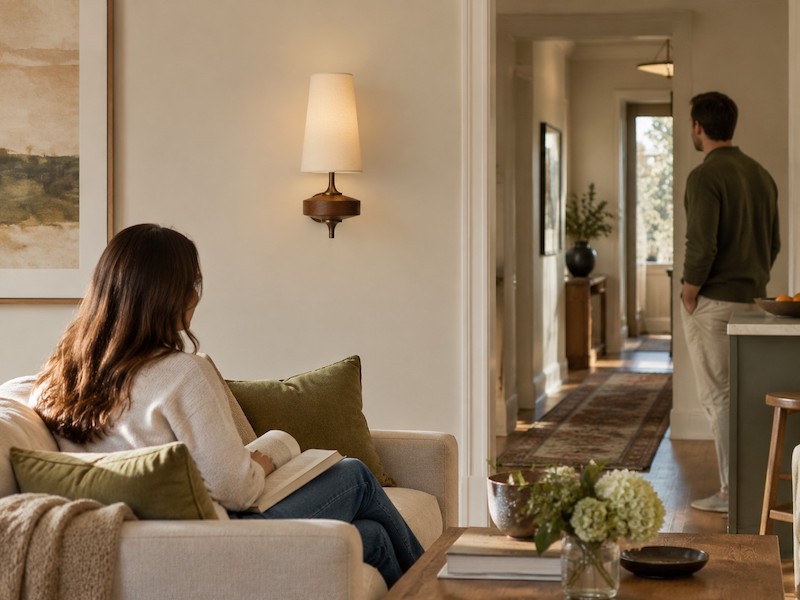
The best wall sconce height is the position that keeps the light comfortable in the main sightlines and makes the complete fixture look connected to the room. Instead of starting with one universal measurement, identify what you are measuring, test the wall at full scale and adjust for the hallway or living-room viewpoint.
First, Name the Center You Mean
“Mount it at eye level” sounds precise but can describe three different points. The light-source center affects glare and illumination. The fixture center controls visual balance. The junction-box center is the construction point. On an asymmetrical lamp, these may be several inches apart.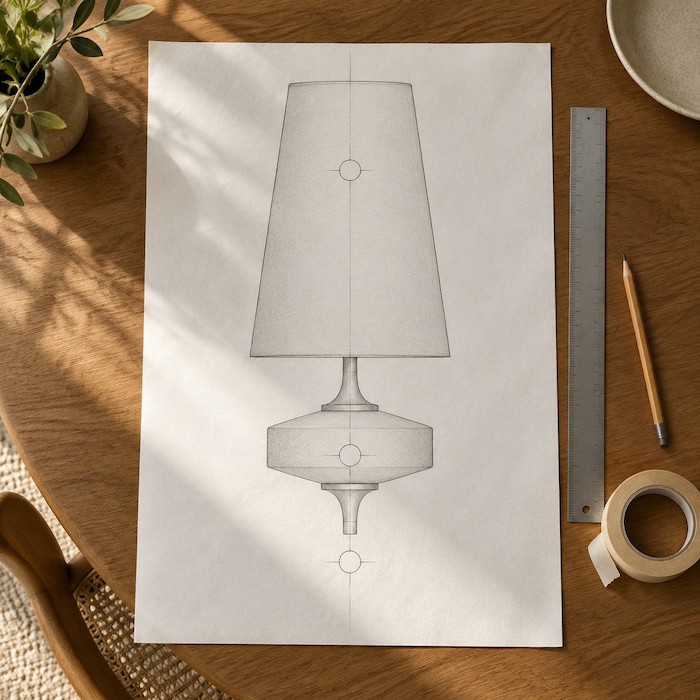
Draw a simple vertical line on paper and label the shade top, shade bottom, bulb center, fixture midpoint and box center. The Hour Rho one-head and two-head variants are currently listed at approximately 35 cm (13.8 in) high, so their total outline can be tested before installation. Do not infer the mounting point from that overall height; use the product's installation information and your electrician's confirmed box location.
For the broader sequence that combines height with spacing and scale, see Wall Sconce Placement Guide: Height, Spacing & Scale.
Hallway Height: Test the Moving View
Hallways are experienced in motion. Tape the fixture outline to the wall, then walk toward it from both ends. Check whether the shade or bulb enters your direct line of sight and whether the fixture feels pinned to the door heads. A comfortable location usually reads as part of the wall, not as a ceiling fixture pulled downward or a furniture light stranded below.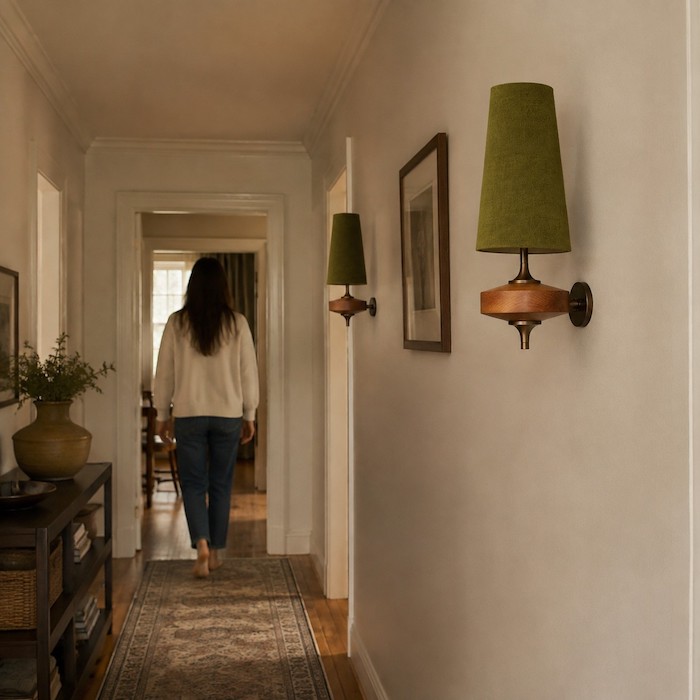
Keep repeated sconces on one level even when horizontal spacing changes around doors. Consistent height is the strongest rhythm. On stairs or sloped floors, however, the reference may need to follow the walking line rather than a level line borrowed from the lower landing; that is a separate site-specific layout decision.
Also verify projection into the path. The U.S. Access Board discusses protruding objects along circulation paths. Applicability varies by building and jurisdiction, but checking projection is sensible in every narrow hall. Hour Rho's current page does not provide projection depth, so obtain it before final placement.
Living-Room Height: Test Both Sitting and Standing
A living-room sconce may look perfect from the doorway yet glare from the sofa. Place the paper outline, sit in each primary seat and look toward the wall naturally. Then stand at the room entrance. If the light source is comfortable but the fixture seems disconnected from the console or artwork, adjust the whole composition rather than chasing a generic number.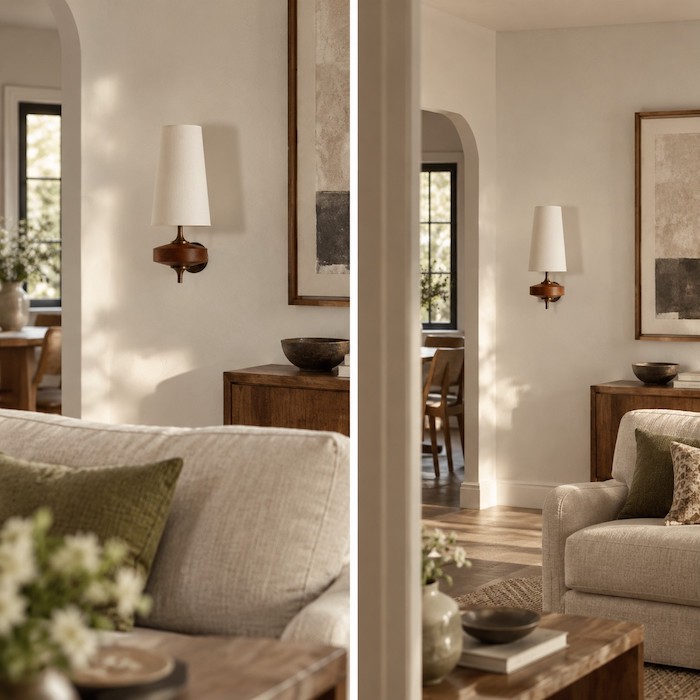
When sconces flank art, work from the combined group. Leave enough air that the shades do not appear to touch the frame, and keep the fixture centers balanced around the art's visual center. When a sconce sits beside a reading chair, the light-source position matters more than alignment with a distant picture rail.
If the wall feels empty after height is solved, the issue may be width rather than elevation. One-Light vs Two-Light Wall Sconces: Which Size Fits? helps separate those decisions.
The Hour Rho Wall Lamp offers one-head and two-head versions with the same approximate overall height, making it practical to compare width while keeping the vertical study consistent.
Compare Hour Rho VariantsA Four-View Height Test
| Viewpoint | Question | Adjustment signal |
|---|---|---|
| Walking toward the wall | Does the bright source appear before the shade? | Move or reorient within the feasible mounting zone |
| Standing beside the fixture | Does it feel unnaturally high or easy to bump? | Recheck fixture center and projection |
| Sitting on the sofa | Is there direct glare or an awkward view under the shade? | Test a small vertical change with the full outline |
| Entering the room | Does the lamp connect to art, furniture and architecture? | Adjust the composition, not only the number |
Fixed Junction Box? Work Backward Carefully
If a box already exists, first obtain the fixture's true mounting geometry. Tape the full outline around the fixed point and mark the actual shade and light-source positions. A backplate that covers the box does not guarantee that the resulting height will look or feel right.
When the box position fails the glare or scale test, ask a qualified electrician about feasible options. Do not conceal an electrical box or improvise wiring to preserve symmetry. The Electrical Safety Foundation International explains why homeowners should select qualified electrical professionals and verify credentials.
Height Mistakes That Survive the Tape Measure
- Measuring to an unlabeled center. Write down whether every mark refers to the bulb, fixture or box.
- Testing only while standing. Living rooms require a seated glare check.
- Raising the lamp for a tall ceiling. Ceiling height is context, not the user's sightline.
- Ignoring the shade edge. Overall dimensions affect nearby trim, art and furniture.
- Solving spacing and height simultaneously. Establish the vertical band first, then calculate the run.
Once height is fixed, use How Far Apart Should Wall Sconces Be in a Hallway? to calculate repeat positions without losing the end margins.
Installation-Day Checklist
- Confirm the selected one-head or two-head variant and current dimensions.
- Label the light-source, fixture and junction-box centers on the elevation.
- Test the full outline from all four viewpoints.
- Check shade clearance, wall projection and the circulation route.
- Photograph the final paper template with measurements visible for the project team.
- Have the electrician verify the hardwired mounting position and local requirements.
Before marking the box, review the current Hour Rho material, E26 socket, hardwired installation description and variant dimensions on the live product page.
Check the Current Product DetailsFrequently Asked Questions
Is there one standard wall sconce height?
No single height fits every fixture and viewpoint. Start near a comfortable eye-level zone, then test glare and composition at full scale.
Do I measure to the center of the backplate?
Only if the installation drawing defines that point. Also record the light-source center and the complete fixture's visual center.
What if the junction box is too high?
Tape the real fixture outline around it, assess glare and appearance, then ask a qualified electrician about feasible corrections.
Should living-room sconces be higher than hallway sconces?
Not as a rule. Living rooms need seated and standing checks; hallways need moving-view and clearance checks.
Does a two-head sconce need a different height?
Not necessarily. Compare the actual light-source positions and overall outline rather than deciding from socket count.